
| Chris Polley |
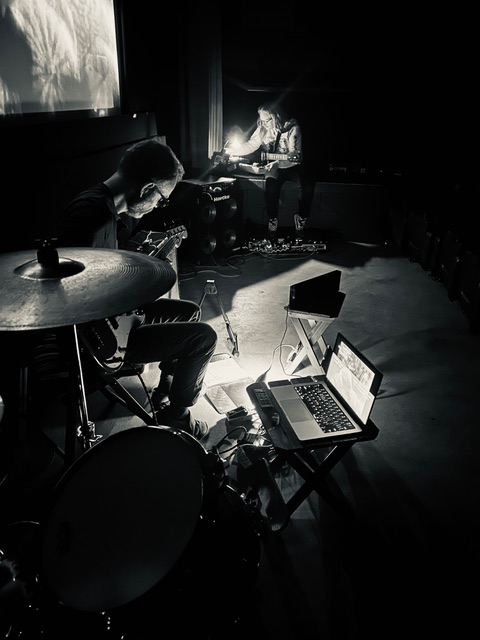
Earth plays at the Trylon Cinema with live music from PRGRPHS from Friday, January 2nd, through Sunday, January 4th. For tickets, showtimes, and other series information, visit trylon.org.
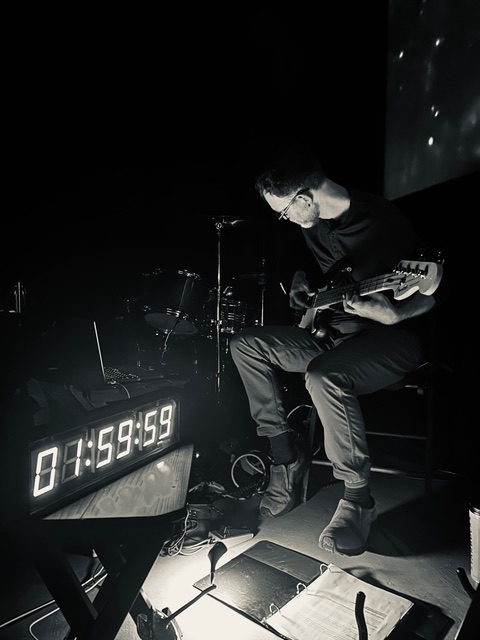
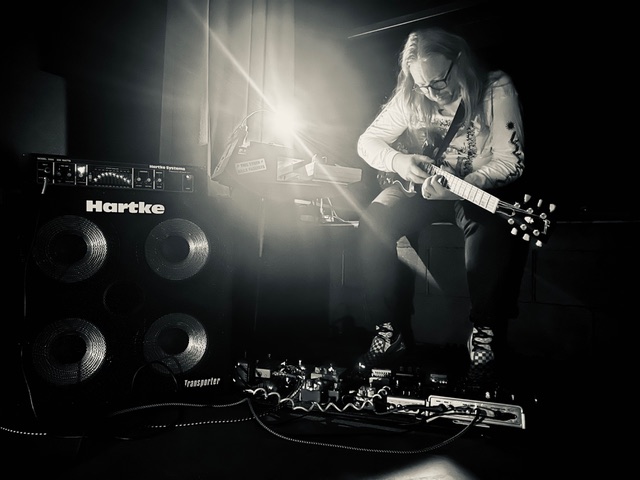
The “ooh, a project!” to “omg this is a huuuuge project” pipeline is real. In less than a week, my ambient post-rock band PRGRPHS will be performing our first live score for a silent film at the Trylon—Ukrainian director Oleksandr Dovzhenko’s 1930 agitprop Rorschach test Earth. As implied in a previously published piece for Perisphere, I’ve wanted to do this for a while now. When I brought the idea up years ago to my bandmates, they were immediately on board, but as we soon learned, as rewarding and enjoyable as the writing and rehearsals have been, it’s also taken some intense problem-solving, patience, and panic (to say the least). What follows below functions as both a tracklist and a semi-chronological breakdown of our scoring process embedded into the narrative and historical context of Dovzhenko’s masterpiece.
1. DEATH
Earth begins with the slow demise of farming community patriarch Simeon (a magnetic Mykola Nademsky)—a giant of the old way of life. The film, which was “originally commissioned to champion a policy that would ultimately lead to the famine-induced deaths of millions of Ukrainians” according to the BFI, has a built-in ominous prescience that necessitated a melody both haunting, rebellious, and stentorian. Following its release, Dovzhenko was let go from the Kiev Film Institute for not conveying Stalin’s fascist vision for farmwork devoutly enough. The theme we devised had to be sticky enough to serve as a leitmotif but also pulse thickly with doom.
2. EAT
As Simeon recognizes the end is near, he takes a bite of fruit from a nearby tree, which serves as a symbol both of the fruits of the community’s labor as well as the life that will continue to be bountiful to his family even after he leaves this mortal coil. As dark as this is, children play nearby, bringing a smile to Simeon’s face, and thus, we needed the apocalyptic vibes to subside a bit in order to help the acceptance ring true, perhaps even as a second side to the coin of death—harsh and sorrowful but ultimately natural.
3. GRIEF
This is the moment we knew this was the film we wanted to score—an intense smash cut to wailing women and fraught men. Much of our inspiration for writing music for a decade-and-a-half has been loss of one kind or another, like I’m sure is true for so many artists, and seeing how Simeon’s community is just wrecked after his passing was a clarion call to us to tap that distortion on and let the despair rip through.
4. NOW
One of the most singular traits of Dovzhenko’s filmmaking is his fearlessness to broach those moments in between, where characters are allowed to simply… process. This is the first of a handful of breathtaking moments where Simeon’s son Opanas (played with raw intensity by Stepan Shkurat), who becomes the film’s default protagonist (if there is one at all) after his father’s passing, simply broods and ponders while those around him argue about the merits of collectivization. As his mind gets clearer, it seems to ironically become even messier, and mimicking that with bubbling loops and layers was both challenging and a methodical joy.
5. REST
A companion interstitial of sorts to its predecessor, it’s also a return to the natural world—a new day in the fields for the farmers who must face the demands of a life that rarely allows ample time for bereavement. Calling back to the theme, but in a more punctuated and fragmented manner, we wanted the viewer to understand that even as our cast of characters attempt to move on without their leader, it’s not possible for this to be a repeat or continuation of the past, even if Opanas is resistant to change. Something is different now, and will forever be, with or without the blessing of the new patriarch.
6. LOST
In one last attempt to hold on to what is gone, Simeon’s friend Old Peter (played by Vasiliy Krasenko) visits the departed’s grave, clinging to it with effusive desperation. As children look on, this time with mockery and judgment rather than innocence and wonder, the whole scene becomes arguably more painful than death itself, an elder depicted as pathetic but in pain nonetheless, and the future with no patience for him. We let the rhythm section rumble for this one in an attempt to treat the proceedings with soulless sincerity, not comic relief.
7. STAND
Facing off against the kulaks (the more prosperous group of farmers whose wealth and reliance on subjugated laborers was a great source of Stalin’s ire), Opanas’s son Vasiliy (played by Semyon Svashenko) puts on a brave face with his colleagues, framed with bold force by cinematographer Daniil Demutsky. This felt like the first match between the Mighty Ducks and the Hawks, and we wanted to present it as such with an anthemic, rousing piece that added a bit of levity (at one point, Dovzhenko centers the oxen as if they are a third unwitting team in this showdown) but also the right amount of piercing melodrama the story necessitates.
8. PISS
Speaking of keeping things light in a film full of darkness, this scene was another key selling point for us as a band. Trylon programmer John Moret suggested Earth alongside some other equally tempting possibilities (including other titles we were both familiar and unfamiliar with) when we approached the cinema, but ultimately, I think I speak for my bandmates too when I say we were all in when we knew a pivotal plot point involved multiple farmhands pissing gleefully on a broken down tractor’s radiator to cool it down and get it working again. This was another tough one to approximate in musical form, but ultimately, it’s still catharsis, and that’s our post-rock bread and butter.
9. TOIL
Once machinery is implemented and technical difficulties no longer stand in the farm’s way, they become as poised as ever to impress and surpass the abilities and success of the onlooking kulaks. The film’s rising action officially kicks into gear here, and with it comes brutal determination. Slowly building without giving in to crescendo quite yet is the name of the game, scoring-wise, and knowing what tricks Dovzhenko has up his sleeve for the next few segments, restraint became as important as propulsion.
10. WORK
This is where the director Dovzhenko gives in completely to the editor Dovzhenko and lets his mad riffing on Sergei Eisenstein’s revolutionary intercutting techniques fly with little holding it down other than a laser focus on the end result—a collectivized hive mind working in unison. Anyone watching Pluribus on AppleTV+ might find some similarly disconcerting synchronicity here. A band that typically thrives on the chaotic, we found ourselves really having to put in that elbow grease for this section to make it still sound like cogs working seamlessly and ruthlessly without pause or hesitation.
11. DAWN
As if waking up from a night of heavy drinking, workers and their families face a new day yet again, but this time it’s full of gauzy haze and uncertain forward movement. Their eyes strain and their hearts are obviously wincing in pain and exhaustion, but they—just as before—cannot go back. This is what they know now, and they are committed. The distortion is gone from the score as the dappled sun persists, but nothing is clear except the day calling out to them that a corner has been turned and the path left behind them has disappeared.
12. KILL
Someone, however, is still drunk with confidence, deadset on the new world they’ve created for themselves by choosing collectivization. Without spoiling a nearly 100-year-old movie, a vengeful murder marks the point of no return—a moment that should have been heeded like a warning sign but was, rather, likely the primary piece of evidence that Dovzhenko had no intentions of being your average propagandist. The most significant segment of the entire film, we knew we wanted to both cash in on that narrative payoff but also distinctly and respectfully mark the anticlimax it provides. This is not fantasy violence; this is the cold, hard truth of what happens when a system is upended without consideration of the consequences.
13. CALL
Vengeance begets vengeance, and thus, the murder of a figurehead will not stand. Shouting for organized revolt against the perpetrators, Opanas’s farm goes full-on Mary Shelley’s mob, tearing through the countryside resolutely like the machine it’s become. At first glance, they’re protesting an unlawful assassination. Upon further inspection, however, they are a single weeping giant rather than the several smaller pieces scattered about earlier following Simeon’s passing. They are strong, but they are dangerous. In like kind, our instrumentation needed to be resolute but not in an inspiring way. It’s a threat to the perpetrator, yes, but also to anyone who stands in their way.
14. PRAY
Stalin’s world without capitalism was also one without religion, as any middle school Social Studies student can hopefully inform you, yet instead of portraying this way of life as liberating, Dovzhenko continues to challenge the review board at the Kiev Film Institute by confirming that even without a god, there is still unresolved pain in loss. The town priest wanders aimlessly, Old Peter sits on a stoop emotionless rather than sobbing at his friend’s Christian grave, and countless community members full of grieving rage have no salve in sight, save for taking to the streets and chanting, marching, and demanding revenge. As Dovzhenko’s frenzied editing slows down, we wanted our musicianship to do the same while also communicating this stuttering, sputtering engine of emotion.
15. SING
Scoring a silent film as an instrumental band where the resolution involves choral singing from hundreds of clomping collectivized zombies was, somehow, not our biggest struggle. As the workers flooded the roads more and more, it became apparent to us as the composers that, especially without intertitles, whatever their drone was saying, it was still just a drone. A soaring, spiteful drone meant to show just how quickly and severely townspeople can become their own singular weapon of projected pain was what was needed. We didn’t just need to pile on the noise—we needed to strip it back until it was just a single, unrelenting voice.
16. SPEAK
The murderer flees, solitary and stumbling through the fields, but the mob stands still, having arrived at the soapbox for yet another rising leader to talk. After all, even a hive mind needs to have a spokesperson sometimes. As Dovzhenko intercuts between these two scenes, he gives the viewer ample opportunity to consider all the possibilities of what could happen next. This call-and-response game of chicken rises to a fever pitch only to bottom out when one least expects it—another incredibly rewarding musical challenge. Will the collective make him pay? Will they focus on the world in front of them that they’ve joined and helped make a reality? Perhaps both?
17. RAIN
More spiral than circle, Earth ends with imagery of nature, but instead of amber waves of grain on a hillside, Dovzhenko opts for sparkling rain, again a potent symbol of this torrential change in living for our maligned Ukrainian farmers. More typically known as a marker of cleansing and rebirth, what makes the film so mesmerizing is its refusal to fit neatly into any message box, no matter the historical context. Considering all that precedes it, the precipitation feels more like a washing away akin to what Travis Bickle hoped for in Taxi Driver than the baptismal imagery of faith, which is outlawed now anyway. It’s a devastating end full of portent, and I can only hope we manage to do right by it with our accompaniment to kick off 2026 at the Trylon.
Edited by Olga Tchepikova-Treon