
| Courtney Kowalke |
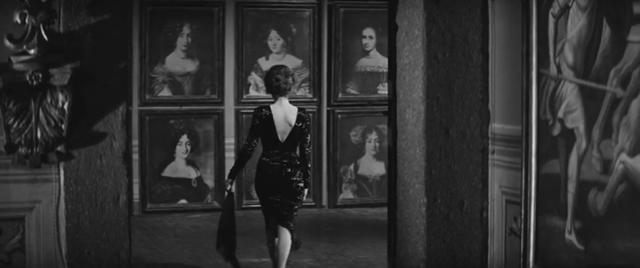
Image sourced from Ladylikes
La Dolce Vita plays at the Trylon Cinema in glorious 35mm from Sunday, January 25th, through Tuesday, January 27th. For tickets, showtimes, and other series information, visit trylon.org.
On October 21, 2025, around 1:00 pm, YourClassical MPR played Ottorino Respighi’s “Fountains of Rome.” I know because I was listening to the station in my car. As I drove through Uptown, I listened to Lynne Warfel wax poetic about the piece. She pointed out that the symphonic poem’s movements would provide a handy guide for visiting four of Rome’s fifty monumental fountains, even suggesting the perfect time of day to visit each of them—the Fountain of Valle Giulia at dawn, the Triton Fountain in the morning, the Trevi Fountain at noon, and the Villa Medici Fountain at sunset.
I was quite taken by this concept. Idly, I started researching these fountains and discovered even more fountains in the city that interested me. The more I thought about it, the more visiting Rome mattered to me. I wanted to go there. I needed to go there. I needed to see these fountains for myself. That night, I decided to look at the weekend of Valentine’s Day to gauge how much a trip to Italy would cost me.
Three days later, the price tracker I set up online found me a round-trip flight to Rome for $663. I would have been a fool to turn that offer down.
Traveling to a new-to-me foreign country based more on vibes than on rational thoughts seems silly, but it is also very in the spirit of Federico Fellini’s La Dolce Vita (1960). The film is composed of a series of vignettes more than a straightforward narrative, although it does follow the life of Marcello Rubini (Marcello Mastroianni). Prior to watching the movie, I thought the whole conceit was going to be ‘sexy people doing sexy and mysterious things.’ There are a lot of attractive people, and they do have a fair amount of sex, but La Dolce Vita cuts a lot deeper than that. The title literally translates to “the sweet life,” but “the bittersweet life” would be more appropriate. Marcello has a lot of dissatisfaction with his life. He has a loving fiancée, but he can’t commit to her and is constantly chasing other women. He can’t decide if he wants to be a serious journalist or write about celebrity gossip or if he wants to write original fiction. Things are not as easy breezy for him as the promotional material I saw beforehand made them seem.
Upon watching the film, I immediately identified with Marcello. I’m not proud of that fact. He’s suave and sexy, but he’s a careless man. He’s chauvinistic and openly disparages women for being weak. In the end, he gives up on doing meaningful work and meaningful relationships and decides to drink and party his life away with people he hardly knows or cares about. So why do I identify with him? I think it’s because of Marcello’s restlessness. He’s looking for his life’s purpose, but he also seems scared of finding it. He’s insecure with what he has and is always comparing his lot to the lives of others. While Marcello’s fiancée, Emma (Yvonne Furneaux), bemoans that Marcello has changed so much, Marcello is telling himself that he needs to change even more. Whatever he is doing is not enough.
I have a lot of sympathy for Emma. I really do. I gasped out loud when Marcello’s father asked about the woman who answered his phone, and Marcello said it was the cleaning lady. I cried when Emma prayed that Marcello would love her above all others, and again when Marcello threw her out of his car and left her on the side of the road after an argument. Still, I cringed alongside Marcello when she reassured him that someday he would have a home like his friend, Enrico Steiner (Alain Cuny). The life with a beautiful house and a beautiful wife and two perfect children seems like a dream, like something everybody ‘should’ want, but it rankles. I love the idea of a nuclear family. I think I want a partner and kids, but in reality, it fits like a shirt that’s one size too small. Every partner I’ve had has bored me or gotten on my nerves eventually. I like having time to read and write in silence. Maybe someday, I will find a compromise, some type of family that works for me. As of now, though, that is not my idea of a sweet life.
Steiner himself tells Marcello as such, that he regrets trading his artistic ambitions for stability. It’s a choice that has deadly consequences for Steiner and his family later in the film. I don’t know that I would go full “Medea destroying hers and Jason’s family” if I got sick of my kids, but I’m not about to test that theory. For now, it’s better to be a free spirit than to be trapped in a lifestyle I can’t get out of.
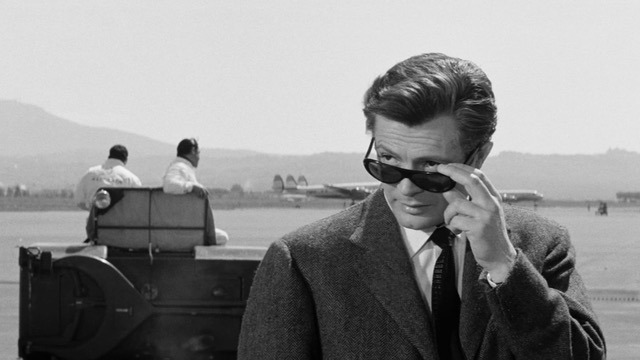
Image sourced from Janus Films
Marcello also struggles with his writing. He’s a journalist, but he isn’t passionate about the work. He’s writing a novel but not making much headway on it. He feels like he needs to choose one or the other to focus on. He feels like maybe both pursuits are a waste of time, telling Steiner, “I don’t think I even know how to write” when his friend compliments his latest article. I don’t know what I consider myself besides “a writer.” Every subset feels too narrow for what I do. I’ve had poems published in magazines and articles published in newspapers. I’ve been keeping a diary since September 22, 2002. I’ve written training manuals for places I have worked. I’m noodling around with a novel, because who isn’t, and I write songs to amuse myself and my friends because who doesn’t? Part of why I have a day job that doesn’t require much writing is because writing means so much to me. I didn’t want to lose my enjoyment of it the way Marcello does. When Marcello rebuffs his compliment, Steiner tells him his article “was clear and passionate, your best qualities.” That is word-for-word a compliment I have received on my writing from several friends and co-workers, and I am eternally grateful for it. I want to be direct. I want my writing to be understood by as many people as possible.
At least one person in La Dolce Vita supports Marcello’s inability to choose one direct or the other. The English poet/actress/model/etc. Iris Steiner (played by herself) addresses Marcello and his concerns at one of Steiner’s parties. “Beware of prisons!” Iris tells the younger man. “Remain free, available, like me. Never marry anything. Never choose. Even in love, it’s better to be chosen.” I can dig that advice, even if I don’t dig Tree’s poetry as much as Marcello does. Marcello calls Tree’s work “powerful [and] precise,” but I found her Poems kind of trite. They read like standard parlor room fare to me, with all rhyming more cloying than novel. I suppose that’s bound to happen when they’re over one hundred years old, though. I’m in a different era of art than both Tree and Marcello; I’ve seen and read things neither of them lived to see.
I found La Dolce Vita reflecting parts of my life besides my inability to settle down. About one hour into the movie, a vignette starts with a mob of people protesting the Roman police’s detention of two children who claim to have seen a vision of the holy Madonna. The crowd rails at the institution, yelling, “Damn the police!” and “You have no right to detain those children!” “Let me tell you what the Communists did,” an onlooker comments to Marcello when he arrives to write about the event. That’s almost verbatim a comment I read last Saturday on CNN’s video regarding the murder of Renee Nicole Good by Immigration and Customs Enforcement (ICE) agent Jonathan Ross over on Portland Avenue, although the “Communists” in this case weren’t the police disrupting counter-revolutionary activity but rather CNN and their ‘liberal bias’ for reporting the facts.
Working on this piece on January 7, 2026, as I was damn near gave me a heart attack. Apart from Good’s murder, ICE agents also raided Roosevelt High School here in Minneapolis. In trying to detain several employees, ICE agents fired pepper grenades and maced teachers and students alike. All schools in the Twin Cities were closed for the rest of the week so parents could prevent their kids from being abducted, injured, or killed by federal agents. There have been protests nearly every day since demanding ICE get out of our city. In a strange way, it was nice to see similar unrest and oppression in La Dolce Vita. The world has always been like this, throughout time and distance. There is no version of events where everything on Earth is working perfectly. Life is messy on large and small scales. That’s how it goes.
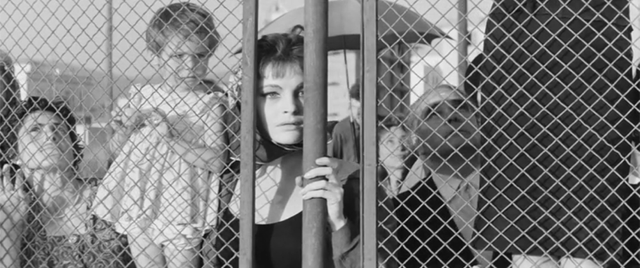
Image sourced from Ladylikes
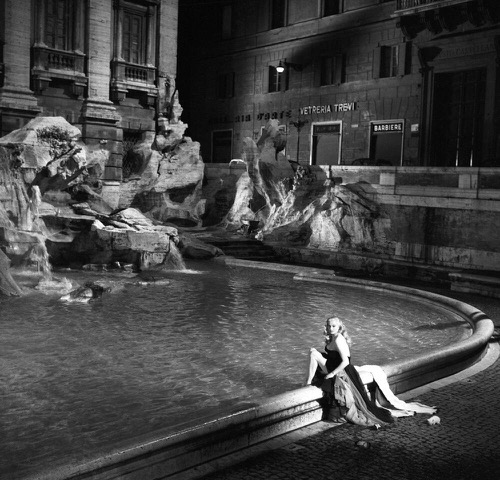
I did not pick a great time to go on this voyage of mine. Nine days after I booked my flights, the Minneapolis-St. Paul International Airport canceled almost forty flights due to air traffic control staffing shortages caused by the U.S. government shut down. Within the past week, a rash of people have reported being detained after arriving in Rome because their passports have been reported as stolen without the passport owner’s knowledge. I also learned Rome’s Council for Tourism and Major Events will start charging tourists to see the Trevi Fountain—you guessed it—next month. A look at the historic site will set me back two whole euros, which isn’t a dealbreaker, but it is two more euros than I expected it to cost. The fountains are also blocked off during large sporting events to keep fans from jumping into the water post-victory and during routine cleanings. The report from the tourism council shows a picture of the Trevi Fountain drained for such maintenance with a fish tank of water in front of it for people to throw coins into instead, which is one of the most depressing things I have seen in my life. Presently, my trip is unaffected by all of these factors. I still worry a little, not of being hurt but of something I have been looking forward to for months being yanked out of my reach. I tell myself it’s okay if all planning this trip gave me was something to anticipate through the long, dark Minnesota winter. I know if I don’t get to go, though, I will always feel like I missed out on something important.
On a less serious note, I know my life is not like a movie. I am not going to meet a film star and dance around with them in the Baths of Caracalla. I have been to Los Angeles four times and never once recognized anybody famous; I wouldn’t know a celebrity if they hit me over the head with an autographed baseball bat. I am not planning to eat snails and drink Valpolicella (although I am apparently staying a seven-minute walk from the Rugantino restaurant where Aïché Nana performed a striptease that inspired the scene in La Dolce Vita where Marcello attempts to incite an orgy. Who knows what will happen there?). I doubt I will actually see the Fountain of Valle Giulia at dawn because I very much doubt my abilities to be out of bed, dressed, and at a second location in time to watch the sun rise. My trip will not be like a movie, but that will be fine. I know it will be fun. My friend in Naples taught me how to explain my nut allergies in Italian and sent me map directions to Fontana delle Rane (which was not originally on my list of fountains to see but is now). I have a dress that makes my chest look amazing and a coin to throw in the Trevi if they let me get close enough to the water. Things might suck or be difficult or be dangerous. I’m going anyway. Good or bad, life is happening, and I need to be a part of it.
Edited by Olga Tchepikova-Treon