
| Matthew Tchepikova-Treon |
Wattstax plays for one night only on January 29th at the Trylon Cinema as part of Archives on Screen’s quarterly programming. For tickets and other programming information, visit trylon.org.
A young Richard Pryor sits inside a dark, nondescript bar. “California is a weird state,” he says, “because they have laws for pedestrians—you know like, you cross the street—they have laws for pedestrians, but they don’t have laws for people at night when cops accidentally shoot people.” Looking just past the camera, the comedian then plainly asks: How do you accidentally shoot someone six times? His familiar barrel-chested but tight-lipped impersonation of a white police officer appeals, “Well, my gun fell and just went crazy.” A small group of people laugh off screen.
This short bit of stand-up is from the celebrated documentary Wattstax, a benefit concert organized by Stax Records in the summer of 1972. As part of the annual Watts Summer Festival, the concert and subsequent film commemorated the Watts Rebellion of 1965, which, as Pryor’s joke conveys, transpired in response to police brutality. One of the key triggers of the rebellion occurred on August 11, 1965, when California Highway Patrol stopped a young black man, Marquette Frye, for suspected drunk driving on 103rd Street in South Central Los Angeles. The altercation escalated into violence when officers forcefully arrest Frye and used excessive force against him and several family members, also in the car, who came to his aid. Word of the incident spread through the neighborhood and civil unrest soon grew into a large-scale revolt across the city. Struggling to regain control, Governor Pat Brown called in 4,000 troops from the California National Guard. Chief William Parker, head of LAPD, rallied the press and called the riots an insurgency, likening the protestors to the Viet Cong. Governor Brown similarly called the rioters “guerillas” (allowing the homophone to do double work, I’m sure). In the end, there were thirty-four deaths, 1,034 serious injuries, and 3,438 arrests.1
Part of Pryor’s point, of course, was that what happened in August of 1965 wasn’t an isolated incident. While momentous, the uprising was a manifestation of deep-seated social injustice and economic disparity. For decades, black residents in Watts endured discriminatory housing practices, including redlining, restrictive covenants, and blatant racial segregation; economic disenfranchisement and limited employment opportunities; a lack of access to well-funded education that perpetuated cycles of poverty and imprisonment; inadequate essential health services and brazen institutional racism; violent policing practices, aggressive racial profiling, and murder. So, when roughly 30,000 resident protesters spent six days setting numerous buildings, police vehicles, and the streets themselves on fire, it was a collective act against—as much as of—lawlessness.
In the years that followed, the name Watts itself became “a universal talisman of black power and pride.”2 It was this talismanic power that animated the Wattstax concert. With tickets priced at $1, approximately 120,000 attendees showed up for the six-hour concert inside Los Angeles’s Memorial Coliseum (20,000 more than the stadium’s official capacity at the time), located seven miles from 103rd Street. During the permit process with the city, the first demand Stax made was that no LAPD and no guns would be allowed inside the venue. Stax’s in-house head of security, Johnny Baylor, and none other than Melvin Van Peebles, a versatile organizer (and a patron saint of the Trylon screen), arranged for an all-black security team. The morning of the concert, the company held a parade that ran through Watts with its star performers riding in open-top Cadillacs while singer Carla Thompson talked about the event’s historical significance on Los Angeles radio. That afternoon, more than two dozen Stax groups, additional members of the company roster, and leading black American figures took to the stage.
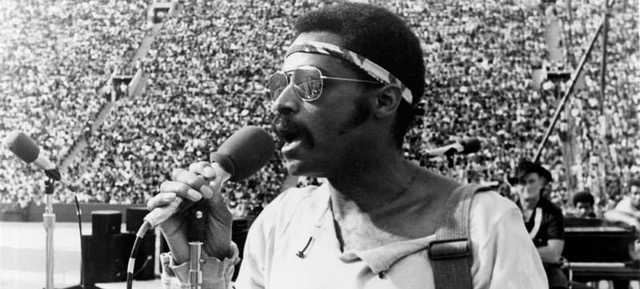
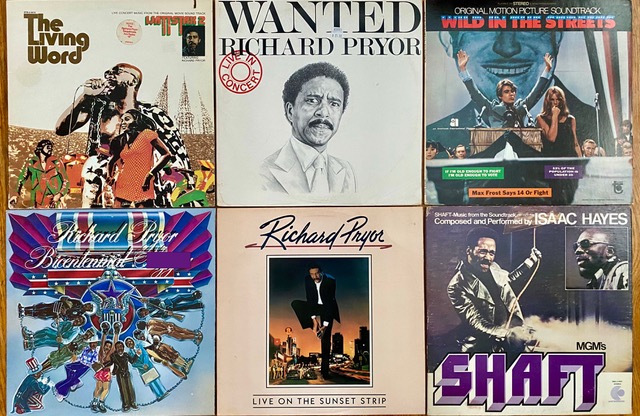
The Wattstax Orchestra, conducted by Dale Warren, warmed up the audience with “Salvation Symphony.” Albert King played his signature red flying-V guitar. Van Peebles gave a short speech on self-respect when he introduced the Staple Singers. Rufus Thomas sang and danced. Stax house band, the Bar-Kays, performed their own hit, “Son of Shaft.” Richard Roundtree spoke to the crowd: “We’re here to commemorate a revolution that started a movement, and was a milestone in Black pride.” Jesse Jackson later introduced the headlining act, Isaac Hayes, who walked onto the stage wearing gold chains over his bare chest, with dark sunglasses and a cape, and opened his roaring nighttime set with the blaxploitation showstopper, “Theme from ‘Shaft’” (which had just won the Academy Award for Best Original Song; the Shaft double-LP remains the highest-selling Stax record to date).
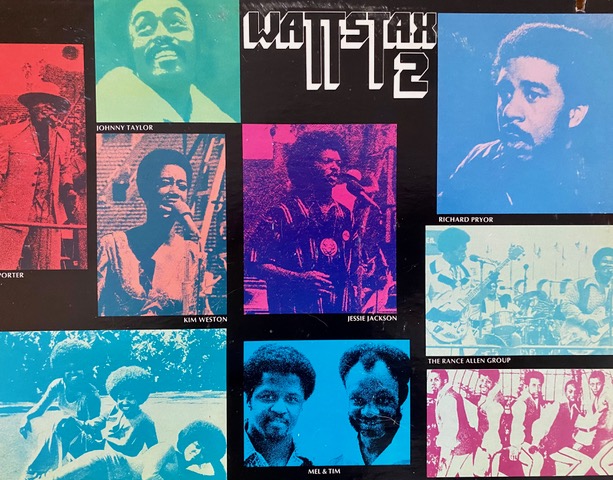
The concert produced a double LP, Wattstax: The Living Word (1972), and the celebrated documentary. Drawing inspiration from D. A. Pennebaker’s Monterey Pop (1968), which included Stax’s Otis Redding with Booker T. & the M.G.s, Stax executive Al Bell enlisted documentarian Mel Stuart to direct the film. The resulting movie features gleaming footage of numerous Stax artists from the show, plus additional, smaller musical performances set up around Watts—for instance, The Emotions at Friendly Will Baptist Church and Johnnie Taylor at the Summit Club. Between the musical performances, Stuart also intercuts prepared street-level interviews with neighborhood residents on what, if anything, had changed in Watts since the rebellion. Tying everything together, Richard Pryor appears like an exegete throughout the film, delivering his intimate stand-up performances in front of the film’s crew and a few friends.
Already a successful comedian, Pryor had appeared on screen before, most notably as the anthropologist drummer, Stanley X, in AIP’s political exploitation farce Wild in the Streets (1968) and a piano player in Lady Sings the Blues (1972), but Wattstax represented a true moment of before-and-after revelation for both his comedy and his career. Some of Pryor’s material from the documentary would soon wind up on his third album, That N——’s Crazy (Stax, 1974), and further serve as his own call sheet full of characters he would inhabit on stage for years. Running just over half an hour, the record includes jokes on education, sex, drugs, poverty, violence, parenting, prostitution, gambling, church, and Dracula, all rendered through Pryor’s ebullient artistry. The tie that binds? Citizen-sanctioned police brutality: “Cops put a hurtin’ on your ass, man. You know? They really degrade you. White folks don’t believe that shit—don’t believe cops degrade. ‘Oh come on, those beatings, those people were resisting arrest. I’m tired of this harassment of police officers.’”
[Author’s note: An early iteration of the above words on Richard Pryor’s tragicomic genius was first drafted in South Minneapolis beginning in May 2020, to the sounds of helicopters and infantry-transportation vehicles entering our city, then revisited and expanded here for Archives on Screen’s special presentation of Wattstax in January 2026, to civilian car horns and a chorus of whistles louder than an Alberta Clipper.]
Footnotes
1 For a truly insightful accounting of these details and many more, I highly encourage checking out Mike Davis and Jon Wiener’s extensive historical accounting in Set the Night on Fire: L.A. in the Sixties, published in 2020.
2 Davis and Wiener’s words, page 210.
Edited by Olga Tchepikova-Treon