
|Wil McMillen|
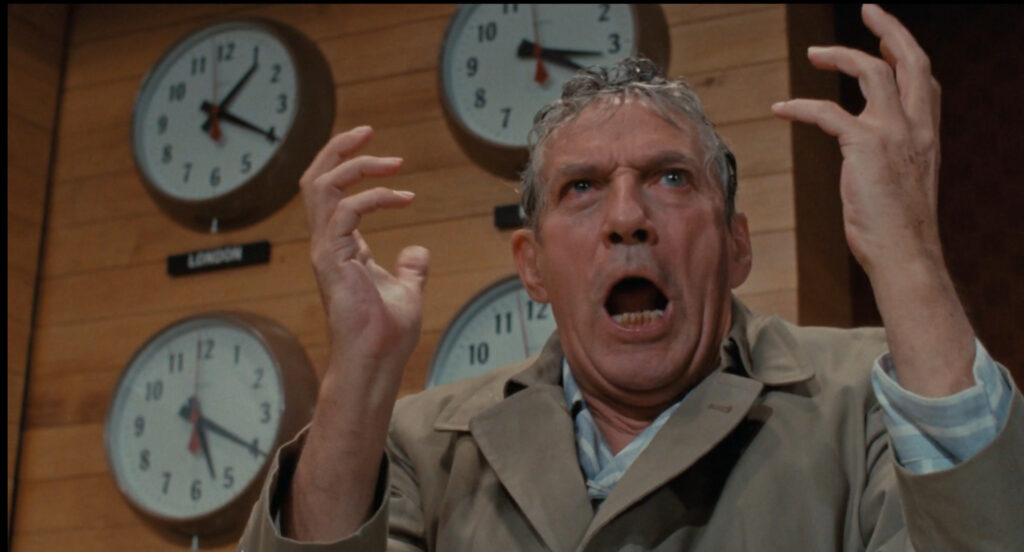
Network plays in at the Trylon Cinema from Friday, March 27th, through Sunday, March 29th. For tickets, showtimes, and other series information, visit trylon.org.
My first day as a national news photographer was December 19, 1998, one of the most important and crazy days that nobody ever talks about. Among the many things that happened that day:
- We bombed Iraq for three days, and on December 19th, we declared that Operation Desert Fox was a success. We had taken out locations housing Iraq’s weapons of mass destruction. Hooray for us! (I mean, U.S.)
- Louisiana Representative Bob Livingston announced he was leaving Congress after Hustler publisher Larry Flynt obtained evidence that Livingston had an ongoing affair with a woman who was not his wife. Pearls were clutched.
- Newt Gingrich stepped down as Speaker of the House, making way for future felon and accused pedophile Dennis Hastert to take his place.
- Oh, and President Bill Clinton was impeached.
Now cut to me, holding a heavy BetacamSP news camera on my shoulder, at 8 a.m., standing outside of Armond’s Pizzeria on Massachusetts Ave. I was waiting there to record people walking in and out with pizza.
That’s right. I’m standing outside of a pizzeria at 8 a.m. to tape people carrying their pizzas.
I was 22, and I didn’t care. The logic of the situation (or lack of it) didn’t even occur to me. I was getting paid to shoot national news! The restaurant isn’t even open yet, but I was there for ABC NewsOne to record people getting pizzas! Me! A kid from Wichita, Kansas, who had only lived in DC for six months! What a break!
Why was this my first location of many on that day? Because someone in editorial had the idea we should do a story on the Pentagon Pizza Theory. If you don’t know what that is, it’s probably because you haven’t lived in DC. It goes like this: when pizza orders spike near government buildings, it means something important is about to happen.
So, my first paid gig as a professional videographer was a trivial angle and a distraction from a much larger story. But it was a lighter and more entertaining angle! Might make it in at the end of the broadcast! It’ll be good for b-roll if nothing else!
Being in the middle of where the news happened and on the front lines was so fun. I remember the excitement of picking up my equipment, heading to one assignment only for my pager to buzz, (yes, this was back in the pager days), running to a pay phone (you always had a pocket full of quarters when shooting news in 1998, or you had to know how to sweet talk someone in an office building into using their phone), and hearing my bureau chief telling me to get to Capitol Hill as fast as I could. The story was changing and something more important was happening elsewhere.
I’ve never done drugs, but I think the rush of getting a story to air as it’s breaking has to be like cocaine. It’s addictive. I swore in college that I’d never work in news. I was an ARTIST! Well kids, never say you’ll never do something, because you’ll end up doing all of your “nevers.” Turns out I LOVED it.
The pay, on the other hand, was a different story. In 1998, I was making $20K a year as a news photographer. A year later I was upgraded to producer and got a whopping $25K a year for it. I was loving my work, and going broke doing it. Isn’t that always life’s little joke? By 2001, I had jettisoned this career arc, $17K in credit card debt. I clawed my way out via government work. It didn’t pay much more, but it paid more than working as a producer in the news industry.
So on my latest rewatch of Sidney Lumet’s vicious satire Network, written by Paddy Chayefsky, the hardest I laughed was during a scene where it’s mentioned how much money the news department loses every year.
I guffawed. It hit my memory bank like nothing else. Nearly everyone I worked with has left the industry and gone on to other careers. They couldn’t afford it. Whenever we would hear “There’s going to be budget cuts this year,” we’d all look at each other and ask, “Where is all of that money going?”
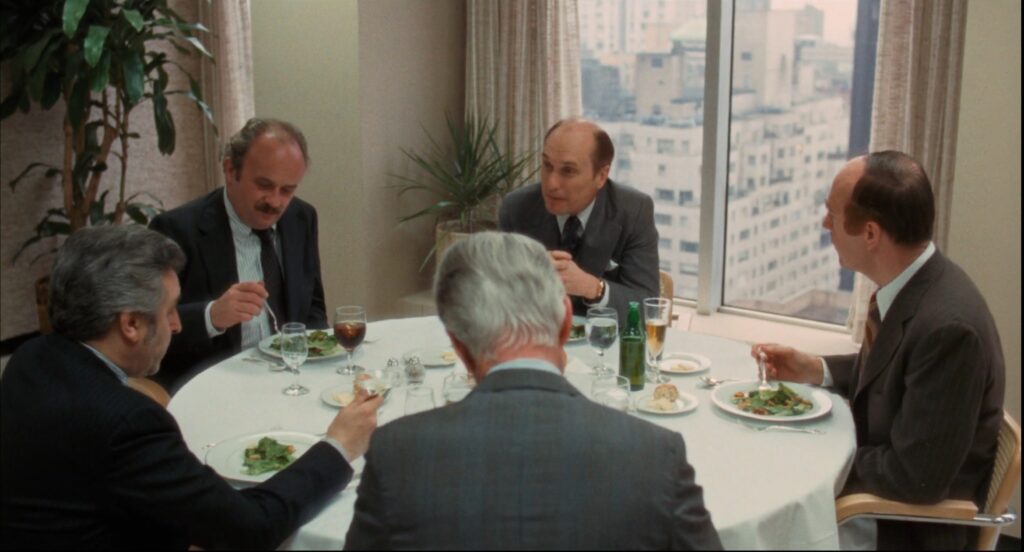
We had ideas of where it was going.
The only people who make money in news are the ones with so little integrity they’ll say whatever they need to get to the top. It’s that shamelessness and unscrupulousness that allows some of the worst people in the world to advance, something Network knows all too well.
Let’s just say that none of us were surprised when Brian Williams was busted, lying about being in a helicopter that got shot down by a missile.
Working with Billy Bush for six months on a news “comedy” show pilot in 1999 was an absolute nightmare. We wanted to be The Daily Show, and we definitely were not. There’s something about the least funny person in the room (Billy Bush) telling you you’re the least funny person in the room to your face on a daily basis that’ll get under your skin. So the day the Donald Trump “grab ‘em by the p***y” tape came out with Billy cackling like a hyena was one of the best days of my life. I’ve eaten up his career implosion like a three-year-old on a birthday cake.
Oh, is HE the funniest person on the bus, Billy? It sure sounds like you think so.
See? Those of us who work in news can hold a grudge like nobody else.
For someone who didn’t work in the industry, Paddy Chayefsky writes like he’s settling scores. Nobody escapes his wrath. For fun, let’s list the things Chayefsky is angry at: technicians that don’t pay attention to what is going out on their airwaves, corporate entities that value profit over integrity, leftist organizations that will sell out their integrity for the highest bidder, corporations that are beholden to the rich and powerful, producers who are so married to their jobs that they have no other inner life, catering the news to the lowest common denominator, news packaged as entertainment, and the masses who would much rather be rabble roused than informed.
At the center of it all is Howard Beale (Peter Finch), the anchor of the national nightly news for United Broadcasting System (or U.B.S. Get it?). Realizing he’s about to be fired, he announces during a broadcast that he will kill himself live on the air in one week. The one person in the control room who catches what he says is the script supervisor, and that’s only because it’s not in the script.
The second person who actually hears what Beale says is the audio technician, and I can tell you from experience, this is one of the most outlandish things in the entire movie. I will be honest here and say I have been, and currently am, an audio technician. We don’t actually listen to what’s being said. We watch the audio levels and listen for audio that is too hot, “cracking out,” or feeding back. Ask me what was talked about in an event or on a broadcast that I worked on, I couldn’t tell you. I don’t listen to what is being said. I’m listening to how my equipment is hearing what’s being said. I’m one of the guys that Chayefsky is mad at. It’s personal, but I don’t take it personally.
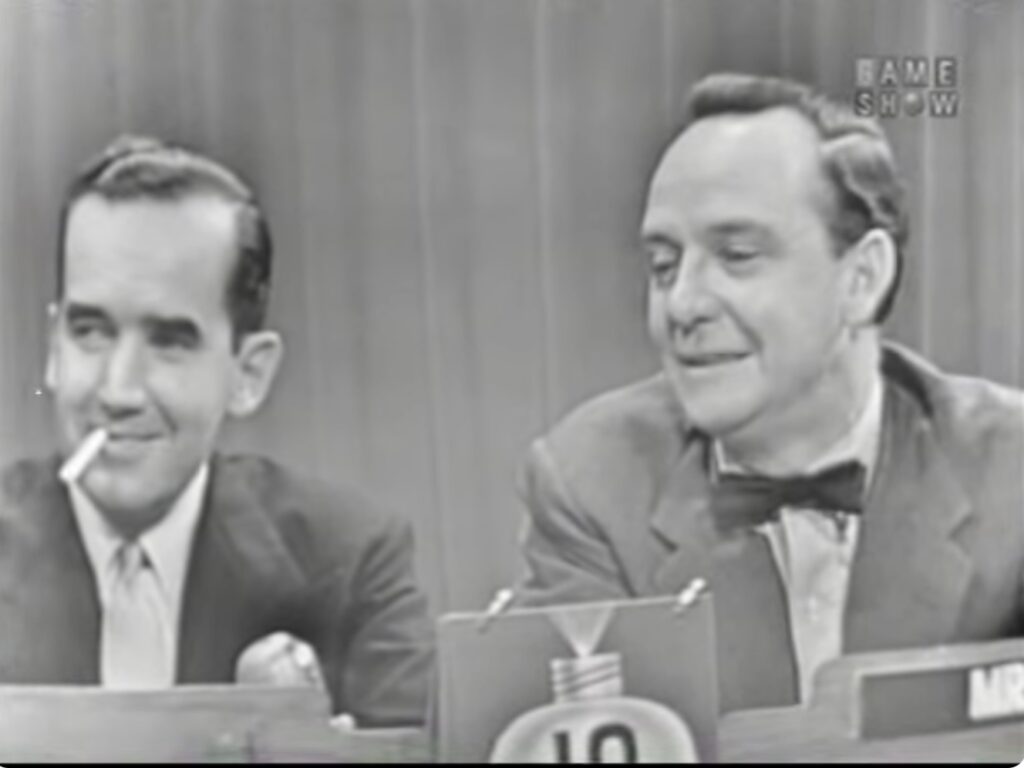
Ultimately, Chayefsky seems to be the angriest at the idea of a news department being run by the entertainment division. But let’s be honest. Television news was always entertainment. Yes, I know Edward R. Murrow took down Joseph McCarthy. Everyone holds up Murrow as the pinnacle of serious news. But don’t forget, Murrow also put his foot deep into entertainment. The man hosted Person To Person, doing staged interviews with the likes of Bing Crosby, Sid Caesar, and, most famously, Liberace. The man even stepped in on the game show What’s My Line. The idea that televised news was ever actually “serious journalism,” and not entertainment is a noble but naïve dream.
Yeah, yeah, I know about 60 Minutes and Nightline. There’s PBS NewsHour. There are outliers, and I acknowledge that.
However, until the invention of CNN in 1980, network television was where you went for breaking news. But most times, stories weren’t exactly breaking, and that nightly hour still had to be filled. Sometimes it had to be filled by squirrels on waterskis. Sometimes it was filled with The Minnesota Mouth Off. I did so many of these types of stories. In 1999, a pair of beavers were eating the cherry blossom trees at the Tidal Basin near the Jefferson Memorial. So off we went and did a story about it. I’m not ashamed to admit it. I kind of like that story.
The film’s deep-seated satire keeps all of the characters at arm’s length. But then, that’s the way most savage satires work. Dr. Strangelove, Idiocracy, Brazil, or Fight Club, just to name a few, are filled with characters who are beyond realistic. It’s hard to connect with any of them. The only character in Network who could be called sympathetic is Howard Beale. He’s exploited by the corporate bosses when they see his obvious mania can be good for ratings.
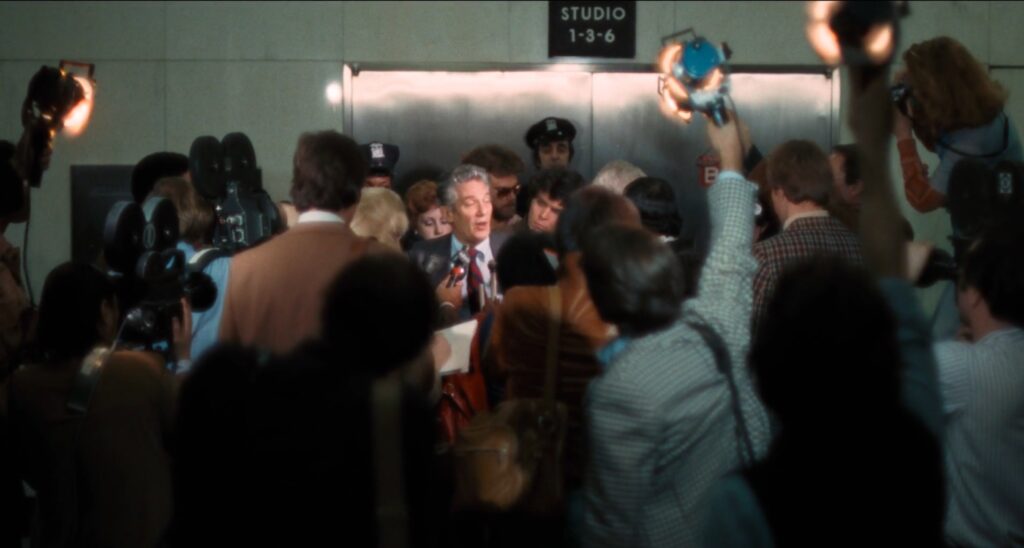
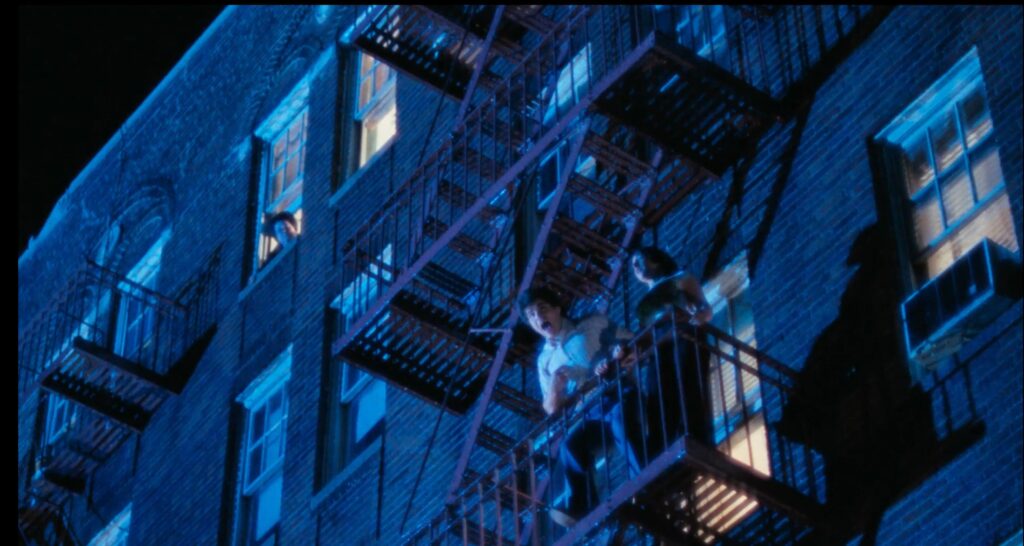
We, the audience, get wrapped up in Beale rousing everyone to stick their heads out of windows and yell along with him, “I’m mad as hell, and I’m not going to take this anymore!” It’s a great rallying cry. It’s one of the greatest scenes in all of film history. But as we get swept up, we miss that he’s not offering a solution, he’s just offering rage. Everyone watching is feeding off of it. And that’s the brilliant thing Chayefsky’s script does. It subverts us into engagement with the very thing he’s satirizing. We cheer, and then we’re horrified that we’re cheering. We go along with the logic of the scene until we realize Chayefsky has led us, like the Pied Piper, into lunacy. The mirror is turned back on us.
In 1999, Fox News could legitimately present itself as a spunky upstart. We used to have it on in the producer’s suite, staring at it in fascination. We couldn’t believe that you could shape a nuanced news story into victimhood and anger. How could you be so clearly one-sided and package it as victimization? And do it for hours on end? Or make a profit from it? Or go home and sleep that night knowing what you had done?
The day Jon Stewart took CNN’s Crossfire down was one of those days when I thought maybe we could get back on track. A dragon had been vanquished! Unfortunately, it turns out, “I’m mad as hell and I’m not going to take this anymore” really sells. If it were made today, I imagine the sequel to Network opening with ten people coming out of Beale’s final audience. They come onstage, put on a piece of Beale’s clothing, and pick up right where he left off.
Because we’re awash in a world of Howard Beales now. Not just the networks, but Facebook, Twitter, YouTube, TikTok, and a thousand other online outlets peddle and cash in on the rage epidemic. We feed on it. We line up at the buffet of anger. We love to bathe in our righteous rage. We scroll through an endless parade of fury.
“You won’t believe it but Trump actually said this!” *flip*
“Liberals are ruining our schools and we must…” *flip*
“Here’s the seven secrets to getting back at your drunk uncle when he says something you just can’t believe…” *flip*
Rage is easy. Solutions are hard. But who cares? It’s only entertainment.
Edited by Finn Odum