
| Reid Lemker |
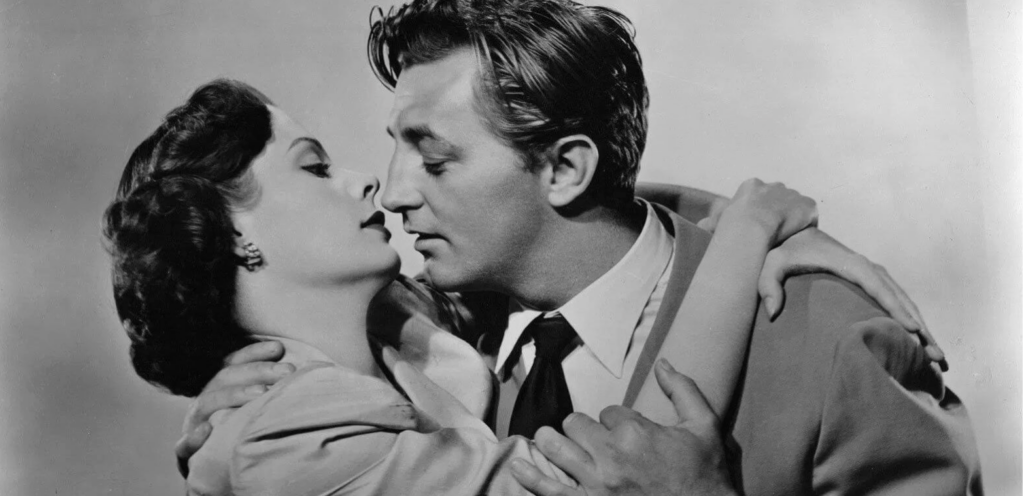
The Big Steal plays on Thursday, February 19th at the Heights in glorious 35mm as part of our collaborative series, Down a Dark Street: The Films Noir of Don Siegel. For tickets, showtimes, and other series information, visit trylon.org.
Sometimes, it’s a miracle that films get made, and RKO’s 1949 film, The Big Steal, is one of those miracles. Directed by Don Siegel and starring Robert Mitchum, Jane Greer, and William Bendix, The Big Steal was originally conceived as a vehicle for RKO star George Raft, but Howard Hughes decided to substitute one of RKO’s bright young stars, Robert Mitchum, for Raft. The film was put into production in the early part of 1949, but there was just one problem: Robert Mitchum was in a bit of trouble with the law. In early September of 1948, Robert Mitchum had been arrested and charged with marijuana possession. Mitchum had been “smoking a joint at a small party in the Laurel Canyon area of Los Angeles when detectives burst in and arrested him.” At the time of his arrest, Mitchum was 31 and already a star for RKO, with lead roles in films such as The Story of G.I. Joe (1945), Crossfire (1947), and Out of the Past (1947).
With Mitchum facing possible prison time for marijuana possession, Hughes’s switch from Raft to Mitchum in the leading role, and the rush to get The Big Steal into production so quickly, may have been a stunt to keep Mitchum out of prison. Whether or not that was Hughes’s intention, it didn’t work. Mitchum would end up serving 60 days in jail at a Los Angeles County Prison Farm in Castaic, California, and was released at the end of March 1949. With his lead actor in prison, and the film already in production, director Don Siegel was forced to get creative. Siegel shot with Mitchum before he went to prison, shot around Mitchum while he was in prison, and then finished the film once Mitchum got out. Siegel’s resourcefulness and technical ability to do this likely saved the entire production.
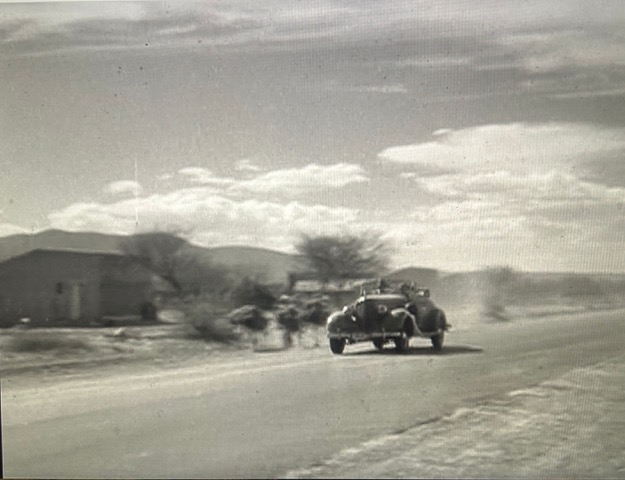
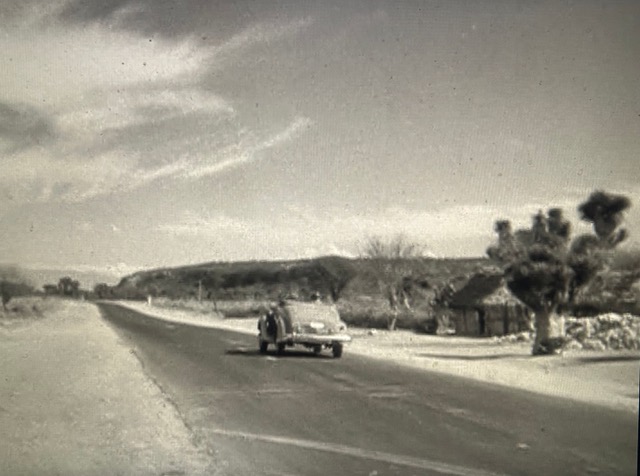
Siegel so expertly shot around Mitchum that on a first viewing, it might not even be obvious that the production was so troubled. However, with close inspection and repeated viewings, the evidence of the shooting strategy becomes visible. One place it becomes clear is in some of the car chase sequences, if you look closely at the roadside scenery in Mexico. Siegel filmed some of the scenes at one time of the year, and others at another, and the vegetation on the side of the road gives this away.
Of course, a troubled production doesn’t necessarily equal a box office bomb. According to Variety,The Big Steal grossed $1.6 million (roughly 21.8 million today), on a $780,000 budget (roughly 10.6 million today). The Big Steal’s 1.6-million-dollar gross placed it as the 74th highest-grossing film of 1949, and the 7th highest-grossing RKO film of that year. The success begs the obvious question: how did this beleaguered production become a money-maker for RKO? Why, Movie stars, of course!
Robert Mitchum and Jane Greer most famously teamed up to star in RKO’s 1947 film noir Out of the Past, alongside Kirk Douglas. Two years later, the pair teamed up again for The Big Steal, but it very nearly didn’t turn out that way. The part of Joan Graham was originally supposed to be played by Veronica Lake, but Lake backed out, and Greer was given the part at the last minute (Greer was pregnant while shooting The Big Steal but didn’t tell anyone). It’s hard to imagine this movie working so well with anyone other than Greer playing Joan Graham.
In the film, Joan Graham arrives in Mexico to find Jim Fiske (Patric Knowles), whom she was once going to be married to, and she’s loaned $2,000. As she’s getting off the ship, she bumps into Duke Halliday (Mitchum), who, we later learn, is accused of stealing a large sum of money from an army payroll. After a while, Graham and Halliday team up in search of Fiske, and the pair chase Fiske across Mexico in search of their money. Graham and Halliday themselves are being chased by Halliday’s superior, Captain Vincent Blake (Bendix).
This setup provides Robert Mitchum and Jane Greer plenty of time to do what they did so well together in Out of the Past: talk to each other. Duke Halliday and Joan Graham don’t quite have the same sizzling connection that Jeff Bailey and Kathie Moffat shared in Out of the Past, but as Halliday and Graham, Mitchum and Greer spend plenty of time together on screen, and it’s their chemistry that is the most interesting part of the film.
Given this setup, it’s a wonder that anyone other than Greer was ever considered to star in this film; the structure is so perfectly set up for a Greer and Mitchum vehicle. The two of them support the romantic elements of the film with their dialogue delivery, their sarcasm, and their suspicious sideways glances. Director Don Siegel’s technical accomplishments kept the film together, but opening the space for Mitchum and Greer to go back and forth in the car is what makes the movie memorable.
Within the first 25 minutes of the film, Halliday and Graham are paired together in a car, chasing Fiske. The pacing of the film in this section is perfect. Neither Mitchum nor Greer gives away their feelings for each other too quickly or outwardly. Instead, feelings begin to get revealed in glances, looks, facial expressions, and the way that dialogue is delivered. After Halliday tells Graham that he is being set up for the Army payroll robbery, and Graham reveals that she loaned Fiske $2,000 for “a nice smile”, Mitchum responds, “I’ll tell you what, Chiquita, you believe me, and I’ll believe you”.
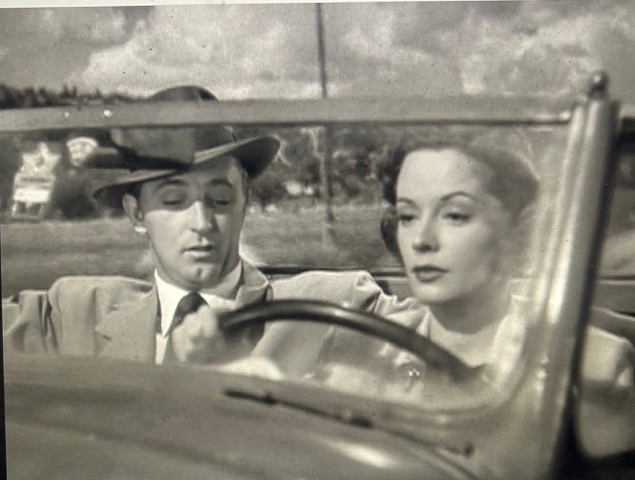
Later, Captain Blake catches up to Halliday and Graham, and the car chase ensues. Halliday and Graham escape Blake by letting loose a bunch of goats into the roadway. Once they have escaped, Graham turns to Halliday and asks:
Graham: “One thing I can’t figure out, you got a gun, why didn’t you use it?”
Halliday: “In the Army, they hang you for shooting captains.”
Graham: “I’ve got a crazy notion, maybe you’re on the level, maybe Jim did steal your money.”
Halliday: “You know I’ve got a notion too, maybe he stole your money.”
The delivery of these lines matches perfectly with the budding romantic element of the plot. There is slightly more emotion and slightly less sarcasm in each of their voices, revealing their budding romantic interest. Importantly, however, the sarcasm and suspicion haven’t totally left either’s face. Both Mitchum and Greer are experts at playing characters that reveal bits and pieces of information while hiding the full story.
Later, as they are running from Blake, Graham and Halliday must convince a construction crew foreman that they must be allowed through a closed road. Graham tells the foreman she wants to run off and marry the “big pretty man” she’s with (Halliday) instead of the one chasing her. Once Halliday and Graham are safe, she laments having to lie to the foreman. Halliday asks if everything she told the Forman was a lie, and Graham responds, “Well…not everything, you are big.” It’s classic Mitchum and Greer: sarcastic delivery of a double entendre, complete with a sidewise glance across the car from Greer as she sizes up his reaction.
After the requisite showdown over the money, the film ends as it spends most of its running time: with Graham and Halliday together, talking. There’s a little back and forth between the two about where they are headed next, dating traditions, and, of course, a kiss. As the music swells, the camera holds on the two characters as they watch people walk past them. Halliday and Graham hold on to each other, smile, and laugh. It’s a naturalistic and tender note to end on, and it’s one final confirmation of the chemistry between these two movie stars that has been the driving force for this entire film. It’s a shame that this would be the last time these two terrific actors would ever star in a film together.
Edited by Olga Tchepikova-Treon