
|Ryan Sanderson|
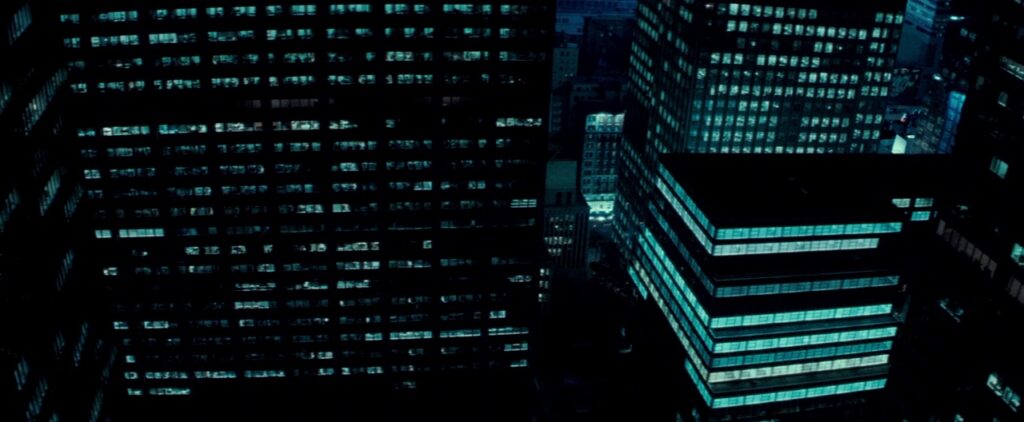
Michael Clayton plays in glorious 35mm at the Trylon Cinema from Sunday, March 1st, through Tuesday, March 3rd. For tickets, showtimes, and other series information, visit trylon.org.
“You sharpen the human appetite to the point where it can split atoms with its desire, you build egos the size of cathedrals, fiber-optically connect the world to every eager impulse, grease even the dullest dreams with these dollar-green, gold plated fantasies until every human becomes an aspiring emperor, becomes his own god, and where can you go from there? And as we’re scrambling from one deal to the next, who’s got his eye on the planet? As the air thickens, the water sours, and even the bees’ honey takes on the metallic taste of radioactivity. And it just keeps coming, faster and faster. There’s no chance to think, to prepare. It’s buy futures, sell futures, when there is no future! We got a runaway train boy, we got a billion Eddie Barzoons all jogging into the future. Every one of ’em getting ready to fist-fuck god’s ex-planet, lick their fingers clean as they reach out toward their pristine, cybernetic keyboards to total up their billable hours.” – John Milton (Al Pacino), The Devil’s Advocate
I went on a Tony Gilroy marathon the last few weeks. All the Bourne films, all the directed films (Michael Clayton, Duplicity, The Bourne Legacy), plus a few other thrillers dispersed throughout his career: The Devil’s Advocate (Taylor Hackford, 1997), Extreme Measures (Michael Apted, 2000), The American remake of State of Play (Kevin Macdonald, 2009), and political drama Beirut (Brad Anderson, 2018).
I did not need to rewatch Andor. I’ve been watching Star Wars since I was seven, and I pay probably too much attention to current events. If anything, I need help thinking about Andor less. Still, it’s part of the reason why I was so eager to rewatch and write about Michael Clayton, a film I hadn’t seen since its original theatrical run more than eighteen years ago. I knew Andor and Clayton were very similar thematically, stylistically, in all the ways that count. Expanding my search to a large chunk of Gilroy’s filmography, it became clear that he’s carried many of the same obsessions throughout his near-forty year career. More specifically, almost everything I watched examined the relationship between conscience and the ideals, institutions, and attitudes that have come to define the United States of America.
So many of the most popular genres of American storytelling reinforce this narrative that America is a place that encourages heroes, that nurtures full and determined consciences who will rise when needed to correct the bad actors who corrupt our flawed but ultimately reasonable systems of capital and governance. Whereas Tony Gilroy’s writing delivers much of the same hope and danger, the same intensity and crispness, but for different—I’d argue more interesting—reasons.
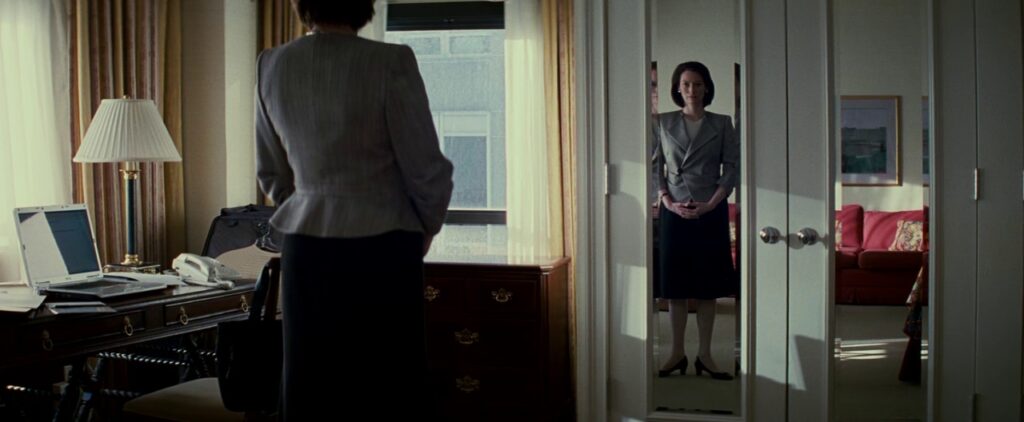
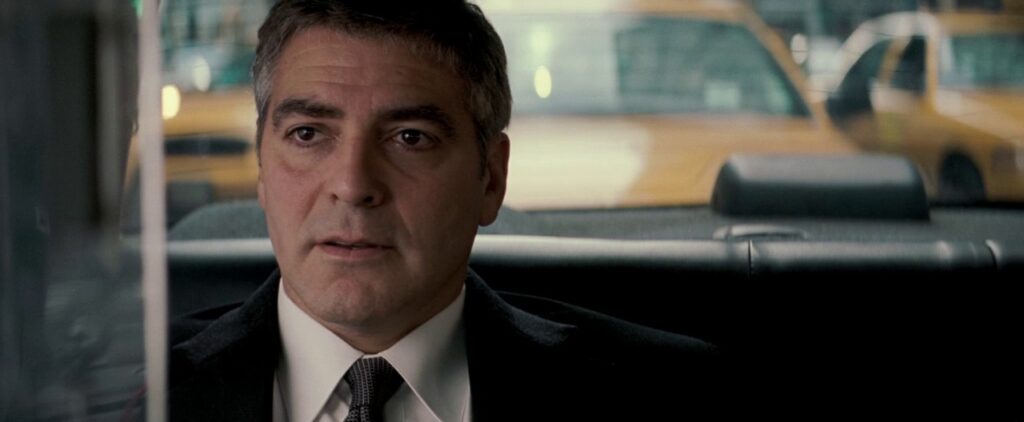
Michael Clayton (George Clooney) is a fixer for a prestigious law firm. The film begins with a sample of his clientele—a wealthy, insufferably arrogant man who just committed a hit and run. You can see how a life defending such people has worn him down. The villain, Karen Crowder (Academy Award-winner Tilda Swinton), is just a few degrees further down that path than Clayton. She sweats nervous buckets and practices conversations to herself in private, on behalf of U-North, a corporation that poisons people and has hitmen on staff. Crowder has no limit for how willing she is to sell out her soul. Does Clayton?
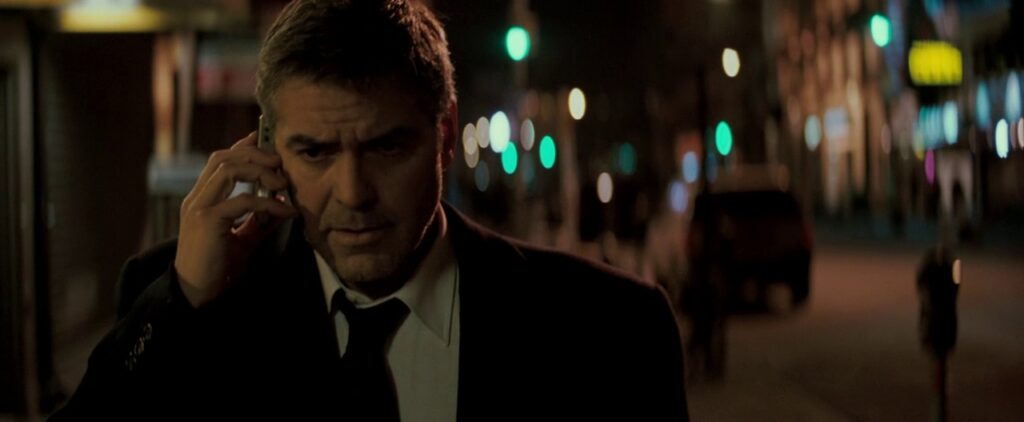
That question—not life or death stakes, not a cunning arch nemesis or a game of cat and mouse—gives Michael Clayton its power. Gilroy’s Academy Award-deserving screenplay emphasizes the point by betraying the fact that Clayton survives a car bomb in the first ten minutes. We’re never worried he’s going to die, at least not physically. The narrative fuel comes from somewhere else. I empathize with Clayton and Crowder. I’ve been in rooms where I had to choose between money, stability, and conscience—not on the same scale, but that recognition is a huge part of why I find the film so compelling.
Just like Michael Clayton, Andor fits [almost] perfectly within a well-known, popular genre. But every scene—practically every corner of every frame—also challenges that genre, asks the audience for a little more curiosity, more tolerance for ambiguity and dissonance, a willingness to sit with some heavy, honest shit.
Cassian Andor spends the whole first season wondering whether it’s worth the trouble to join the Rebellion. Again, Gilroy draws his best, most powerful scenes from moral tension, between fear and courage, between surrendering to the inevitability of corruption and fighting for the world as you want it to be. Mon Mothma, my new favorite Star Wars character ever, somehow stubbornly holds onto her conscience in the midst of the Coruscant wealthy party circuit. Every detail of her world tells her to abandon all awareness of what’s going on outside, and yet time and again, she resists the sense that she’s going crazy and finds the resources to do the next right thing. Both negotiate a Michael-Clayton-style crisis of conscience, within their own social rung of a stratified empire.
You can overstate the radical nature of genre revisions. As a teenager, I didn’t feel like I was enjoying anything transgressive watching the Gilroy-penned Bourne films. An all-American white male beating the shit out of anyone who got in his path? There were many such offerings available to me at the time. There still are. But even here, the stories challenge the traditional approach. It’s remarkable in retrospect to see a major Hollywood blockbuster, probably the most popular non-superhero action series of my adolescence (released in the immediate wake of 9/11, no less), where the villain is the American security apparatus. Not a bad actor within an otherwise good system. Not a regime overthrown, either, with order restored at the end. Whoever Bourne defeats, their boss becomes the villain in the next film. Everyone we meet in the chain of command, from leader to lackey, to some degree cosigns the killing and the chaos.
That’s not the case in Ludlum’s original, where Bourne teams up with Treadstone to take down a terrorist. In fact, producers were worried enough that they shot an alternative ending where Bourne and Abbott make up a little at the end. It was cut for not matching the film’s overall tone. Ultimately, the Bourne films are so obviously antagonistic towards American military hegemony that you cannot even try to push them in a different direction. That change occurred the moment Tony Gilroy got his hands on the property, and I think it’s safe to argue it wouldn’t have been done that way without him.
It’s interesting he’s able to get away with that over and over again. Part of it is just sheer skill and professionalism. The scripts are immaculately taut, guiding the audience’s attention, drawing us forward, delivering calculated bursts of strong feeling between setups. But then, once our attention’s been won, maybe they offer us an image we’re not so certain about, a question we might normally be spared from asking. They portray a consequence-filled world that regularly demands people choose between their ethics and stability. If you choose to ignore the problem, to just nod and let it happen, what does that do to your soul? What does it do to the lives of the people around you? If you decide to challenge it, to double down, what could that do to your safety, to the safety of your loved ones?
These questions are contextual, and their answers shift depending on the story and circumstance. I think Tony Gilroy’s gift is making us believe the characters are really asking them, with many of the same considerations we in the audience might have. He’s so good at making those ethical questions feel urgent and doubtful, not grandiose and performative.
Those questions are asked with mythical simplicity in The Devil’s Advocate, where Kevin Lomax’s (Keanu Reeves) boss is literally the devil. Jason Bourne gets hit with amnesia bullets and wakes up an enemy of the same state that trained him. He has no choice but to become a dissident. More interesting are the agents charged to take out Bourne. Pamela Landy and Nicky Parsons each discover their target, a so-called threat to national security, is more nuanced and human than they’ve been led to believe by their superiors. Suddenly they have to negotiate a moral crisis as well. Michael Clayton weighs his loyalty to his friend and his last shred of moral decency against a lifetime saving assholes from consequences for increasingly larger checks. What does he get in return for heroism and decency? I guess he takes some genuine pleasure when he takes down Crowder. He nearly grits his teeth when he says, “You’re so fucked.” Then the audience watches for almost three minutes of credits as he sits with the full weight of what he’s done.
I chose the title, “Tony Gilroy’s American Conscience,” because really it’s all about America. Kevin Lomax and Michael Clayton deal with the fallout from American capitalism. Jason Bourne runs from American agents all over the globe. Andor might be set in a galaxy far far away, but production designer Luke Hull’s props and set pieces call attention to their familiarity far more than their alienness. A paper takeout container with weird-shaped flaps and blue noodles, for instance.

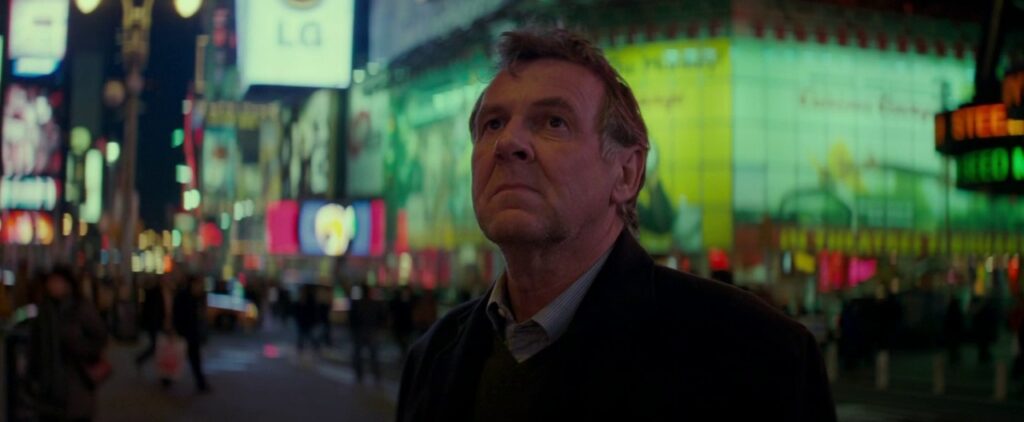
The opening shots of Michael Clayton juxtapose a quiet New York office building with a manic rant from Clayton’s friend and fellow lawyer, Arthur (Tom Wilkinson). How could the mythological evil he describes, the “poison, the ammo, the defoliant necessary for other, larger, more powerful organisms to destroy the miracle of humanity,” emerge from such a sterile, well-ordered environment? You begin to see how that argument is part of the building’s purpose. It exists to argue for its own reasonableness, whatever is happening on the inside.
Ultimately that’s part of Gilroy’s point. The normalcy protects and launders the monstrousness. It smothers people’s consciences with polite tension and aesthetic order. It keeps many of its most heinous actors separated from the consequences, at least enough to ensure their continued cooperation, by speaking in codes and innuendos, by incentivizing them to keep their head down and stay quiet. Note how many of the most devastating scenes in Tony Gilroy films take place in similar sterile, well-ordered environments. Notice how often the greatest violence and cruelty is buried in some kind of disinterested routine. For these and many other reasons, Tony Gilroy’s America is not a place that encourages heroism and conscience. Instead, it’s a place where devil’s bargains are everywhere, where each compromise makes the next one a little easier. But sometimes, it’s also a place where the stakes are so high, the consequences so intolerable, that ordinary and even morally compromised people have to respond anyway.
Edited by Finn Odum