
|Harry Mackin|
Blade Runner: The Final Cut plays Saturday, March 7th at Emagine Willow Creek. For tickets, showtimes, and other series information, visit emagine-entertainment.com.
“Did you ever take that test yourself?”
Whenever an institution of power has wanted to exploit, enslave, or just murder another group of people, they’ve gotten away with it by convincing everyone else that that group isn’t really human.
There have been thousands of justifications for this dehumanization, but the strategy always remains the same: the cops (in whatever form they take) make the case that their enemies are somehow fundamentally different from the rest of humanity. These differences make the enemy fundamentally unknowable and separate from everyone else. Being unknowable, these enemies are therefore a threat, because they don’t possess the same values and judgments we do. Even if it seems like there are easy explanations for what they’re doing, they’re actually motivated by something we can’t understand.
Depending on how egregious the action taken against this enemy is, the cops will go so far as to say these strange values the enemy lives by make all of their actions sinister. Even if it looks a lot like they’re just trying to stay alive or protect their loved ones, what they’re actually doing is subverting the natural order of things in a manner that is existential in the scope of its threat to everyone who isn’t on “their side.”
Every step of this process is meant to get the majority of people living under the oppressive regime to a place of total denial. Deny what is obviously true to any person with a modicum of empathy or basic decency. Instead of the obvious truth that cops are murdering our neighbors in our streets, the proposition is that the people they’re killing aren’t people. And so, what these cops are doing to them is not murder.
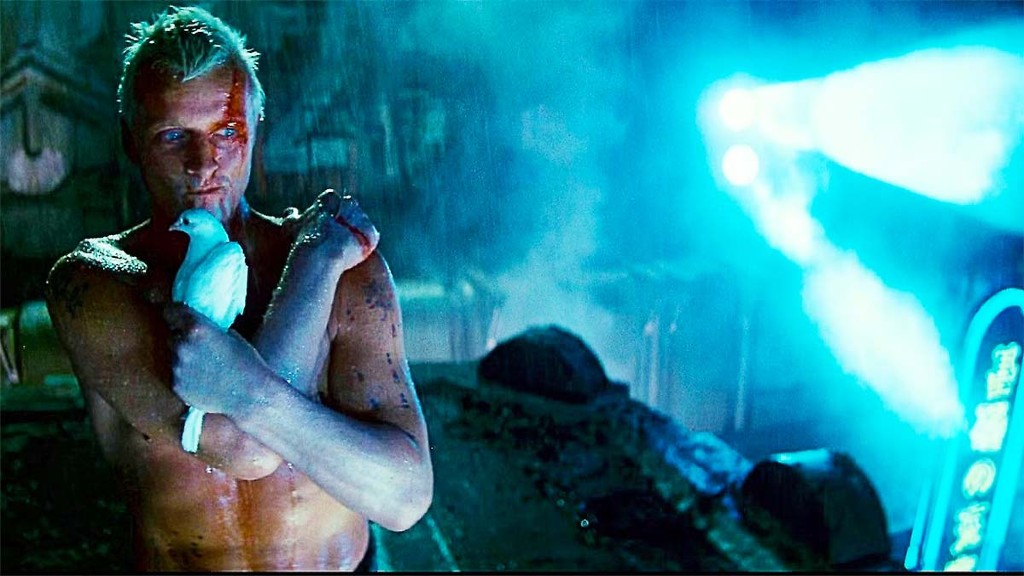
It’s a brazen, insultingly simplistic go-to for papering over atrocities, and yet it works again and again. Blade Runner is about why it works, and what we give up when we allow it to. The fact that the film has remained as beloved as it is for almost entirely the wrong reasons is all the more evidence of how essential its message remains.
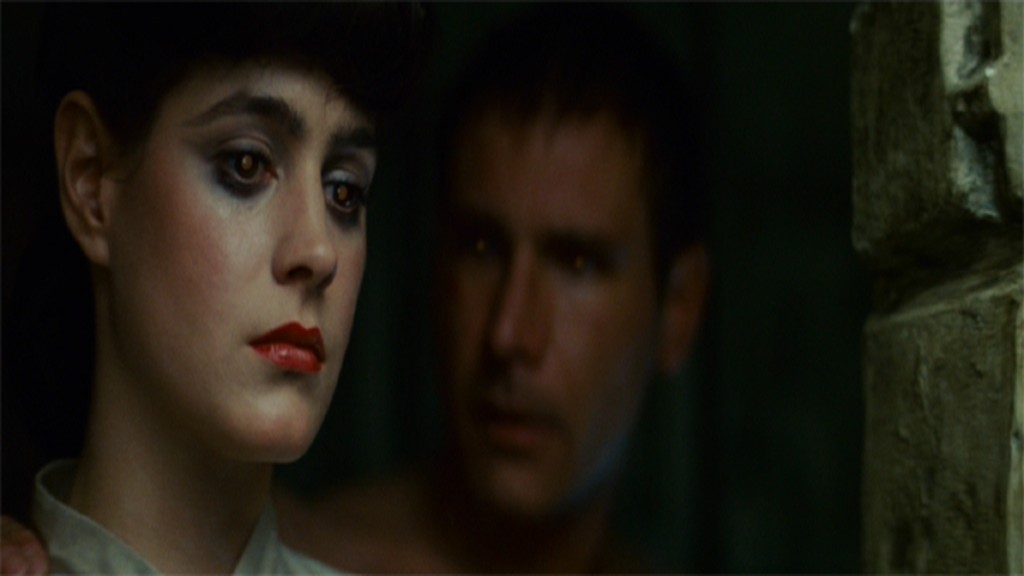
So much of Blade Runner‘s legacy is wrapped up in the endless debate over whether its protagonist Rick Deckard is a replicant or not. Fans have spent the last 40-plus years poring over virtually every frame of each cut of the movie to forward their own theories about whether or not Deckard is one of the things he hunts. What’s always been less clear to me is why the answer matters. No matter what the answer is, it seems to me that the obsession over the hunt is more revealing: it demonstrates why cops, in every form, continue to get away with abusing the same playbook, over and over again.
For all its supposed ambiguity, I think Blade Runner is remarkably clear about the subject matter it cares about. The opening scroll minces no words about what life is like for replicants: “Replicants were used off-world as slave labor, in the hazardous exploration and colonization of other planets.” The specific usage of the term “slave” is no accident, and the replicant’s status as slaves weighs heavily on their lives even after their escape, with Roy telling Deckard, “Quite an experience to live in fear, isn’t it? That’s what it is to be a slave” during their climactic confrontation.
Despite replicants’ status as both slaves and beings that are “at least equal in intelligence to the genetic engineers who created them,” the opening makes it clear that replicants aren’t treated as human beings. Instead, any escaped replicants are ruthlessly hunted by blade runners who have permission to kill them with impunity. The opening ends by making it clear that “this was not called execution. It was called retirement.”
The justification for blade runners having total authority to kill replicants is summed up by Deckard’s police captain: “They were designed to copy human beings in every way except their emotions.” The idea is that, despite overwhelming evidence to the contrary, replicants don’t really have feelings and therefore they don’t warrant human rights. Even though they look, act, and feel just like us, they’re different in a way we’ll never understand, and so they’re dangerous and must be destroyed. To find replicants, blade runners use the “Voight-Kampff” test, a ludicrously over-complicated machine-assisted interrogation where the blade runner asks the subject leading questions while closely studying their microexpressions for “the so-called blush response,” and other vanishingly tiny indications that the human in front of them is, in fact, not.
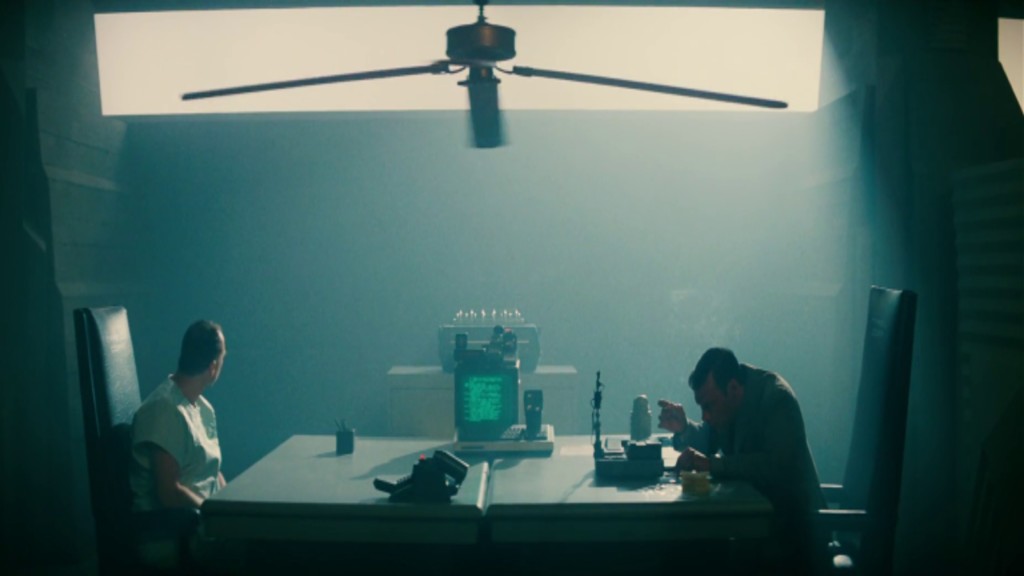
Blade Runner is equally clear-eyed about what a load of bullshit this is. We never learn how the Voight-Kampff test really works, much less see it successfully identify a replicant or a human. Deckard never answers whether he’s ever “retired a human by mistake.” Meanwhile, the movie makes it explicitly evident that the replicants Deckard hunts do in fact experience “real” emotions. They argue, they express rage and hatred and regret and grief, fall in love, and even learn to fear death by learning to love being alive. Roy’s famous “tears in rain” monologue is the most-cited evidence as to the essential personhood of the replicants, but there’s another I find almost more important.
Roy soliloquizes about his own experiences and what he felt from them to prove his humanity, but Rachael does the same thing when she plays piano at Deckard’s apartment. Despite the fact that her memories of learning to play piano are not hers, she “plays beautifully,” as Deckard tells her, with all the pathos and understanding of someone practicing an art they are passionate about. Rachael’s memories may be implanted from someone else, but what she’s learned from—and what they’ve made her—are just as real as if they were hers to begin with. Even if the circumstances of her life are different from ours, Rachael is as much a human as Deckard, or anyone else.
If this is true, as Deckard comes to believe, then we have to accept that replicants are thinking, feeling people in every sense, and when Deckard kills them he is murdering escaped slaves who are only trying to reclaim their lives. Blade Runner is a movie about the ways in which we narrativize state violence in order to sanitize it and make something other than the murder it is. Deckard’s murder of the exotic dancer Zhora Salome might be the movie’s most powerful example: he shoots her twice in the back as she flees, and she falls through a storefront display window, shattering glass and knocking over the mannequins inside, as Vangelis plays a heartbeat as the soundtrack over the whole sad scene. When Deckard turns the body over, a single tear falls from her cheek.
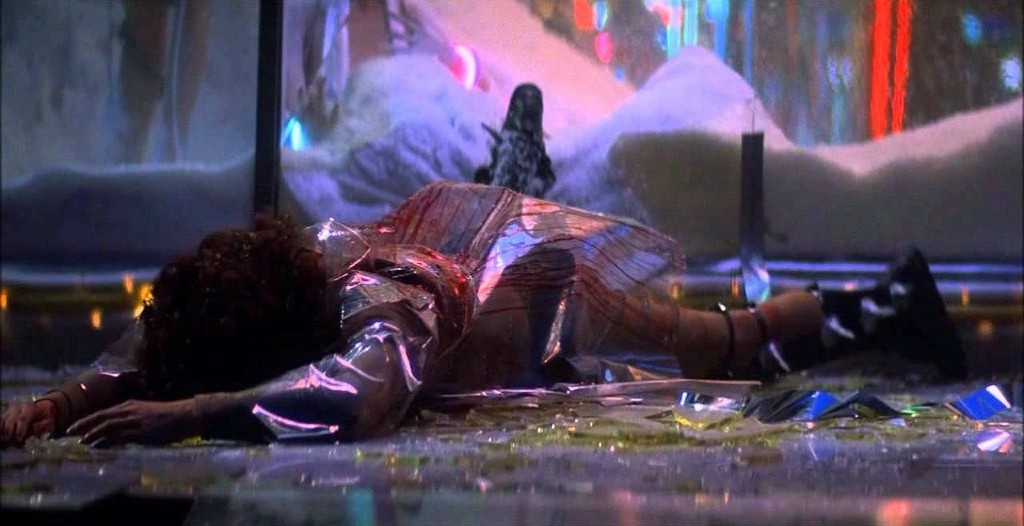
But no one talks about Zhora Salome’s murder. Instead, we fixate on whether or not Deckard is a real boy.
What does it matter if Deckard’s memories are real or not? If he’s a human being born or created in a lab? Either way, he has deadened his empathy and made himself a living weapon of state violence. Either way, he dominates Rachael and forces her to participate in the narrative that suits him (notice how, during and after their infamous “love” scene, she never says anything he doesn’t tell her to say for the rest of the movie). Either way, the point isn’t whether Deckard was always a replicant or not, the point is that he has made himself less than human in order to do the state’s bidding; in order to remain a part of the majority, the “rest of us.”
The strategy that those in power have used to softpedal their murder of minority groups throughout history works because we let it. Instead of seeing things for what they are—one group of human beings murdering another—we equivocate and invent reasons why the murdered group aren’t really human. We decide they’re “domestic terrorists” or “superpredators” or “psychopaths” or “replicants.” And instead of seeing what Deckard does for what it is, we endlessly argue about whether or not he’s a replicant himself, as if that changes anything about who he is, what he did, or what it means for all of us.
The powerful are always going to come up with a new Voight-Kampff test. They’re always going to invent a reason why the person who needs killing isn’t actually as human as you or I. And we’re always going to want to believe them, because the alternative means upending everything that allows us to live as we are. But every time we choose to draw a new boundary to delineate who is and is not a human being we will lose something essential about our own humanity in the process. How many more “so-called empathy tests” can we design before we fail them, too? How human is human enough?
“It’s a shame she won’t live, but then again, who does?”
Edited by Finn Odum