
|Brogan Earney|
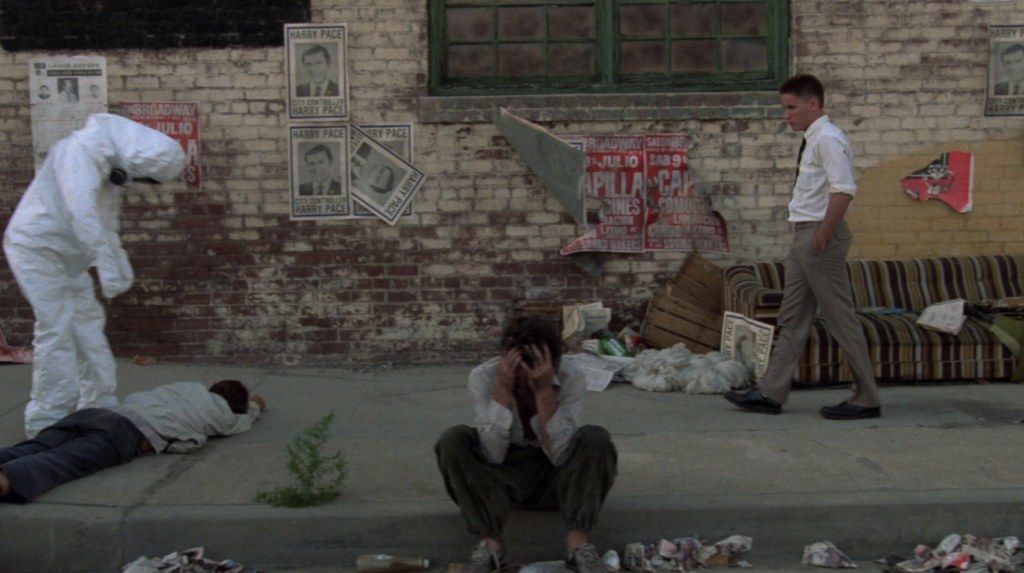
Repo Man plays Saturday, March 26th at Emagine Willow Creek. For tickets, showtimes, and other series information, visit emagine-entertainment.com.
If you’re like me and you grew up in Minnesota in the 90s or early 2000s, then we can all agree that Gordon Bombay was the shit. I first saw the Mighty Ducks films when I was 6 years old, and I quickly latched onto the character and looked up to his methodology, and I wasn’t even a hockey player. Over time, I realized that it wasn’t the character that I was transfixed by, it was the performer, Emilio Estevez. Of course I raced to consume whatever else he was in; Breakfast Club, St Elmo’s Fire, Young Guns are some of the most notable. But it took about 20 years of my life to come across my favorite performance of his, in Repo Man. The charisma, the smolder, the line delivery, it’s truly a young actor finding his spark. Why doesn’t Estevez have 10 more of these types of movies on his resume? I’m assuming it’s because he got sucked into the “Brat Pack” and then the Disney machine. Overall, I’d say it worked out for him. I still question, why did he do a movie like this in the first place? My conclusion is Estevez started his career trying to imitate the career of his father, Martin Sheen. I could do a full breakdown of each career and compare and contrast, but instead, let’s talk about the relationship between Badlands and Repo Man.
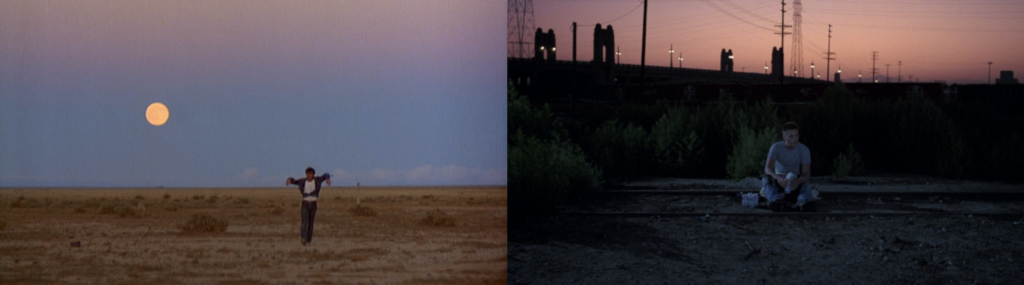
Badlands is a 1973 film directed by Terrence Malick, starring Martin Sheen and Sissy Spacek. It’s one of the greatest American films ever made and launched the career of one of the great American filmmakers. Based on the Starkweather killings in the 1950s, Martin plays Kit, a young man with a reckless attitude who commits a series of heinous crimes and blames society in the process. Martin Sheen has said that Badlands was a big turning point in his career at a time when he was known as a T.V. actor who couldn’t make the jump to features. Similarly, Repo Man was a transition to leading roles for Estevez, who previously played supporting characters in Tex and The Outsiders. What brought both actors to the movies was their love of the scripts, with Martin Sheen saying Badlands was “the best script I’ve ever read,” and Estevez telling American Films in 1985, “I was falling on my ass laughing, the script was just hysterical! I said I had to do this picture.”
While both actors loved the scripts, they both unfortunately entered troubled productions. For Badlands, there was trouble with finding the financing, the crew gradually rebelling against the director, and an on-set explosion that injured a few members of the crew. Repo Man had similar issues with financing and had to rely on a negative pickup deal with Universal; the initial 1964 Malibu was stolen early into filming and later recovered after spending time and money finding a replacement. Plus, actor Fox Harris accidentally crashed the vehicle, causing damage that can be visible in the actual film. Another hiccup in the production was the difficulty in attaining brand partnerships; luckily, the company Ralphs pulled through and provided some out-of-date products with simplified labels like “food” and “beer.” This detail became a notable part of the film’s views on consumerism.
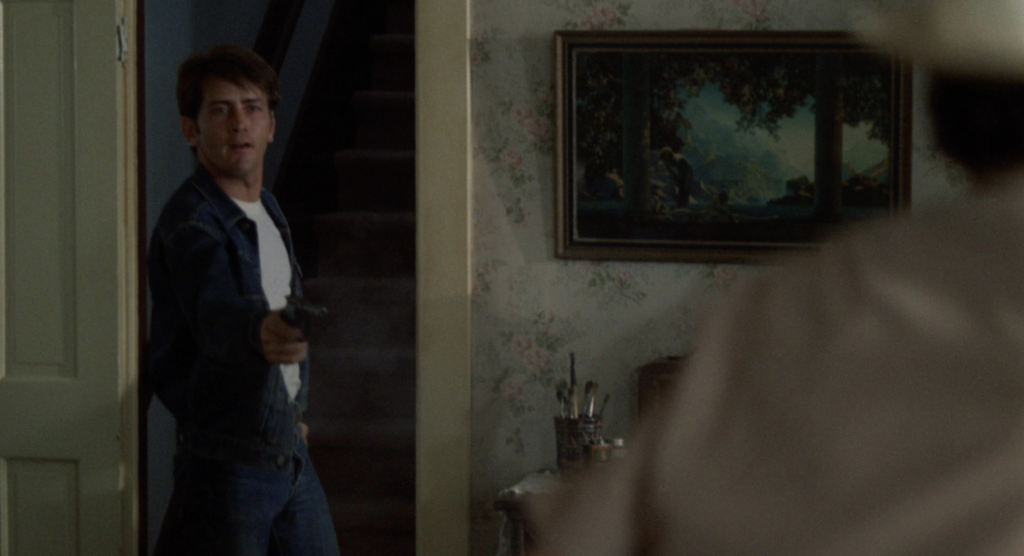
On paper these are some basic similarities, but where the films really speak to each other is in their themes. Both of the films reflect the wandering youth at different times in America. While in the 1950s, everything was idyllic and safe for the average small-town American, what happens when a rebellious youth is inspired by popular culture and goes AWOL? In the more chaotic world of the 1980s, the only way to find safety is through structure. What happens to the youth when that structure isn’t available? Both films represent conformity in their different eras. In the 1950s, everyone conformed to societal norms, and it was unheard of for someone not to, until Kit came along. In the 1980s conformity was a way to safety, rebelling and being a punk would only get you so far.
Kit in Badlands represents a kid who was raised by what he saw in popular culture. He models himself after James Dean, specifically his character in Rebel Without A Cause, a member of the misunderstood youth. Like Starkweather, he views his killings as “movie murders,” they aren’t real, they just add to the legend of Kit. In 1950s America, this lack of structure led Kit to believe that he was like one of the figures in a magazine story, or a romanticized movie, detaching himself from reality. In the 1980s, Otto doesn’t believe he’s meant to do anything. The world around him doesn’t allow him to think that way. Besides the friends he associates himself with, everyone else around him has a form of structure or a code. The store clerk manager believes in punctuality, and doing tedious tasks with care. The security guard believes in the power of the badge and the gun. Otto’s parents believe in religion, or whatever the television tells them to believe in. And most importantly, “Bud” and the rest of the men named after beers, believe in the Repo code. Through the Repo code, Otto is able to find both things that he is chasing. The chaos and riskiness that he craves from his punk lifestyle and the structure and order that he knows he needs to survive it. Like Kit, when he fires a gun at a person for the first time, when Otto steals his first vehicle, you can see the joy on their faces, and the understanding that they have found their calling. But of course these callings will only take them so far.
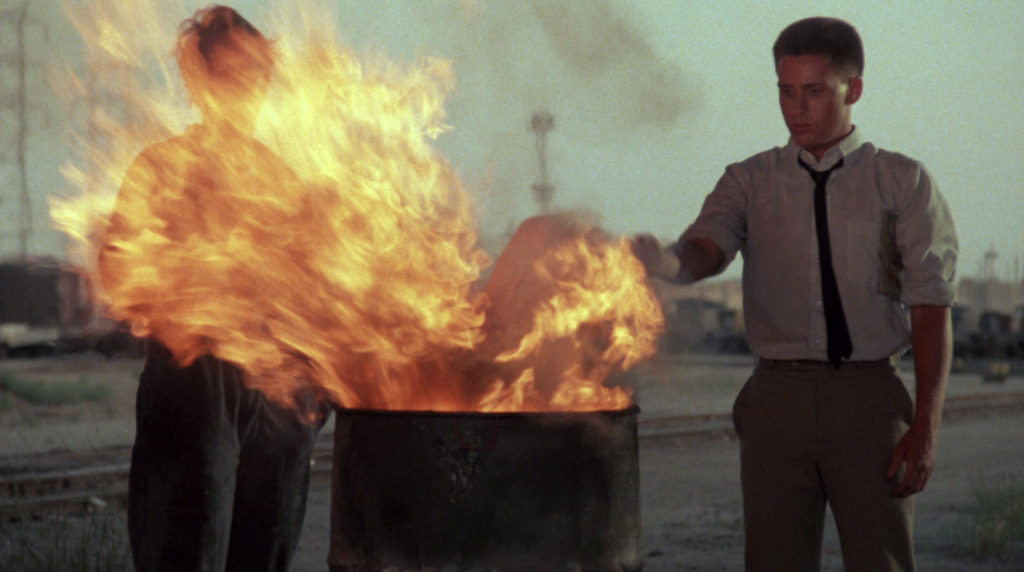
Another thing the films have in common is the expectations that Kit and Otto both develop after they have found their callings. Kit expects everyone he comes across to be mystified by him; when he points the gun he doesn’t expect fear, he expects wonder. He can’t really fathom Holly leaving him, because he assumes she thinks she ended up with the coolest guy in the world. Otto has similar expectations. His entire relationship with Leila is built on the fact that she should want him because he has a job and a rotating collection of cars. He thinks it’s what he has been missing the whole time and that’s the basis of a relationship. He also thinks he is above his previous punk friends because of his newfound job, but really he just brought himself even closer to the violence and intensity of life in L.A. Eventually, both Otto and Kit realize that they maybe aren’t meant for the worlds that they entered. Kit finds solace in his stolen white Cadillac and the freedom of the desert, but gradually he starts to lose faith in his plan. The only thing that keeps him contained in his newfound world is Holly, and once she decides to leave, he decides that his world isn’t as fun alone. So he decides to get caught and finally conform to the world around him. Otto on the other end gets the chance to leave his world for good. Even with the pressures of his career, new friends and his relationship. He simply decides to say “fuck that” and enter his ticket to the unknown.
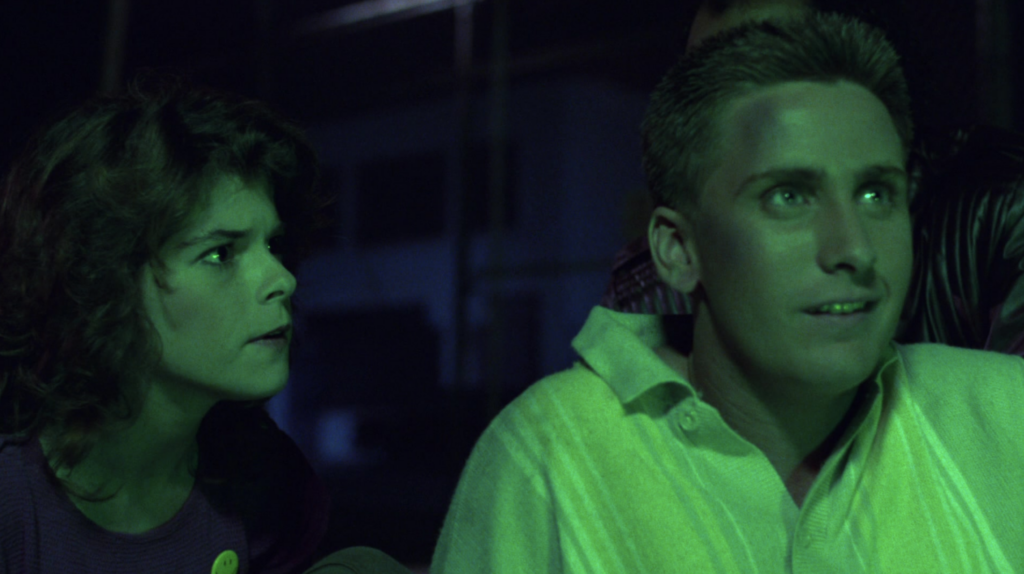
Both films affected the actors’ careers in different ways. Badlands gave Martin Sheen the push he needed into features and opened up a whole new world of roles that eventually gave him one of the most prestigious careers in Hollywood. While Repo Man didn’t initially have the same impact in the industry, its soundtrack gathered a cult following, which played a big part in the movie’s success. Luckily, for Estevez, he got cast in The Breakfast Club around the same time, which sparked the career that we know and love today. It would be great to have another Repo Man in Estevez’s career, but the truth is, we’ll never have another Repo Man at all. The film stands as a singular piece of art that represents a very specific time in America and especially Los Angeles. Like the idea the movie represents, we may always want more, but let’s be happy we have anything at all.
Sources
Scott Feinberg, “Martin Sheen on Emilio and Charlie, ‘Badlands’ and ‘Apocalypse Now,’ and Finding ‘The Way,’” Hollywood Reporter.
Dante A Ciampaglia, “15 Atomic Truths About Repo Man,” Mental Floss.
Edited by Finn Odum