| Dan McCabe |
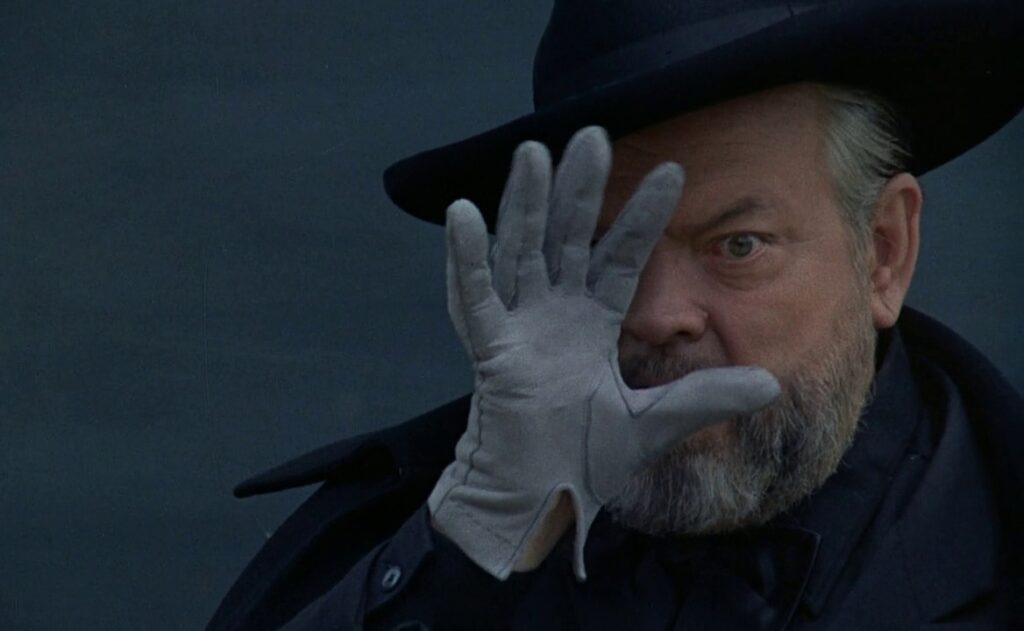
Orson Wells directed and narrated the documentary F for Fake, playing at the Trylon July 24th through July 26th.
F for Fake plays in glorious 35mm at the Trylon Cinema from Friday, July 24th, through Sunday, July 26th. For tickets, showtimes, and other information, visit trylon.org.
“Maybe a man’s name doesn’t matter all that much,” Orson Welles says towards the end of F for Fake (1973) as he gazes upon Chartres Cathedral, which he describes as a great, unsigned masterpiece. F for Fake asks questions about the importance (or lack thereof) of an artist’s identity and the perverse incentives of commercial art. If Picasso could get rich painting, someone else could get rich forging Picasso’s style. Elmyr de Hory, the main subject of Welles’ documentary/film essay, did just that.
To the extent the concept of spoilers are applicable to a film essay/documentary, here’s your warning.
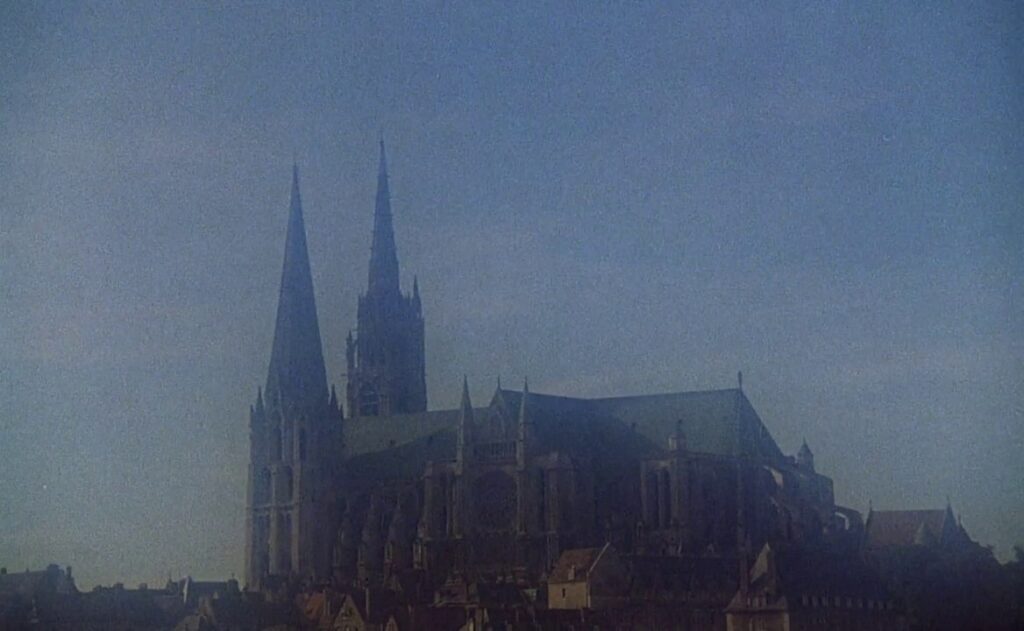
Chartres Cathedral in France provides Welles the opportunity to make one of the main arguments of his film, that enduring art means more than the name of the artist who created it.
Elmyr, whom Welles calls by his first name throughout F for Fake, allegedly forged thousands of paintings and drawings that he sold to art collectors and museum curators around the world. For years, he convinced these gatekeepers that he had newly discovered paintings of Picasso, Matisse, and others, until his scheme unraveled in the 1960s. The other subject of Welles’s film, Clifford Irving, chronicled Elmyr’s rise and fall, shortly before Irving served time in prison for writing a fraudulent “autobiography” of Howard Hughes.
Elmyr made a fortune trading off the names of others. Was he a charlatan? Certainly. Welles, however, believed that the art world’s gatekeepers were to blame for allowing Elmyr to fool them, and had sympathy for the great forger himself. The gatekeepers, the curators and collectors, are the ones who paid Elmyr for his phony masterpieces to satisfy their endless hunger for new “masterpieces” to increase the value of their gate receipts, collections, or sales. Elmyr, distasteful as he was, just used his talent to survive.
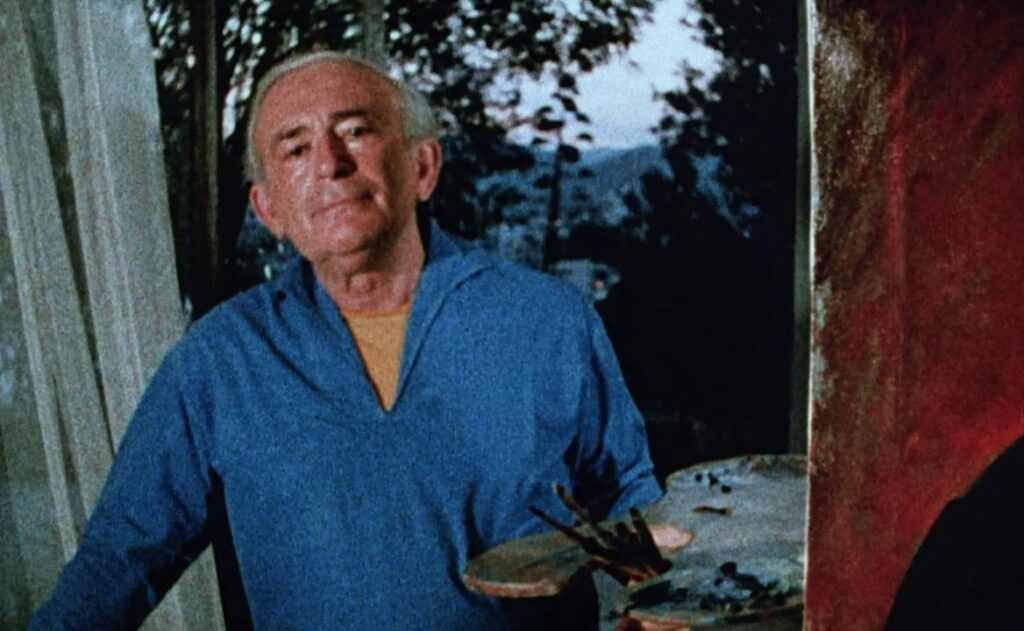
Elmyr de Hory, shown here with a palette that helped him create many forgeries.
Orson Welles left this mortal coil in 1985, but I wonder what he would think today when anyone with access to the internet can become Elmyr, Irving, or Welles himself for that matter. After all, Welles’s 1938 radio broadcast of War of the Worlds, fake news broadcasts and all, made Welles a star. With a click of a button, I can forge a Picasso, generate a false interview of a reclusive celebrity, or string together a misleading radio broadcast. As such, the questions Welles asks in F for Fake about art, commerce, and means of human expression are as urgent today as they were 53 years ago.
If the art dealer wants to sell Picasso-like paintings and can create them en masse, we have the technology to allow that. The dealer can avoid working with those pesky artists who have to eat, sleep, and might not feel like painting. The only barrier would be demand. Do we want “art” generated by a computer? Did anyone ask for it? People wanted more Matisse and Picasso paintings. People wanted salacious details about Howard Hughes. Just because you can create your own little forgery on your computer doesn’t mean anyone cares. The problem is that there are billions upon billions of dollars being invested in this technology to make you care, and it’s not without reason.
You see, art dealers couldn’t make more Picassos. The real Picasso may have been the most prolific artist of the twentieth century, but he was human. But if they had a machine that could make Picassos and pass them off as the real thing, you can easily imagine that they would have done so. They didn’t have generative AI; they had Elmyr. The same principle applies. When art is tied to commerce, and commerce demands more art, someone will fill that demand.
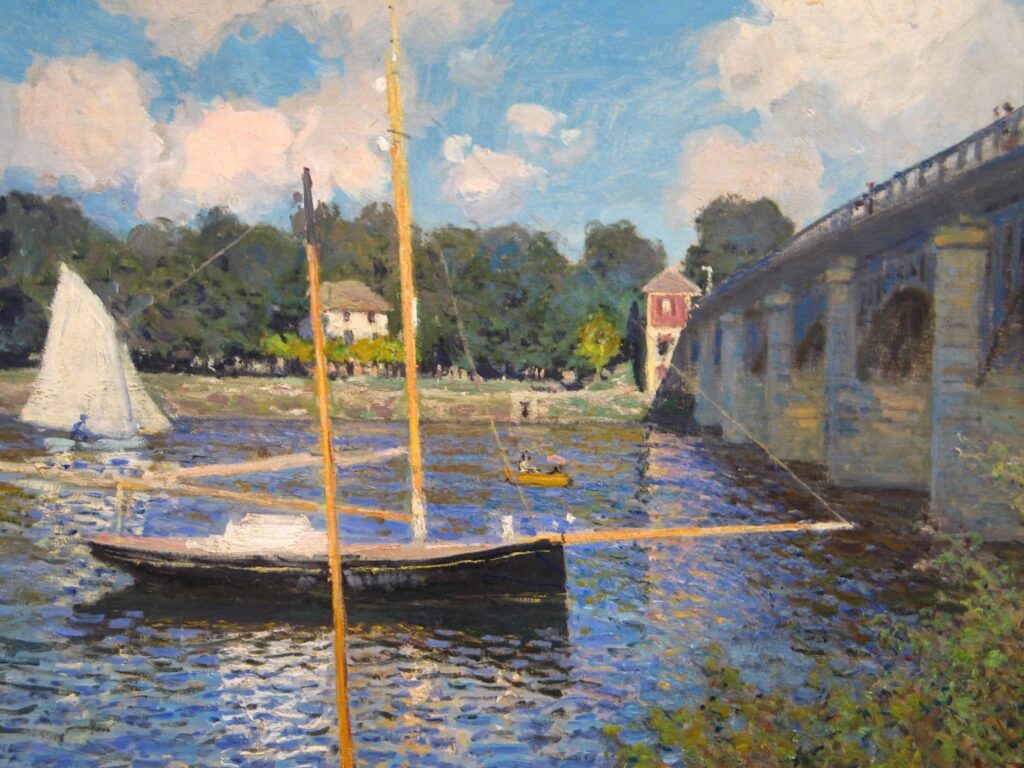
Claude Monet’s famous Bridge at Argenteuil. A full size, digital reproduction of this painting hangs in my house.
Before generative AI, the capacity to separate the art from the artist had its limits. Mass-produced copies of famous art has little value. I have a reproduction of Claude Monet’s Bridge at Argenteuil in my house; the real one hangs in the National Gallery of Art in Washington, DC. It’s fake, I know it’s fake, and any art expert in the world knows what gallery showcases the original. The real one is priceless. The one in my house is not.
You can’t mass produce fake “new” Monets. Monet died a hundred years ago and he was one of the most famous and catalogued artists who ever lived. You might, like Elmyr did, get away with forging one or two, but if you started pumping them out using Generative AI, people would get wise. No one is going to believe that a forger is out there miraculously finding lost masterpieces when the technology exists to manufacture forged artworks by the thousands.
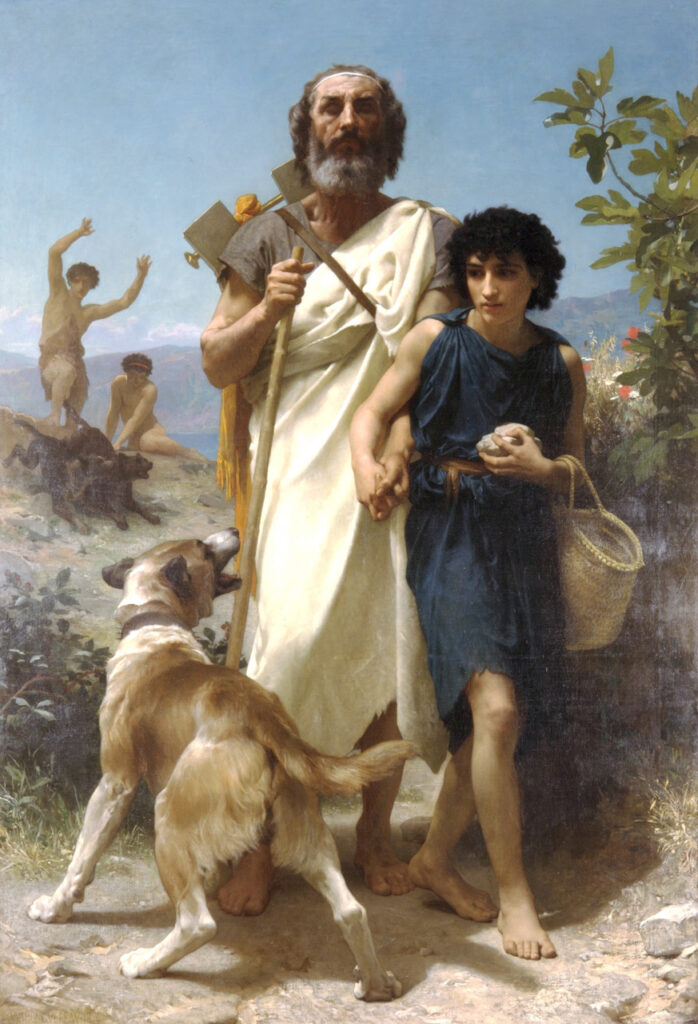
William-Adolphe Bouguereau’s Homer and his Guide. Literary scholars have debated for centuries whether Homer, the legendary author of The Iliad and The Odyssey, existed.
The hand of Monet, Piscasso, Matisse, and Orson Welles matters. Even if, like the stonemasons of Chartres, we lose track of their identity, our descendants would know a human created those things. We don’t know the names of the Beowulf Poet, or the Pearl Poet. Homer have been several different writers working over centuries. Through their work, we can make an emotional connection with these artists because we know that they existed, even if time has made them anonymous.
But wait, you might think, I’m human, and if I want to generate a painting of my cat as Abraham Lincoln, so what? It’s just a little fun, and I can’t draw. Sure, that might seem innocuous, but what if Disney wants to populate their next Captain America movie with AI-generated actors to avoid those inconvenient Screen Actors Guild rules? This is not entirely speculative, an AI-project called “Tilly Norwood” created by Eline van den Velden has been making headlines in the entertainment trades promising a series of films centered around an AI-generated actor.
Would anyone pay for a film starring an AI-generated actor in the same way they would pay for an Elmyr-generated Picasso? Maybe. An artist could spend many hours manipulating generative AI software to create an effective work of art. The method of creation matters less than the output, and comparing your “cat as Lincoln” picture to something created by a future, skilled generative AI artist might end up like comparing a child noodling on a keyboard to Daft Punk.
The problem, of course, is that Daft Punk didn’t displace hundreds of musicians and workers to create their masterpieces of electronic dance music. It’s not the technology of generative AI that’s problematic: it’s what the commercial entities that profit from art can do with the technology that could destroy the livelihoods of real artists. If movie studios could create AI-generated movies filled with fake actors, that would displace real actors. The film industry’s gatekeepers could threaten to cut the artists out of art altogether. We still connect to the Odyssey even though Homer is largely a legendary figure, but art mass-produced by computers could make even legendary authorship impossible. Even giving Eline van den Velden and her “Tilly Norwood” the benefit of the doubt,1 the primary problem lies not with her, but the capacity of vast media empires to take away funding from van den Velden and every other artist working in film and television.
The problems of generative-AI, therefore, are not fully analogous to Welles’s discussion of Elmyr in F for Fake. Elmyr needed famous artists to exist for his scam to work. Picasso still got rich, Elmyr just vacuumed up some scraps. If a movie studio can use thousands of archived shots of real actors to create a movie with no artists, it takes away the capacity for real artists to become the next Picasso in the first place.
Welles, I think, would warn against industry gatekeepers in the same way that he does in F for Fake. He fought big media empires his entire career. William Randolph Hearst tried to censor Citizen Kane (1940), and RKO chopped up Welles’ The Magnificent Ambersons (1942) without his consent. I’m confident that he would aim any criticism of generative AI on the massive media corporations that could use it to shove artists aside, not the artist experimenting with cat pictures at home, a writer using a speech-to-text program, or Eline van den Velden. He made a point in F for Fake of criticizing the curators and collectors whose insatiable desire for more paintings by famous artists enabled Elmyr’s criminal enterprise.

Orson Welles in his element: the editing room, surrounded by film reels.
An artist’s name might not ultimately matter to someone admiring a medieval cathedral or an epic poem. I think, and Orson Welles probably would agree, that the fact that artists created Chartres Cathedral and Beowulf matters. But the same profit motivations that caused the art world to look the other way when Elmyr miraculously “found” another Matisse now motivate gatekeepers to try to cut out the artist entirely from their livelihood so that big media’s stock value will go up. As long as this motivation exists, F for Fake will remain a crucial film.
Edited by Olga Tchepikova-Treon