
| Riccardo Williams |
Paprika plays in glorious 35mm at the Trylon Cinema on Friday, November 20th and Saturday, November 21st. For tickets, showtimes, and other series information, visit trylon.org.
From the moment we’re brought into this world, we’re molded by other’s expectations of what we should be. For many, the bygone hopes of our parents are pinned to us before we have a chance to breathe air from outside of our mother’s womb. Others are discarded, abused, pre-selected to amount to nothing. We’re given labels, race, class, gender—even our area code determine where we get our education and who we may or may not meet. It’s hard to understand where we end and others begin. Satoshi Kon’s Paprika tackles this conundrum from an interesting angle.
Satoshi Kon is a man after my own heart. He makes stunning, truly mind bending movies about who we are inside. He isn’t afraid to get messy and leave the viewer with more questions than answers. This is in full force in Paprika, which turns to the realm of dreams to make us look inward. There is a lot happening in this movie such that I do not feel I have the time nor expertise necessary to fully unpack what is going on. Despite not being the most confusing of Kon’s work (see: Perfect Blue) Paprika is still a dense filmic text. The psychological and philosophical subtext here could be dissected by the best of them.
The narrative of Paprika is laden with Jungian psychology’s archetypes on the persona, the mask we wear in public, and how we present ourselves. There are also musings on what it means to be truly awake, and subjective truth. What I want to specifically talk about is how the movie handles character growth. Paprika uses the confusing nature of dreams and self imaging to relate a story of self actualization in a way we don’t often see. I believe the symbolism of the butterfly invokes first the separation of self that the main characters experience, in tandem with the idea of the persona that we embody. Next, the crucible of the plot serves as a catalyst for change. Finally, a rebirth illustrates as a new and beautiful new being that has not forgotten its past.
In many cultures, butterflies are symbols of rebirth and growth. Metamorphosis as a concept is relatively easy to understand. We all were taught the basic concepts early on: the humble larval caterpillar cocoons and emerges a beautifully winged thing. This imagery is all over our media landscape and Paprika is no exception. Admittedly, it takes some time to sit with understand the movie beyond what you’re presented. Once you do, you get a better understanding of why this symbol was chosen to represent our main characters.
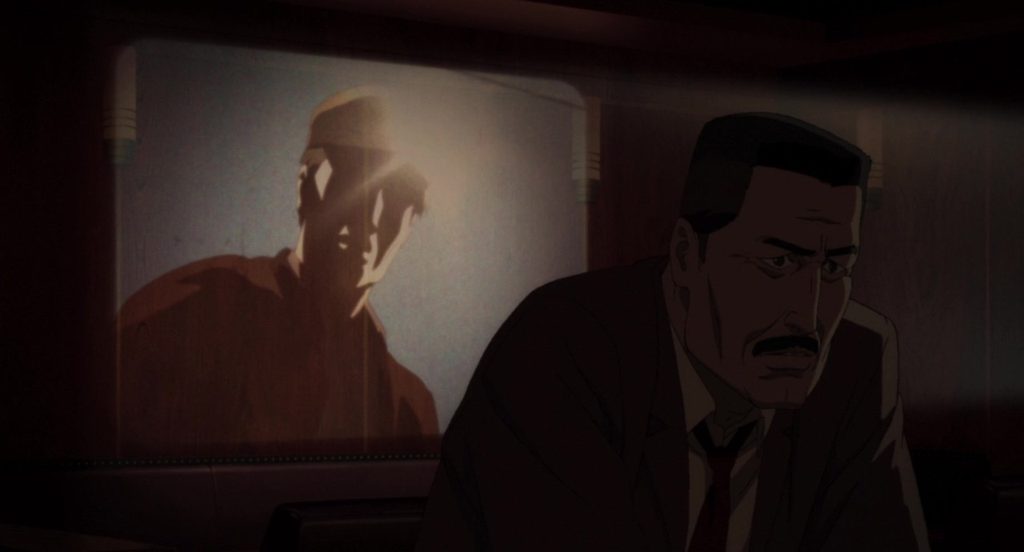
Paprika follows its namesake character (and her mild mannered alter ego Chiba Atsuko) and Detective Kogawa Toshimi as they work together to uncover a grand conspiracy in the annals of the human subconsciousness. It wastes no time getting right into our main event: dream logic. In the introduction of the Detective and Paprika characters you see the detective’s wild subconscious imagination, influenced by his suppressed love of film. You also see Paprika’s upbeat and energetic nature. We flow from genre to genre, confronted by a barrage of narrative tropes. We go from romantic comedy to spy thriller and everything in between in just these starting minutes. Upon exiting his dreamscape, we see Toshimi to be not so much the wild man of action from his dreams, but a pretty down-to-earth law enforcement member.
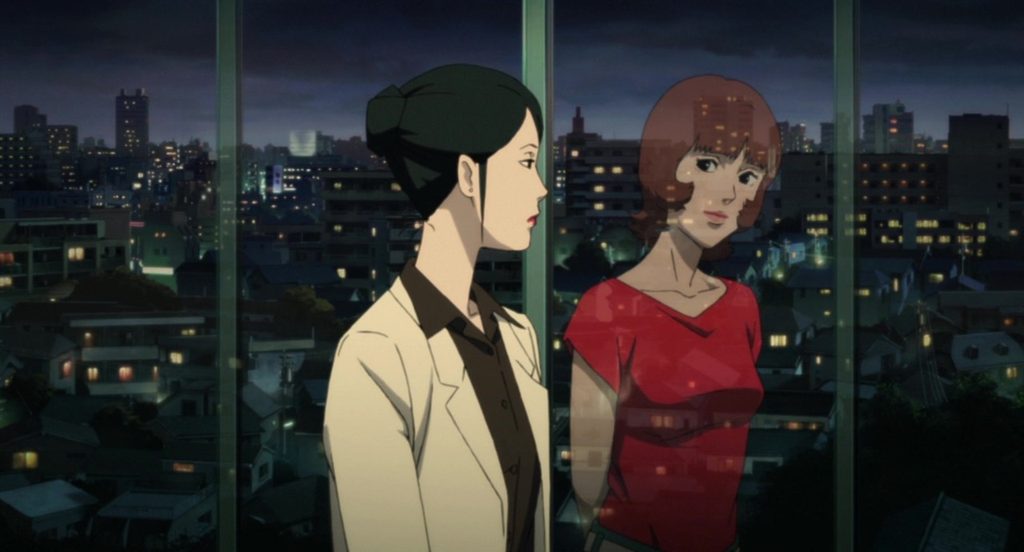
Then, as we go from the opening sequence to the opening credits, we see Paprika in reflections that contrast with her “true” self in the world of the awake. Chiba Atusko is a no-nonsense business lady. Throughout the film we see how both Chiba’s and the Detective’s “dream selves” represent something about their inner lives that they’re suppressing, even from themselves. For Chiba this is her spontaneity, her love for her goofy but well intentioned colleague, her outward charm. For Detective Toshimi it’s his connection to his love of movies and his late best friend, whom he feels he let down by leaving their work together unfinished.
This is what I find most interesting about Paprika. Unlike Wes Craven’s A Nightmare on Elm Street or Christopher Nolan’s Inception these dreams are not just sources of horror, delusion, or espionage. Though you have to admit the similarities between this hallway scene and Nolan’s later sequence in Inception are suspicious. But Kon’s is a film about your subconscious mind hiding your true aspirations—“dreams” in a quite literal sense. We all, at times, feel shackled by what people expect us to be. And by what we used to be.
Sometimes I think about what I wanted when I was a child and what my parents wanted for me. The connections that I’ve made and that I’ve yet to make, and the tremendous lows and dizzying highs I have yet to experience. When I think about all the chance encounters I’ve had in my life, it can honestly be anxiety-inducing. The friends I met because I decided to go to a certain school and was assigned to a certain class.
I worry about the friends I haven’t made and the chances that are lost forever. What I do for a living now is something that I didn’t even know existed when I was a kid. I wanted to be the first black president. Someone else beat me to it. I only ended up going to Trylon because it’s local and might not have found it had I not been living close at the time. The list goes on. I think what Paprika has to say about those moments long past is why it continues to stick in my mind today.
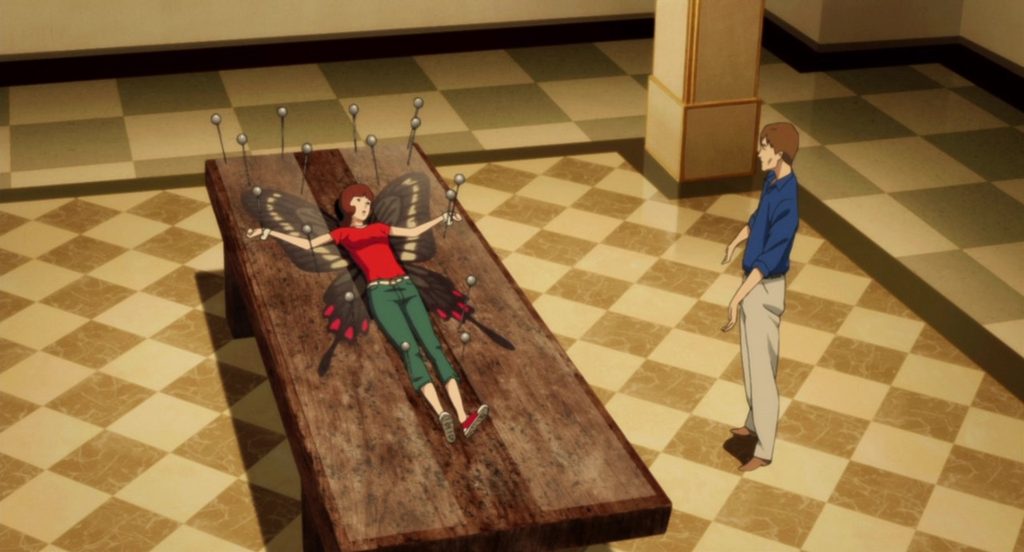
Throughout the movie, we constantly see the theme changing or growing, in some cases quite literally. In many of the dreams, Paprika grows or shrinks in size, even at times adopting the wings of a butterfly or Tinkerbell-esque fairy wings. The main antagonist’s right hand man literally has a room of pinned butterflies and pins Paprika to a table in the dream world in much the same way. It is there where her true identity is forcibly unveiled.
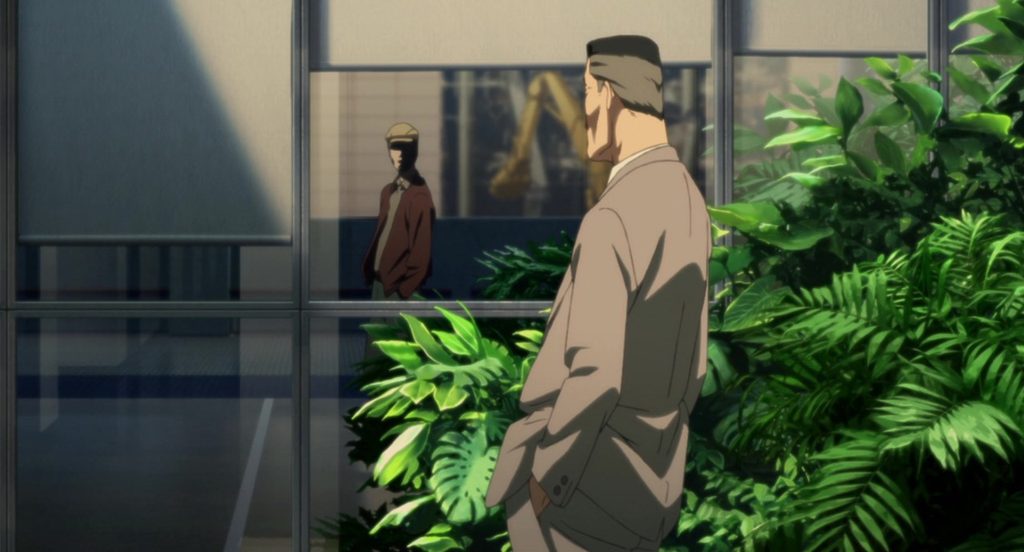
The Detective also has a secret identity in a sense. He eventually discovers that his work as a detective is deeply influenced by the short film he shot as a child. Even though he has abandoned that life, he still subconsciously followed that path, like an instinctual growth pattern. In the dreamscape, he is both a cop and a director, representing how suppressing his passions has hidden other parts of him a way. In working through this dreamscape mystery, both characters become closer to their “other.”
By its ending, Paprika/Chiba and the Detective have realized their true selves. Paprika’s personality becomes a bigger part of Chiba’s overall mentality toward life. Detective Toshimi strives to never forget his late childhood friend again and starts to reconnect with his love of film. I think what makes this unique to me is sense of this being a gradual change that doesn’t mean a full life switch. So often in the big climax of stories we see a full switch to a completely different style of living. But our protagonists don’t change overnight, they simply go out and try to be true to themselves every day. While they may have saved the day, their metamorphosis is really just beginning.
Paprika will always be a fascinating film to me because of what it represents. Even on a minor scale, it’s almost a mystery on how we come to inhabit the lives we have today. I think we often talk about how we don’t owe people things, how our dreams are our own and independent from others. To an extent I believe that. I think that you are the only one that really knows what you’re thinking, and should pursue your dreams without misgivings.
At the same time, the person you are at the end of the day is the cumulative effect of everyone that has ever touched your life. I’ve known people who have imparted more on me than I think they’ll ever know, in fractions of the time that I’ve spent with others. I carry them in my head and heart. And when I sleep I think their dreams still touch mine somehow.
Paprika shows us an example of reconciling both. It won’t always be an easy thing to do, because being true to yourself never is. But through this understanding of who you are, no matter how slow, you too can undergo a metamorphosis. Once you do, maybe you can spread your wings and soar. There are certainly worse things to be than butterflies.
Edited by Olga Tchepikova-Treon