
| Jackson Stern |
Manhunter plays at the Trylon Cinema from Sunday, April 5th, through Tuesday, April 7th. For tickets, showtimes, and other series information, visit trylon.org.
“You owe me awe,” says the fictional serial killer at the darkened core of Manhunter. Lucky for him, the moviegoing public not only met his demand but put it on a pedestal. In the four decades since the film’s release, Michael Mann’s third theatrical feature has become the primary, if obscured, benefactor of an entire genre that has only ramped up in popularity through the years. The “serial killer procedural” didn’t start with Manhunter but it’s easy to see it as the closest thing to an inciting incident, in the same way that Mervyn Leroy’s Little Caesar was for the American gangster picture. Each took seeds from other films, harvested them, and birthed archetypes, plot points, and stylings that would become staples of their respective genres for decades to come. Each, as it turns out, would also be overshadowed by the monuments that came after. In the case of Little Caesar, it was Scarface. In Manhunter’s, The Silence of the Lambs. AKA: the one that won all those Oscars.
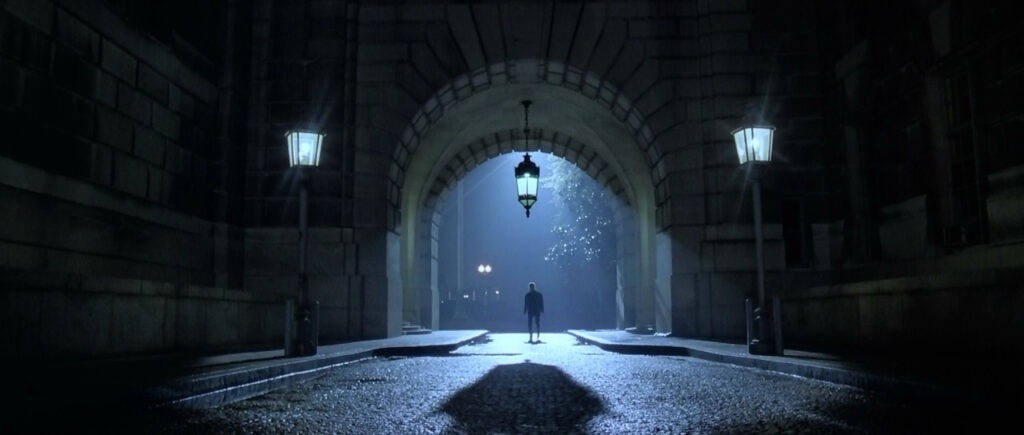
But that’s not to put down Lambs because it deserves its status as a late century masterwork. If anything, it raised what its predecessor laid down and refined it into something more identifiably terrifying and alluring, further developing what would become a staple subgenre of the crime film pantheon. The overwhelming visual style and operatic 80s synths of Mann’s film may be too much for many but those who have seen the light know that those types of flourishes are exactly what make the film standout amidst a sea of grey-tinted Fincher wannabes. The abrupt “Strong As I Am” needle drop rules and so does all the crazy expressionist lighting. These elements work not just as stylistic differentiation within a category of film that hadn’t even begun but to further intensify the sensorial mania the film inflicts upon its viewers; the neon-drenched light shocks the darkness of the story just as the retired lawman works to best the killer. Longlegs could learn a thing or two.
The most obvious genesis for the film is Mann’s very own Miami Vice TV series which revolutionized fashionable television with its frantic pace and hip music, while becoming the crime show of the emerging MTV generation. Yet its influences go further back than that and can be found in more classically artistic and international places. The various epics of the Japanese New Wave, specifically the works of Masahiro Shinoda and Seijun Suzuki, are clear influences on Mann’s editing rhythms and neo-noir aesthetics while Bresson’s strict close-ups and puritanical economy shines through in his most intimate character moment. Speaking of which, ancestors of his signature brand of capital P Professionals can be found all throughout the history of cinema leading up to his debut Thief: from Bogart to Rififi. Even something as simple as the opening scene of Manhunter feels somewhat indebted to the perverted POV shots that litter Peeping Tom and Black Christmas. Given all the roots that were planted leading up to Manhunter’s release, it’s no wonder that something so rich in experience would grow a genre of its own.
One of the most fascinating elements of Manhunter when compared to its contemporaries and descendants is its restraint as the film has less on-screen murder than Psycho from nearly two decades earlier. Instead of depicting the killer’s murders, Mann only gives the same glimpses that the detectives on the case get, the same grisly aftermaths that leave the details up to interpretation and insists on giving a measure of distance between the heinous acts and the man who committed them. A man who, contrary to subsequent films of its kind, is humanized enough to have a shot at explaining himself. Not that his explanation is any sort of excuse or comes close to explaining away his evil, but he is portrayed as a human being who’s just a few steps away from leading a normal, happy life if not for the pressures, both societal and self-inflicted, that consumed him and an almost certain dose of mental illness. Even Hannibal Lecktor (here played by Brian Cox and spelled differently from both the source material and other filmic portrayals of the character) is given a certain aura of approachability, at least at first, that makes him all the more intimidating due to his inherent (but jaded) humanity.
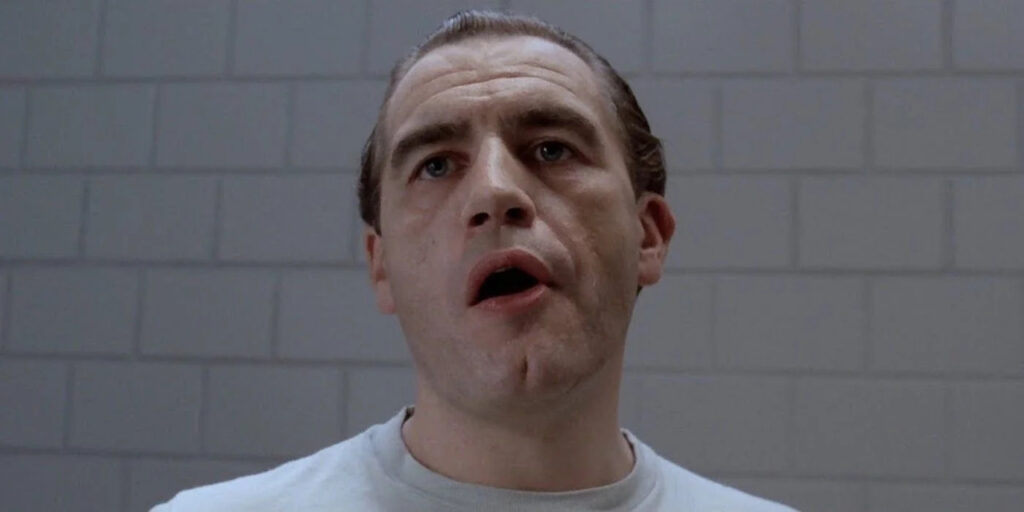
Compare these performances to those of Anthony Hopkins as Lecter (here spelled correctly) in Lambs and Kevin Spacey’s John Doe in Se7en. Both are excellently executed and characteristically terrifying, but you take one look at either of these two even from just a screenshot and you wouldn’t want to get within twenty feet of them. Both have completed dead eyes, cold dispositions, and posture that feels artificially articulated. Neither type of character is right or wrong, and all suit their source exceptionally but they’re scary in different ways. Lecter and Doe are out-in-out monsters: there are endless reasons to look closer but fundamentally, they are unflinching monsters. Their nihilistic existence strikes fear in a “look into the abyss” kind of way whereas the Tooth Fairy killer of Manhunter feels less like a monolith of terror and more like pillars of insecurity and neglect. Lecktor/Lecter is, by all accounts, an unfeeling predator in both films but perhaps he wears a slightly more convincing skin than one in Mann’s.
The portrayal of killers in this type of media has become more overtly complicated with time and in the early-to-mid 2000s, a third category was born: the enigma, the unseen. The prime examples of this are in Memories of Murder and Zodiac, possibly the pinnacles of the “serial killer procedure” even if each contain enough cultural nuances and philosophical underpinnings to stand apart from one another. These films took what all the previous films of their kind did and perfected the formula. Both are tales of obsession, grief, and an endless pursuit of a goal that may not even exist: blind mice in a maze without the promise of cheese. Both frame the law and press alike as fundamentally passionate individuals whose aspirations for true moral justice are upended by a broken system. Germs of all these ideas can be found in Manhunter: the pathological compulsion to pursue the damned and the way our order fails us.
Today, this genre rests in an uneasy place. With a few notable exceptions, the most obvious being Fincher’s excellent series, Mindhunter, fictional character studies that dive into the topic have been mostly replaced by faceless streaming documentaries on whoever the historical fascination of the week is. These films and series rarely probe beyond the exploitation aspects of these tragedies and are commonly made en masse for whatever suburbanite may want a taste for a side of humanity they otherwise wouldn’t ever encounter. Because of all this content and undying public interest, maybe the genre is due for either a revitalization, a la The Godfather, or a funeral like Once Upon a Time in America. Only time will tell.
While public interest is ever shifting, an interest in harbingers of the macabre has existed in media for hundreds of years, even before penny dreadfuls. The genre will almost certainly never die as long as art is consumed by human people, but the brand of crime drama that Michael Mann started with Manhunter doesn’t seem to have as many results as it used to. The profiler procedural will always exist on television in the endless realm of CSI, but prestigious Hollywood productions of them (and successful ones at that) seem to be a little on the rocks. Not to get all “they don’t make ‘em like this anymore” but perhaps we’re due for another major film like Manhunter. One that provocatively probes the nature of inhumanity in the most stylish and humane way possible. Or maybe we should leave it be and let the singularity of its achievements incite awe in all those who encounter it in the years to come.
Edited by Olga Tchepikova-Treon