
| Sophie Durbin |
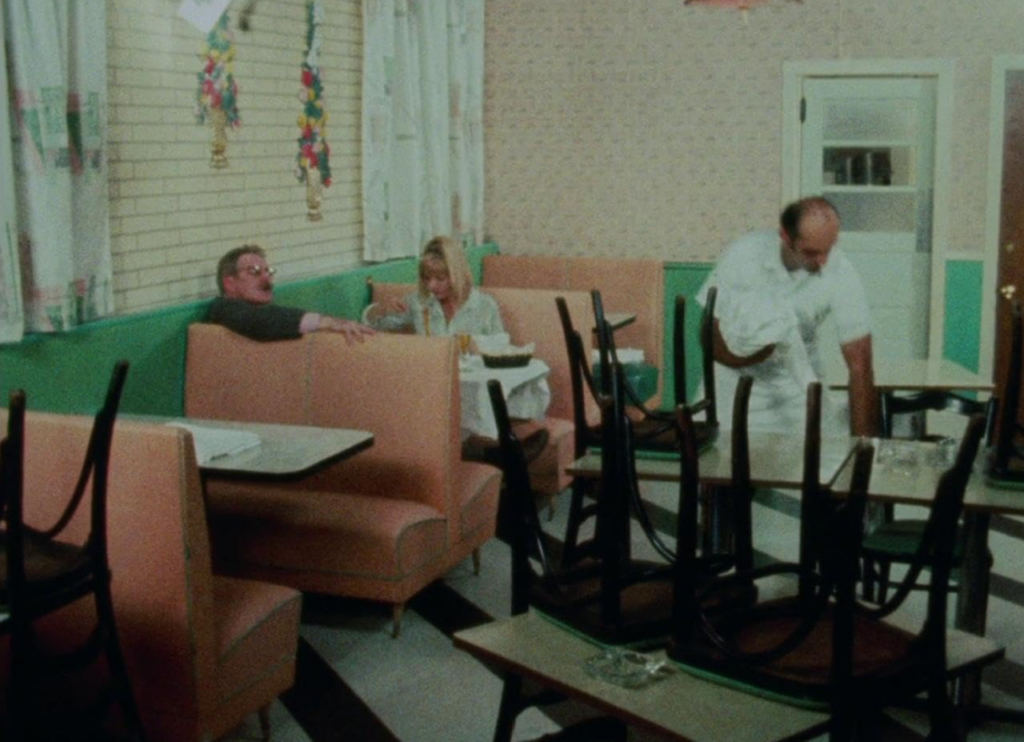
Wanda plays at the Trylon Cinema from Sunday, July 26th, through Tuesday, July 28th. For tickets, showtimes, and other series information, visit trylon.org.
MR. DENNIS: You don’t want anything, you won’t have anything. You don’t have anything, you’re nothing. Might as well be dead. You’re not even a citizen of the United States.
WANDA: I guess I’m dead then.
As a hobby film writer, I brace myself for the inevitable pressure to cater to a particular ideology when I write about certain movies.1 When I saw that the Trylon would be showing Wanda this summer, I immediately wanted to protect it from anyone who may want to make it into something that, to me, it surely isn’t: a classic film about the struggle of working women stuck under the boot of the patriarchal family structure and rural poverty. Sure, you can package the film that way to shove it into a Films Made by Women feminist film curriculum, but doing so sands all the rough edges off the movie. Nor, of course, should Wanda be reclaimed as a depiction of the ultimate “passenger princess” for Gen Z. To watch Wanda is to experience something far more radical than any –ism or pop culture idiom we might filter it through.
The New Hollywood of the 60s and 70s allowed audiences to finally see a few solidly pessimistic portrayals of female characters,2 but it seems to me that no one was willing to go as far as Barbara Loden. I came to Wanda through Loden’s few sparkling moments in Splendor in the Grass and stills from The Swimmer before she was replaced by Janice Rule. It can’t have been easy being Barbara,3 and people like to elaborate on this, but I won’t do that here. Let’s focus on Wanda, who contains shades of Loden, but is ultimately a different being. Wanda isn’t particularly intelligent and reads aloud laboriously. She is content being told what to do. Not submissive: complacent. She’s pretty but she has no aura of sexual power, nor is she repressing or implying one. She accepts male companionship out of convenience, devotion without romance. (Other writers will tell you Wanda is desperately seeking male protection, but I think she finds a real friend in Mr. Dennis. She doesn’t mind his criminality so long as he treats her like a friendly stray dog.4) She doesn’t know what kindness from anyone feels like anyway, so she adores being tolerated. We don’t know much about her inner life. We know she likes onions on her burger. She can only “kind of” drive, but she can definitely paint her nails one-handed while sitting on the hood of a car.
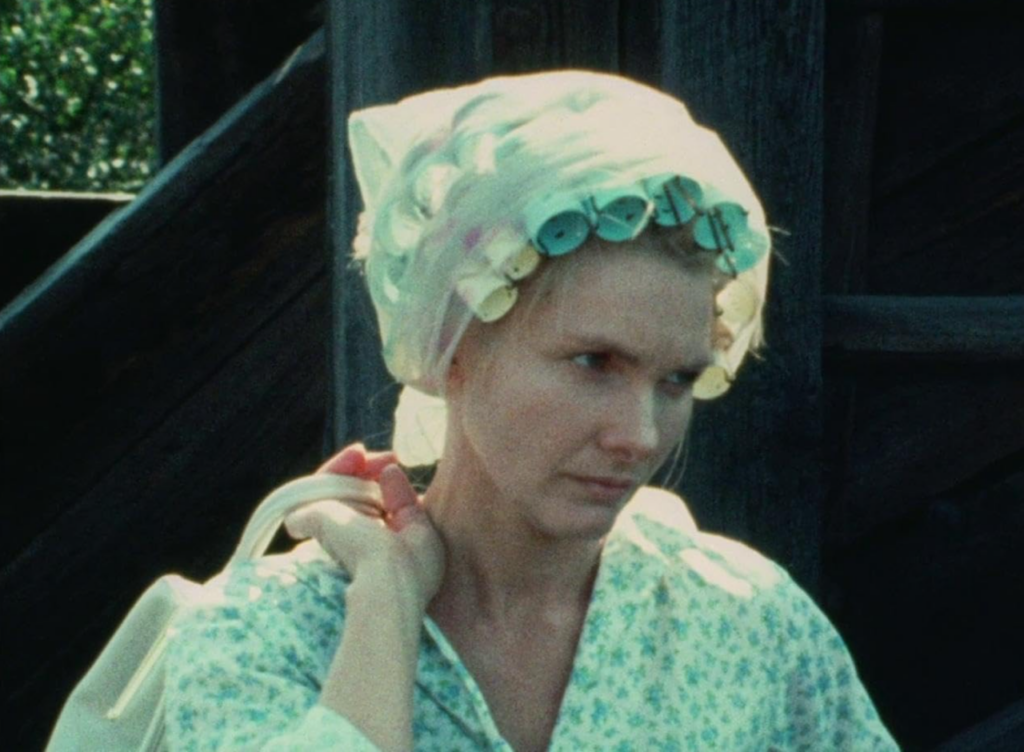
Wanda lies around on the couch all day. She doesn’t want to keep her man. She doesn’t care about keeping her job. She is indifferent to her kids. She wanders around in hair curlers. She doesn’t care who she sleeps with, or if it’s any good. She stops into a bar for a Rolling Rock, and halfheartedly holds up a few coins that don’t add up to the price. She wanders into a movie. There’s no hurry in her step. A woman who doesn’t care about anyone or anything! That’s not an archetype we get to spend much time with often. We’re usually stuck watching (god bless them) more typical madwomen, women who care too much, who are too much, Women On the Verge, women who snap because society makes them. Even complex heroines are seldom really antiheroines, and even more rarely are they anonymous, blank, apathetic, empty; these characteristics, however undesirable, are something men guard fiercely for themselves.
We do see Wanda attempt to exercise a little agency when she plays a part in Mr. Dennis’s bank robbery plan. She tries pathetically to opt out, repeating “I can’t do it,” over and over again and vomiting a few times. But she’s powerless against his surprisingly effective pep talk (“Maybe you never did anything before…maybe you never did…but you’re gonna do this”). Maybe no one has ever believed in Wanda that way before. It feels unnatural to see her brandish a gun and bark orders, but she manages it. This is the last spark of life we see from Wanda. The robbery goes all wrong anyway, and we see a final burst of emotion when she wrestles off a would-be rapist who has given her a ride. She reacts like a wild animal, reduced to a laundry list of survival instincts; she freezes, then fights, then flees. She wanders into a bar, where she returns to her preferred role as a passive drifter. People hand her a beer and a cigarette, and she sits in silence as a bluegrass band takes the stage and the film cuts to black.
Wanda takes an absolutely anti-essentialist position of what it means to be a woman. To Loden, there’s no inherent good or evil in the female condition. In a memorable moment, Mr. Dennis interrogates Wanda about her family life. She shrugs off his questions and shares that her kids are with her ex-husband: they’re “better off with him.” To this she adds, cheerfully: “I’m no good. I’m just no good!” Audiences are often expected to feel unsettled when they see a female protagonist reject her kids without sorrow. We react like a woman could never do this, that a woman who does must be sick, must eventually be regretful. Not so! They have. We see this in nature, though we look away. Female animals kill their young, women abandon their kids, they have them and wish they didn’t. Sometimes they have them and could care less, and this is Wanda. Wanda doesn’t generate, doesn’t harness any Sacred Feminine Power, doesn’t inspire, doesn’t improve her community, doesn’t stand for anything. She is nothing. So many men are nothing. Why not Wanda?
Footnotes
1 The good people at Perisphere have never asked this of me, of course!
2 See my 2024 piece on Play It As It Lays, which depicts an almost Wanda-level “nothing woman.”
3 Barbara Loden was Elia Kazan’s young wife. He seems to have really loved her, but also perhaps considered her beneath him, an exotic hillbilly curiosity. She died in her 40s of breast cancer.
4 Also, anyone who’s ever been lonely knows that sometimes all you need is to be in the passenger seat with someone you vaguely know who’s running an errand.
Edited by Olga Tchepikova-Treon