
|Sophie Durbin|
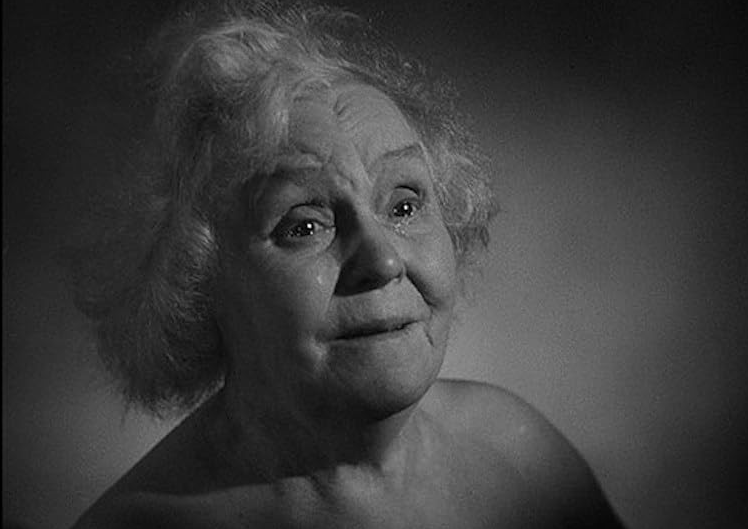
Day of Wrath plays in glorious 35mm at the Trylon Cinema from Friday, October 2 to Sunday, October 4. For tickets, showtimes, and other series information, visit trylon.org.
“I fear neither Heaven nor Hell. I am only afraid to die.” (Herlof’s Marte, Day of Wrath)
Humans have burned each other at the stake for a long time. Records dating back to the Code of Hammurabi prescribe death by burning for criminals convicted of incest or heresy. The Celts may have roasted their human sacrifices alive in huge wooden baskets during antiquity;1 in the Baltic, supposedly young women were sacrificed by being burnt alive, decorated in flower offerings, until at least the 12th century.2 Once Europe was thoroughly Christianized, heresy surpassed other crimes as the prerequisite for burning, and in Germanic and Nordic contexts burning was typically associated with witchcraft. While anyone burned alive is likely to die first of suffocation from smoke or inhalation of gas, the body is inevitably mutilated through shrinkage of the skin and tissue damage. In a gesture of something resembling mercy, sometimes the heretic in question was killed first by other means and then burned. This is a punishment that is brutal by design, a warning that those who worship the wrong god may find themselves, too, tied to the stake.
Perhaps because of its visual impact, burning at the stake has found a welcome home on film. In the span of two decades, Carl Theodor Dreyer made two movies featuring female characters who exist outside of society, who are tortured and then burned to death: The Passion of Joan of Arc (1928) and Day of Wrath (1943). His depictions are bleak and realistic, bearing no resemblance to the nationalistic, romanticized images of Joan of Arc’s burning or the cartoonish or even titillating images of witch burning in popular culture. Both films are dark, somber, austere affairs, ones that take the audience on a painfully slow journey into hell. In each, the viewer is plunged into a near-existential meditation about the nature of the mob that enables, demands, and ultimately reenacts these burnings to maintain their supposedly civil social fabric. But what makes the fundamental impact of each film so different?
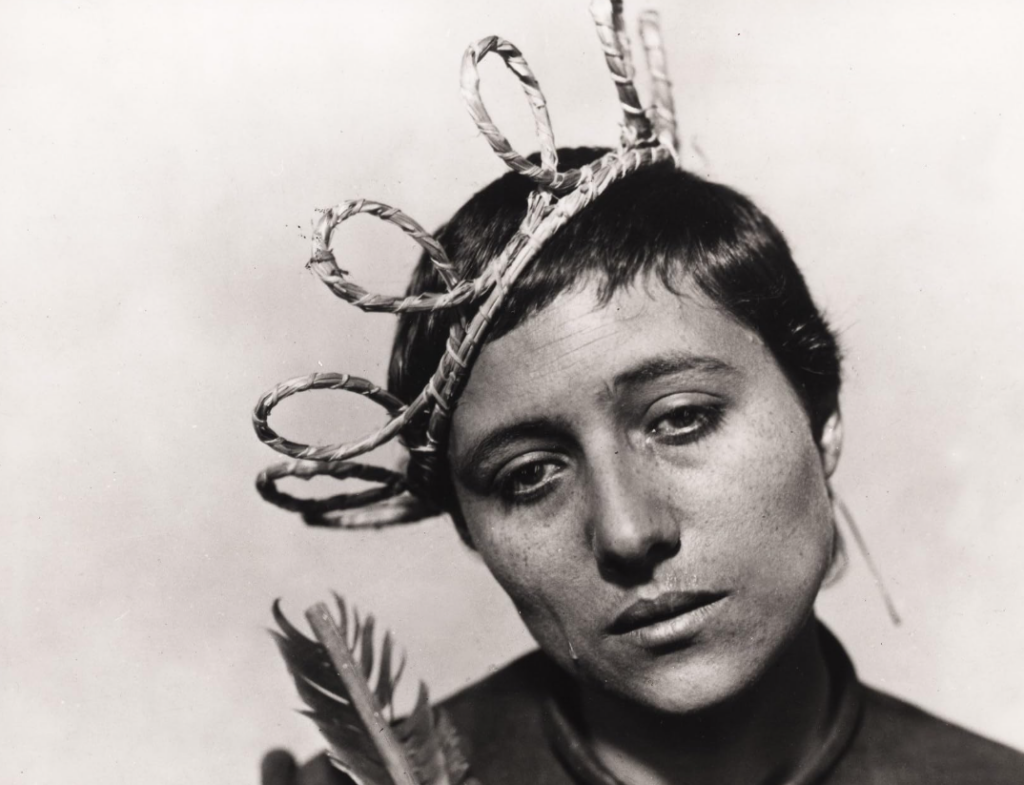
See first the crucial difference between the execution crowds in The Passion of Joan of Arc and Day of Wrath.When Joan is martyred, a powerful crowd of commoners emerges to witness her burning, to shed tears over her death and to cry out against it. When Joan’s stoic, weeping visage finally succumbs to the flames, her head hanging lifelessly, we see members of the crowd crossing themselves and beginning to stir. The intertitles are accusatory: “Vous avez brûlé une sainte!“3 A fight breaks out amongst the crowd and the occupying soldiers. The final title cards share that Joan’s soul was protected by flames as she rose to heaven, and that she became the heart of the French people. In its way, this is a hopeful ending, or at least one that gestures forward to a future world that would not have accepted Joan’s capture and conviction. When it was released in 1928, the people of France, still in the aftershocks of the First World War and creeping toward more war, may have found solace in Joan’s legacy.
The burning of Joan of Arc is tragic but dignified, an act of selflessness in the face of injustice, a sacrifice for the greater good of France. The burning in Day of Wrath is not like this. In a miserable sequence early on in the film, local accused witch Herlof’s Marte is tied to a stake and tossed horizontally onto a bed of flames to immolate in a pit reminiscent of hell itself, a crowd watching enthusiastically all the while. An offscreen crowd chants for her death; a choir of children sing the film’s signature song about the apocalypse as she is pitched into the flames. She does not die with dignity but in pain and fear. As viewers, it’s unclear how much we really should be sympathizing with Herlof’s Marte; surely we don’t want to be members of this barbaric crowd, but she herself is not painted as an innocent; in fact, it’s possible to watch the film and come away believing that she was a witch indeed. Before she is burned, she curses the bishop’s young wife Anne, warning that she is a witch like her mother before her and that she will burn too. Sure enough, Anne is eventually accused of using witchcraft to engineer the death of her husband, and makes a confession. The final tableaus show that she will meet the same fate as Herlof’s Marte, and for the last time, we hear the eerie title song about judgment day.
Like many great directors before and after him, there are legends of Dreyer’s sadism. He gleefully kept the elderly actress Anna Svierkier as uncomfortable as possible during her burning scene to induce an organic, traumatized emotional state in Day of Wrath.4 Renee Maria Falconetti was supposedly not treated much better during Joan of Arc, as Dreyer made her “kneel painfully on stone and then wipe all expression from her face–so that the viewer would read suppressed or inner pain.”5 Dreyer’s biographers Jean and Dale Drum dispute these rumors, but the legends are famous enough that his actors live in their shadow. If Dreyer was a director interested in how cruelty could serve as a means to an artistic end, it shouldn’t surprise that depicting torture and death appealed to him. It seems to me that whether he was sadistic toward his actors or not, he wanted his audience to feel the stone under its knees, too. Day of Wrath was released in 1943, when Denmark was under Nazi occupation. This occupation required collaboration: a mob. The cruel truth of history is that ordinary people often do join whatever they perceive as the winning side, either through active participation or passive indifference, and after the war, 40,000 people were arrested for collaboration.6 In recognizing this for ourselves, we must reflect painfully on just how ordinary many of those collaborators were.
As an audience, we might make sense of this by asking ourselves what it really meant to believe in witchcraft in the Middle Ages and early modern era. It meant living in an unpredictable, harsh world where unexplained phenomena demanded scapegoats. It meant believing wholeheartedly that there were bad actors who could control fate, who could curse their neighbors, make the crops fail and use their powers to kill; this meant believing that these people must be exterminated, and carrying out this belief to its logical conclusion. It would be easy for us to point our finger at this mob and claim we would take no part in it, but Dreyer forces us repeatedly to instead confront this instinct to revel in our own goodness. When we first meet Herlof’s Marte, she does seem to be practicing witchcraft. She gleefully chatters about seeds she gathered from below the town gallows, marveling at “the power in evil.” We must remember this moment as well as her curse on Anne when we see her burn; we cannot consider her a simple, innocent old lady. This creates an uncomfortable tension, a nagging feeling that the demarcation of “good” and “evil” is not simple in this cinematic universe. The cyclical, tangled nature of the burnings (Herlof’s Marte accuses Anne’s mother of witchcraft, Herlof’s Marte is accused and convicted herself, Herlof’s Marte accuses Anne who is then convicted…) lead us to wonder if this society is doomed to repeat the same behaviors borne of unquestioning paranoia.
You may notice that I have not touched on the most obvious difference between the films: The Passion of Joan of Arc is silent and Day of Wrath hails from the sound era. For other films dealing with similar subject matter, this may indeed be the most meaningful difference between them. This difference does not manifest in quite the way we might expect. Joan of Arc may be silent, but it is filled with chatter, interrogation, disorienting cuts between figures talking and their intertitles. In the final sequence, The Passion of Joan of Arc tells a story of eventual triumph, however bleak; it’s not a surprise that numerous composers have been inspired to score the film, which seems to cry out for battle hymns. Day of Wrath, on the other hand, is quite silent, punctuated by moments of auditory horror: Herlof’s Marte’s scream as she is thrown into the fiery pit, the choir intoning about the apocalypse. There is no triumphal outburst here. The silences make room for Dreyer’s meditation on the sheer hopelessness of the confused, credulous mob, and in this silence we are forced to imagine this cacophony all on our own.
Notes:
- See my essay from last year about The Wicker Man for Perisphere for more on this. ↩︎
- Łucja Okulicz-Kozaryn, Everyday Life of the Prussians and Yotvingians in the Middle Ages (9th–13th centuries)(PIW, 1983), 237, cited in Aleksander Pluskowski, The Archaeology of the Prussian Crusade: Holy War and Colonisation (Taylor & Francis, 2013), 77. ↩︎
- “You (pl.) have burned a saint.” ↩︎
- Jeff Stafford. 2004. “Day of Wrath.” Turner Classic Movies. TCM. August 27, 2004. ↩︎
- Roger Ebert. 1997. “The Passion of Joan of Arc Movie Review (1928) | Roger Ebert.” Rogerebert.Com. February 16, 1997. ↩︎
- While these numbers are high I will note that the Danish resistance movement did help save nearly all of Denmark’s Jews. ↩︎
Edited by Finn Odum