
|Dan Howard|
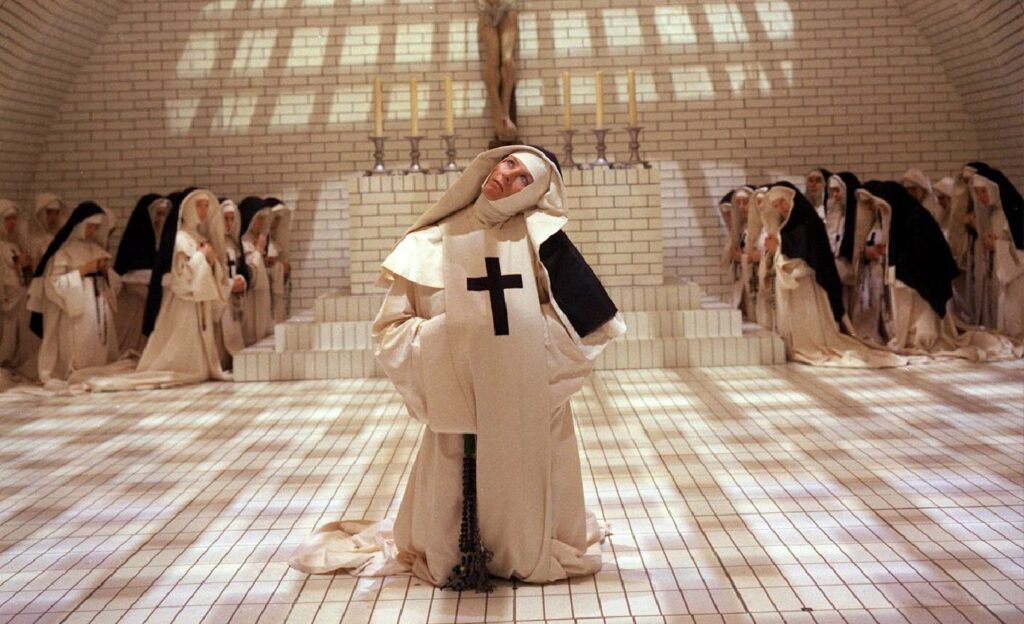
The Devils plays in stunning 4K at the Trylon Cinema from Saturday, October 31, through Tuesday, November 3. For tickets, showtimes, and other series information, visit trylon.org.
Over the last few decades, The Devils is a film that, ironically, is considered the ultimate holy grails for film buffs. One that audiences will snag any opportunity they can to watch even the most butchered version of, bootleg or otherwise. The first time I saw The Devils was in January 2024 when the Criterion Channel was streaming it for a limited time. I had heard so much about this film for so long. It’s even one of Guillermo del Toro’s favorites. Yet, because it’s been considered so controversial, I didn’t know if I would ever get a chance to see it. So, when Criterion started streaming the film, I jumped at the opportunity. I had no clue what to expect, but when I finished it, I was mesmerized. Astonished. Not just by the fact that The Devils is based on actual historical events, but the fact that it was executed so perfectly. I was simply blown away by Vanessa Redgrave, Oliver Reed, and the entire cast, the sets, everything! I ended up watching two more times afterwards, because… Well, at the time, who knew how long it would be before we could see it again? Once I found out it was an edited version, it intrigued me even more. What more were we missing and why?
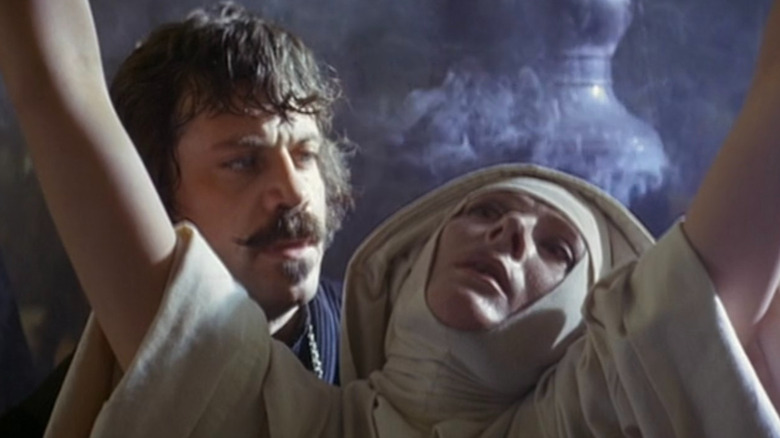
The Devils is based on real historical events, focusing on Urbain Grandier (Oliver Reed), a priest and community leader in 1634 France, and the mass hysteria that fell upon the people of the self-governed town of Loudun. When the town’s nuns become obsessed and infatuated with Grandier, Sister Jeanne (Vanessa Redgrave) subsequently begins to experience sacrilegious sexual fantasies involving Grandier. Those desires turn to jealousy upon discovering Grandier has married a woman in town named Madeleine (Gemma Jones) and deeper blurring Sister Jeanne’s ability to distinguish between reality and fantasy. Once word gets back to the powerful heads of the newfound church-and-state such as Baron de Laubardemont (Dudley Sutton), Father-Canon Jean Mignon (Murray Melvin), Cardinal Richelieu (Christopher Logue) and King Louis XIII (Graham Armitage), a sinister plot unfolds to bring about Father Grandier’s destruction.
Having finally seen the Director’s Cut that Ken Russell always intended to show the world, it’s no surprise why it was originally given an X rating and caused panic among the film boards of the world. (The “rape of Christ” scene alone is deeply disturbing, even if you’re not religious.) Yet, despite the sex, despite the severity of the graphic violence and torture, even despite some liberties Russell had taken in the style of the production, the biggest criticisms people gave were due to the actual events themselves that were being portrayed.
Sadly, Hollywood is no stranger to censorship. To better understand what lead to Russell’s never-ending headache of trying to appease every country with the various edits of The Devils that were made, let’s have a bit of a peak at the past. Hollywood introduced the Hays Code in 1934 after public outcry from various religious groups—primarily Catholic—over racy, sexual, and violent imagery on screen in the early 30s, resulting in studios self-censoring their own works and, unsurprisingly, banning criticisms of the clergy. Countless films from 1934 to 1968 fell victim to the limitations of the Hays Code. The original Scarface for its violence, Baby Face for its main character’s sexual manipulation, even the film adaptation of A Streetcar Named Desire had to face major plot and character changes to play down its queer and transgressive themes and the Legion of Decency had the biggest influences with the film boards among all the religious groups.
One prime example of the church specifically being responsible for a removing scene was during production of Bride of Frankenstein, in which the monster is attempting to save Jesus from the cross. Even outside the era of the Hays Code, films centered around religious critique (silly or otherwise), have been targets for censorship upon release: Häxan (1928), Martin Scorsese’s The Last Temptation of Christ, Kevin Smith’s Dogma, and Roberto Rossellini’s L’Amore (The Miracle) all faced protesters and naysayers for their blasphemous and sacrilegious plot lines and for their critiques of the church.
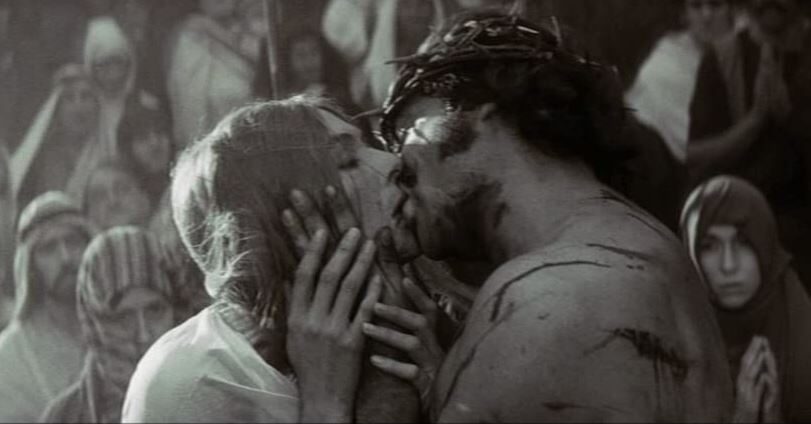
I never viewed The Devils as necessarily anti-Catholic or anti-Christian. Blasphemous? Absolutely, but with a purpose. Russell’s vision was ultimately a cautionary tale of corruption in power amongst the church and state and twisting religious faith for their own self interests. Yet, though released after the Hays Code era ended, The Devils went through one of the worst cases of censorship in history, being cut to shreds six ways from Sunday. Why? Because he’s talking about actual history in his film? It seems any public outrage over the film stemmed from a surface level standpoint of specific images like Grandier being portrayed as Jesus in the mind of Sister Jeanne and, subsequently, Russell drawing comparisons between Grandier’s trial and Jesus’s crucifixion. With Russell attempting to appease multiple worldwide committees, it left The Devils as a jumbled mess in many of the initial release versions and lessened its impact and coherency. I find it morbidly poetic that the very institutions The Devils depicts as responsible for these atrocities are the very ones trying to sweep their own history under the rug.
“You have seduced the people in order to destroy them.” – Father Urbain Grandier
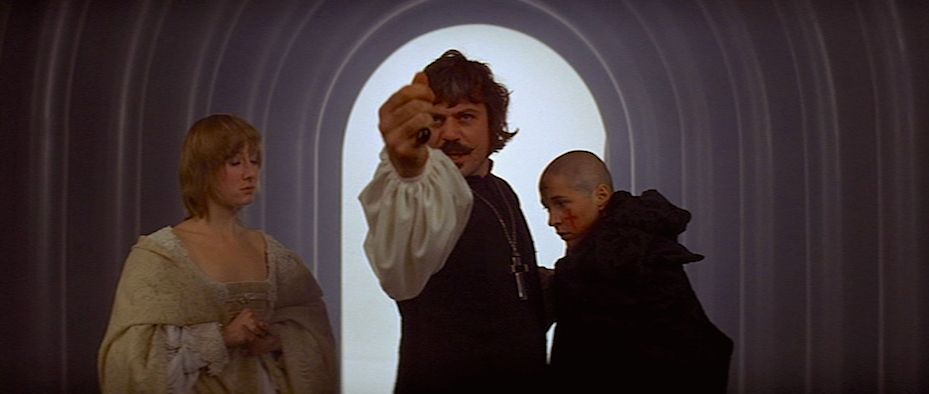
Much like the Salem witch trials that would come six decades later, the religious state had used witchcraft as their own scapegoat. Witchcraft was a solution to the elites’ problems in the 1690s just as it was the solution for the Urbain Grandier conundrum King Louis XIII was facing. Using the sexual repression of the nuns in Loudun to accuse Father Grandier of aligning with Satan, the church had succeeded in convincing people of their accusations and subjected Grandier and Sister Jeanne to horrific torture. The people believed they would be rescued from the clutches of the devil by allowing the destruction of Grandier and, consequently, also bringing the city to its downfall, sending a strong, intimidating message for anyone who dares go against King Louis XIII. Maybe Ken Russel’s ultimate word of wisdom was to not give in to blind faith?
Was it that the church was afraid of losing followers by having this story told to a wider audience in 1971? Is that still the case today? Well, perhaps the passage of time, and the growth of cinema, have played a part in Russell’s Director’s Cut finally being unveiled. As we’ve seen, these cases of censorship have only increased public demand to have these works of art be presented as intended and to show what we almost lost with groups like the Legion of Decency burying what they deem “immoral” or “sinful.” We risk losing the most critical aspects of our humanity when powerful people try to block films like The Devils from the public eye. Audiences are intelligent enough to spot these underlying themes that filmmakers snuck into Hays Code cinema. Just imagine what the films could have been if not for these strict rules by which they were forced to abide.
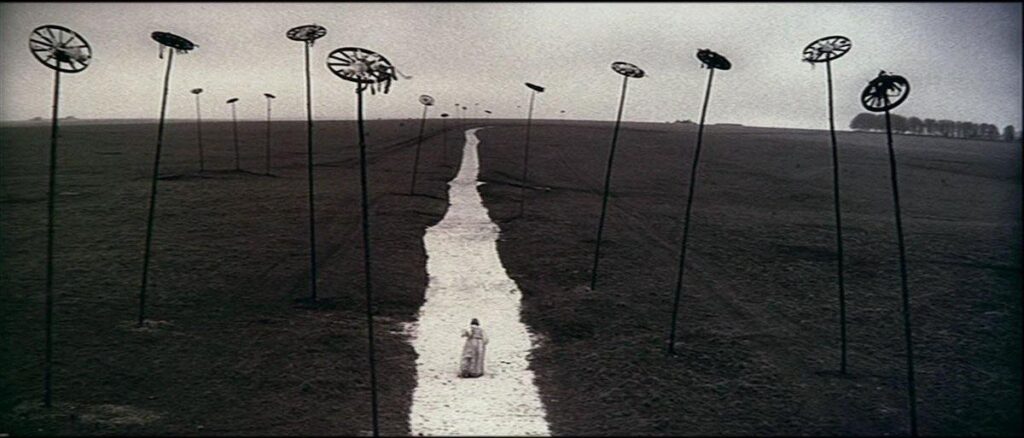
Fans certainly would not have that be the case with The Devils, proving that the public wants to see the art the governments and churches of the world try to shield them from your eyes, to form their own opinions. Five decades of fans, scholars, and fellow artists protesting and pressuring Warner Bros. to stop acting like The Devils wasn’t a movie to which they gave the green light; protesting and demanding its availability beyond the initial release. It may have taken 55 years, but finally, audiences can rejoice. Ken Russell’s magnum opus has beaten the censors and the naysayers. At long last, in all its restored NC-17 glory, The Devils is free!
Edited by Finn Odum