
| Nate Logsdon |
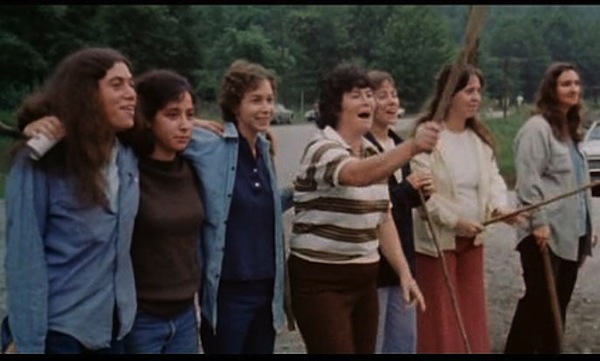
Harlan County USA plays at the Trylon Cinema from Friday, November 27th through Sunday, November 29th. For tickets, showtimes, and other series information, visit trylon.org.
It wasn’t The Odyssey. It wasn’t Spider-Man: No Way Home. It wasn’t Backsession. It wasn’t even Melania.
No, the movie that captivated audiences and shaped the cultural conversation more than any other in 2026 was a three-hour documentary about a documentarian using a variety of documentary techniques to reveal the limitations of documentaries.
Those limitations leave a lot more unknown than shown (excluding Billy Evans’s penis) but what you actually can see in You Can See Everything is a consolidated history of nonfiction cinema in which the ethical and ontological dimensions of the genre repeatedly surface into the explicit plot of the film and the most shocking twists concern the formal choices and financing decisions that directly shaped the images appearing on the screen. The filmmakers Nathan Fielder and Lance Oppenheim, as well as numerous critics and commentators, have pointed to precedents for the various approaches they employ in the doomed pursuit of a “real” Elizabeth Holmes but, especially in the film’s simultaneously chilling and hilarious first half, their methods can largely be seen as a canny interpolation of the participant observer into a cinéma vérité frame. Fifty years ago, the documentarian Barbara Kopple broke new ground in this realm.
Imagine if instead of watching Elizabeth Holmes entering prison from his car parked across the street Nathan had followed her into the facility, down the corridors to her jail cell, and then continued interviewing her within lockup. That’s the level of access that Barbara Kopple achieved in her Oscar-winning 1976 strike documentary Harlan County, USA. The sequence takes place early in the film as picketing coal miners and their supporters attempt to block scabs from entering the worksite by lying in the road. We see three women, offering no resistance, being dragged from the street and into state police cars and then a handcuffed man who yells “Take your pictures, boys” to the filmmakers as he’s escorted from the scene by two officers; the picture then cuts to a view down a hall at the end of which the man is being locked up. But then—and it takes a moment for the gravity and rarity of this scene to be realized—the following shot shows two of the arrested women being interviewed inside their jail cells. The camera has gone from the street to the corridor to behind the bars. “I’d rather be dead,” one of the women says, “if I have to know that there’s scabs that’s been put inside.” Then, with no prompting, she begins to sing: “Stay on the picket line, always on the picket line” (to the tune of “Keep on the Sunny Side”).
Kopple pushed the participant observer role to a point of sharing risk. Like Nathan Fielder in You Can See Everything she established trust and familiarity—and gained extraordinary access—by living with her subjects. She was allowed to shoot inside people’s homes, often catching vulnerable moments like a retired coal miner with black lung using his oxygen machine while a grandchild looks on, or a mother fainting from grief as she approaches her murdered son’s casket at his funeral. She translates this confidence and intimacy into political activity on the ground by her presence on the picket line where she generates first-hand footage of violence against strikers. In one of the film’s most potent and consequential scenes Kopple is present at a pre-dawn rally where her camera captures the sound of gun fire and screaming and is then briefly blinded by headlights before homing in on the truck of the chief gun thug who points his weapon directly at the camera as a voice screams “Don’t shoot!” His face is clearly visible in the shot. At a subsequent blockade Kopple herself delivers an arrest warrant for the gun thug to the sheriff who then reluctantly approaches the man’s truck and informs him that he’s under arrest.
The authenticity that flows from the artists’ shared risk is modeled throughout the film by musicians on the front lines of the contemporary struggle and its historical antecedents. By layering the voices and songs of past strikes atop footage of the film’s present Kopple elegantly establishes a temporal linkage while integrating the voices and experiences of workers like the (perfectly named) Nimrod Workman, a songwriter and retired coal miner who performs his autobiographical “Forty-Two Years” on his front porch. The time scales are dramatically collapsed when the folk singer Florence Reece, in her mid-seventies when the film was made, performs her song “Which Side Are You On?” at a rally. She originally wrote the song at the age of twelve when her father, a coal miner, was on strike. She updated it in the 1930s when her husband, also a coal miner, was on strike. And now here she is, generations later, singing it to striking miners in 1973. “As you know, I’m old,” she says as she introduces the tune, “and I can’t sing very well. But you can ask the scabs and the gun thugs which side they’re on.”
As with the woman who bursts into a performance of a folk song in her jail cell or the women shown singing along with Florence Reece to “Which Side Are You On?” or the violent labor histories recounted in song by Hazel Dickens, music is both a personal expression and a galvanizing enactment of solidarity. Kopple would explore this dynamic again in her 2006 documentary Shut Up and Sing, about the career-altering backlash to the chart-topping country music trio The Chicks1 after they spoke out against George W. Bush and the Iraq War. In both films “songs by women become vital anthems defining not only women, but ordinary people and their ability to speak and act in the face of oppression and adversity”.2
Kopple happened to be filming at The Chicks’ concert in London on March 10, 2003, on the eve of the war, when singer Natalie Maines spontaneously said from stage that they were “ashamed that the President of the United States is from Texas.” This relatively modest protest led to a nationwide boycott that included being banned from country radio stations, mass events for destroying Chicks CDs, canceled tour dates, and credible death threats.
The film picks up with them again in 2005 as they write and record a new album, Taking the Long Way, that reckons with the fallout of their stance and doubles down on their original rejection of the war which, by that time, is on its way to becoming the majority opinion. In Shut Up and Sing, as in Harlan County, women’s voices are a threat to male-dominated political power and entrenched business interests. Music becomes both a vehicle for dissent and an act of witness that can speak across movements through time. In the final scene of the film The Chicks return to the same London stage where Maines made her initial protest and she defiantly repeats her original statement once more, word for word. Earlier this year they reissued Taking the Long Way and performed it in its entirety to mark its twentieth anniversary.
Kopple is no stranger to the twinned themes of music and violence in Shut Up and Sing and Harlan County, USA. One of her first jobs in film was as a camera operator (while still an uncredited intern) on the Maysles’ and Charlotte Zwerin’s legendary concert film Gimme Shelter which documented the Rolling Stones’ performance at the disastrous 1969 Altamont Free Concert and includes footage of the brutal murder of Meredith Curly Hunter Jr. by members of the Hell’s Angels.
The filmmakers faced an ethical dilemma when attempting to complete the film: How to integrate the images of the killing into the final documentary without exploiting a tragedy or traumatizing the viewers? The co-director Charlotte Zwerin solved the dilemma with the idea to show the Stones watching the footage. Somehow that extra dimension of distance—the screen within the screen—provided enough moral and emotional cover for audiences to be able to process a too visceral truth.
You Can See Everything takes this effect a few steps further when it shows Nathan Fielder watching Amanda Seyfried watching Elizabeth Holmes watching Amanda Seyfried play Elizabeth Holmes on TV. In a world where reality and cinéma blur, nothing could be more vérité.
Footnotes
1 At the time the film was made the group was known as The Dixie Chicks. They changed their name to The Chicks in 2020 in response to renewed scrutiny of racism and confederate symbols in the aftermath of the murder of George Floyd.
2 Kate Hearst, ReFocus: The Films of Barbara Kopple ed. by Jeff Jaeckle and Susan Ryan (Edinburgh: Edinburgh University Press, 2019), 80.
Edited by Olga Tchepikova-Treon