
|Courtney Kowalke|
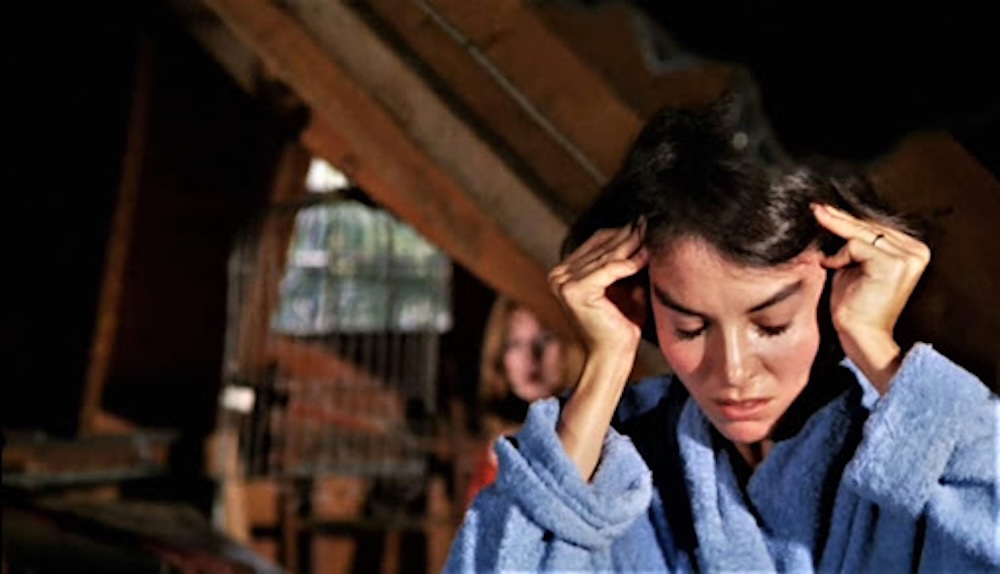
Let’s Scare Jessica to Death plays at the Trylon Cinema from Friday, October 17 to Sunday, October 19. For tickets, showtimes, and other series information, visit trylon.org.
Last night I dreamt I went to Manderley again.
Or did I? Do you believe everything I write in these reviews? Do you take me at my word when I mention details from my life, or is there a sliver of doubt? Do you know who I am offline? When I’m not the person behind the keyboard telling you what I want you to feel or know or think? Am I worthy of your trust? Am I your friend behind this screen, or a ghost in the machine feeding you lies and deliberately coloring your view to make you like what I like and hate what I hate?
I don’t remember what I dreamt last night. That’s probably for the best. The difference between a dream and a nightmare is as thin as a razor’s edge. So the titular protagonist of 1971’s Let’s Scare Jessica to Death tells us. “Dreams or nightmares?” Jessica (Zohra Lampert) muses at both the start and the end of the movie. “Madness or sanity? I don’t know which is which.”
Jessica has plenty of reasons to question her reality. For starters, she has just been released from a psychiatric hospital. What she was in treatment for is never revealed. Jessica, her husband, Duncan (Barton Heyman), and their friend, Woody (Kevin O’Connor), leave their homes in New York City for a farmhouse on the outskirts of (fictional) small town Brookfield, hoping some time in the country will settle Jessica’s nerves. A drifter named Emily (Mariclare Costello) has been squatting in said farmhouse prior to now, and the trio invite her to stay. It isn’t long before her new environment and new acquaintance cause Jessica’s neuroses to flare back up.
From the opening scene, Jessica’s thoughts ebb and flow throughout the movie via voiceover. She isn’t a narrator. She gives the viewers insight into her own feelings, but she doesn’t explain or comment on everything that occurs. Immediately, it reminded me of a book written from a limited character perspective. There was something about the story showing a more intimate part of its protagonist’s psyche that reminded me of literature, of having an “in” with the main character and feeling like they are letting you into their world.
Specifically, the opening scenes reminded me of The Haunting of Hill House by Shirley Jackson. In the first chapter, the protagonist Eleanor “Nell” Vance stops at the small town of Hillsdale before journeying to the titular Hill House out in the country. Dr. John Montague—who has invited Eleanor there—has given her written directions, noting that “it is inadvisable to stop in Hillsdale to ask your way. The people there are rude to strangers and openly hostile to anyone inquiring about Hill House.”1 Eleanor stops in Hillsdale, and—surprise—the people she talks to there are rude and suspicious of her interest in the area. Something similar happens when Jessica, Duncan, and Woody roll through Brookfield. The locals eye the new trio with distrust and talk under their breath about them being hippies and interlopers. (It doesn’t help that they also drove a hearse to get there.) These uneasy interactions set the tone for the rest of their stories, as Eleanor ventures out to her doom at Hill House and Jessica and company head for the site of their own undoing.
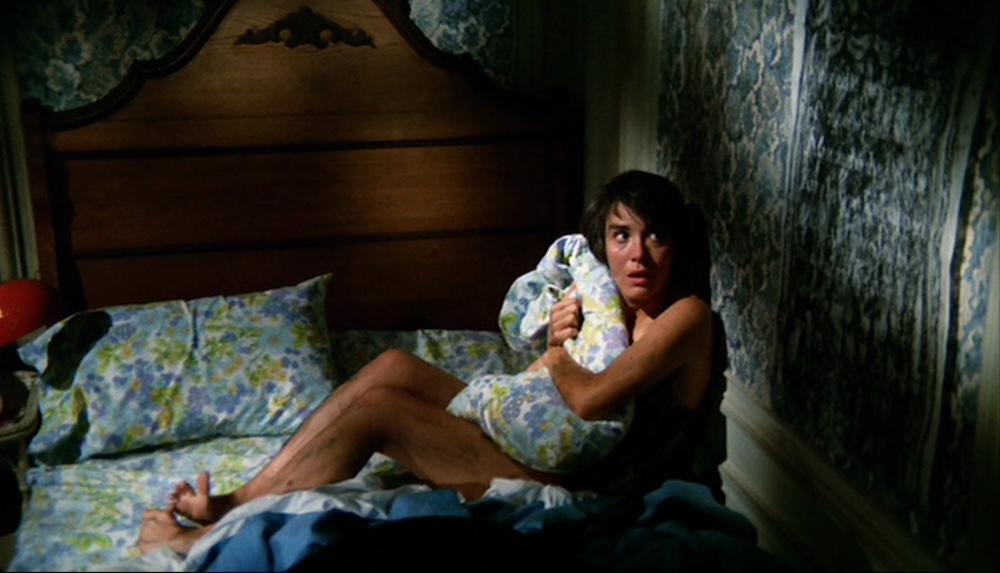
It’s been thirteen years since I last studied Gothic literature, and I spent most of the semester making penetration jokes with my friends. Still, Let’s Scare Jessica to Death immediately reminded me of the course. It got me thinking about the traditional character archetypes that show up in Gothic literature. Back in college, I was more focused on the brooding, Byronic males than any other archetype. I also remember reading about a lot of ingénues, female characters who start out naïve and trusting and are broken down emotionally (if not killed) as the story progresses.
Jessica is not an ingénue. She isn’t a vamp either, another standard female character in Gothic tales. (That would be Emily, for more than one definition of “vamp.”) Jessica is what the writing resource TV Tropes calls “The Haunted Heroine.” TV Tropes describes this archetype as “A heroine haunted equally by her own past and the uncanny events around her.” While conflict with the ingénue centers on her being broken for the first time, the Haunted Heroine has experienced something traumatic before the events of the story. Maybe she’s been orphaned and is seen as a burden by her caretakers, like Jane Eyre from Charlotte Brontë’s Jane Eyre. Maybe she escaped a life of slavery, like Sethe from Toni Morrison’s Beloved. Maybe she’s suffering from post-partum depression, like the narrator in Charlotte Perkins Gilman’s “The Yellow Wallpaper.” Maybe we never learn exactly what happened to her, like Jessica.
At any rate, the story the reader is privy to is not the heroine’s first rodeo. This makes the Haunted Heroine’s role in the story flexible and unpredictable. The story will do its damnedest to break her mind and her spirit again. The story is guaranteed to succeed, though. Sometimes the new situation overwhelms the heroine and leads to her demise, but sometimes she’s able to use her past trauma to outsmart or outlast whatever wants her dead.
This past trauma also sets up two layers of conflict—the protagonist now has to battle herself while also battling outside forces. Jessica spends the story terrified that there is something malevolent in her new home, but also fearful that she is merely slipping back into insanity. The movie plays with this—for example, while swimming in a cove near the start of the film, Jessica panics that something has grabbed her leg and is trying to pull her under the water. Duncan and Woody rescue her, and neither of them see anything in the water. Later in the film, Emily actually tries pulling Jessica under while the pair of them are swimming. However, Emily was at the house making lunch in the first scene. We see her leave the trio at the cove, and we see food prepared afterward. So, what actually happened? Did Emily magically get back in the water without the audience or her companions seeing her? Was there another person in the water doing her bidding? Was it a fish? Or was it simply Jessica’s mind playing tricks on her?
On the subject of Jessica’s mind, after Emily’s true nature is revealed, a woman’s voice says, “You want to die.” In the moment, I couldn’t tell if it was one of Jessica’s thoughts narrated aloud or Emily trying to plant the idea in Jessica’s mind. Given her facial expression and the way she holes herself up in her room afterward, Jessica surely wondered the same thing. No one else is around. Nothing more is said. It’s a moment of reckoning and resolution, though. To paraphrase Rebecca once more, the moment of crisis had come, and Jessica must face it. Her old fears had to be conquered and thrust aside, or else she should fail forever. There might not be another chance to escape.2
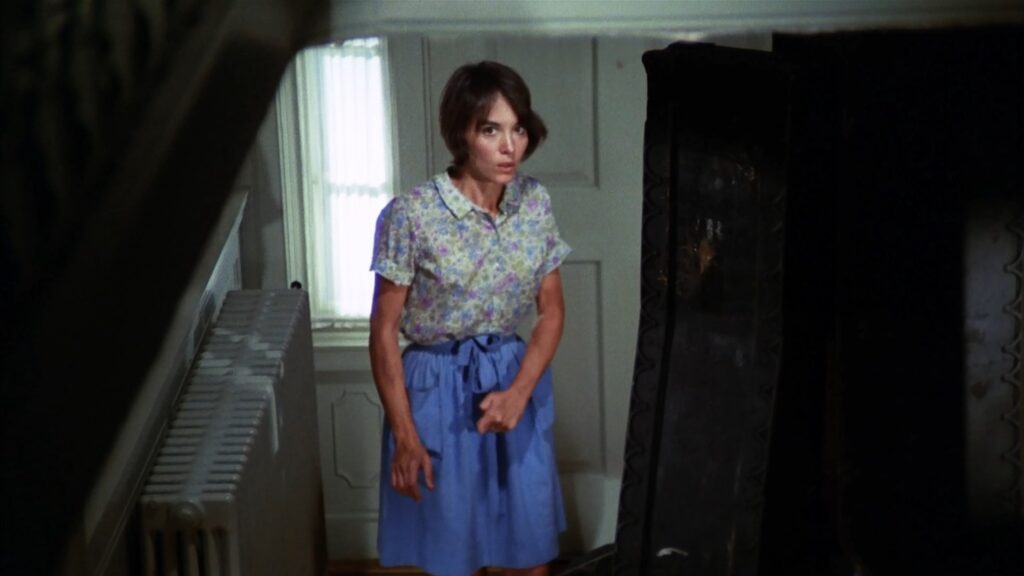
Knowing your thoughts are unreliable can lead to self-gaslighting as well. Jessica does it to herself. She notices things that make her uncomfortable, but she also knows her mind plays tricks on her. She has seen things that weren’t real before. What if she is wrong again? There is precedent for her being wrong. Humans are wired to look for patterns, so it’s easiest to assume that’s what’s happening.
It happens to the best of us. This is the first piece I have written for Perisphere in five months due to my major depressive disorder rearing its ugly head. I know firsthand what it’s like to have thoughts you can’t trust. I know what it’s like to wave off my present concerns, because how can I know for sure that what I’m thinking and feeling is real? How can I know the world around me if I can’t even know myself?
It won’t surprise you to know, then, that I was rooting for Jessica from start to finish. I felt an affinity with her. I wanted to see her overcome both her inner demons and the demons around her, making her doubt her lived experience. The fate of a Haunted Heroine is never set in stone. Maybe she succumbs to her inner or outer darkness. Maybe it’s too much. Maybe, though, she is made of stronger stuff. Maybe she can make it out alive. Whether it’s a dream or a nightmare, Jessica always opens her eyes and wakes up.
Notes:
- Shirley Jackson, The Haunting of Hill House (Viking, 1959), 11. ↩︎
- Daphne du Maurier, Rebecca (Doubleday, 1938), 262. ↩︎
Edited by Finn Odum