
| Zach Staads |
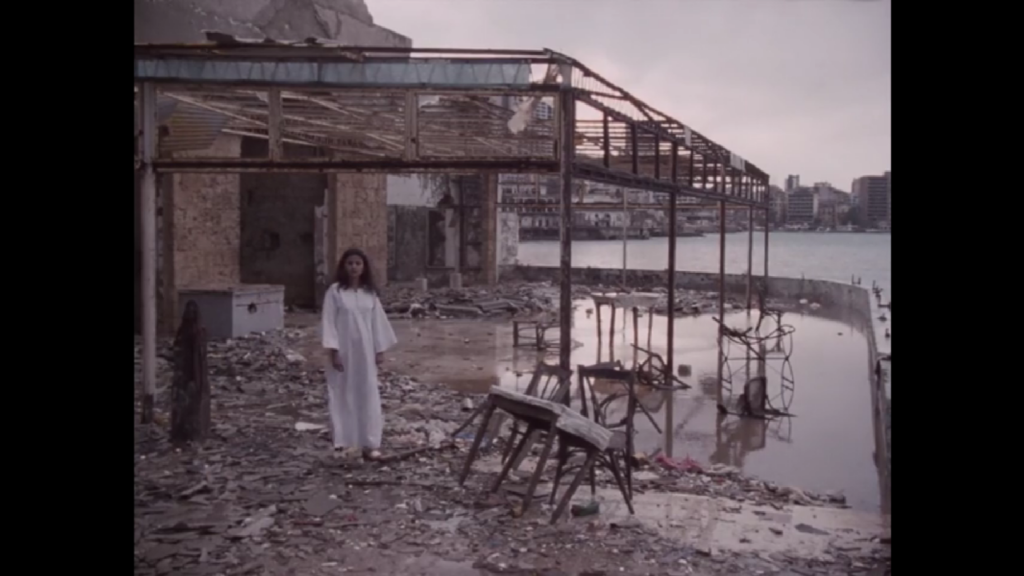
Leila and the Wolves plays at the Trylon Cinema from Friday, December 12th, through Sunday, December 14th. For tickets, showtimes, and other series information, visit trylon.org.
Foreword
See this film. If you take nothing else from this, please see this film. There may be things that don’t appeal to a contemporary palette, and it may be considered overly simplistic or overly artistic, depending on who you ask. However, the heart, the soul of this film rests with those of the oppressed—those who are denied the light of life by those who hold the world in their grasp. See this film.
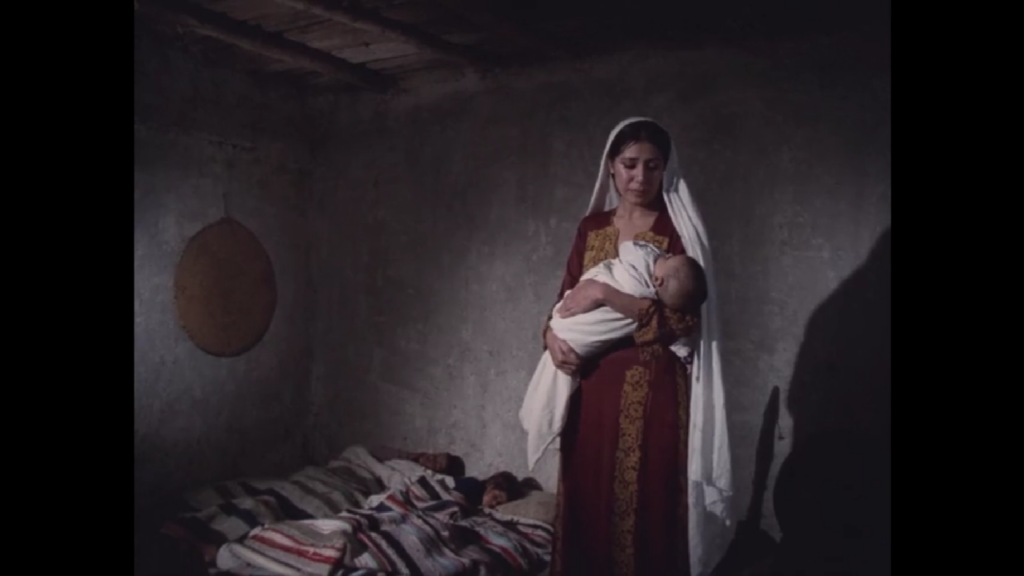
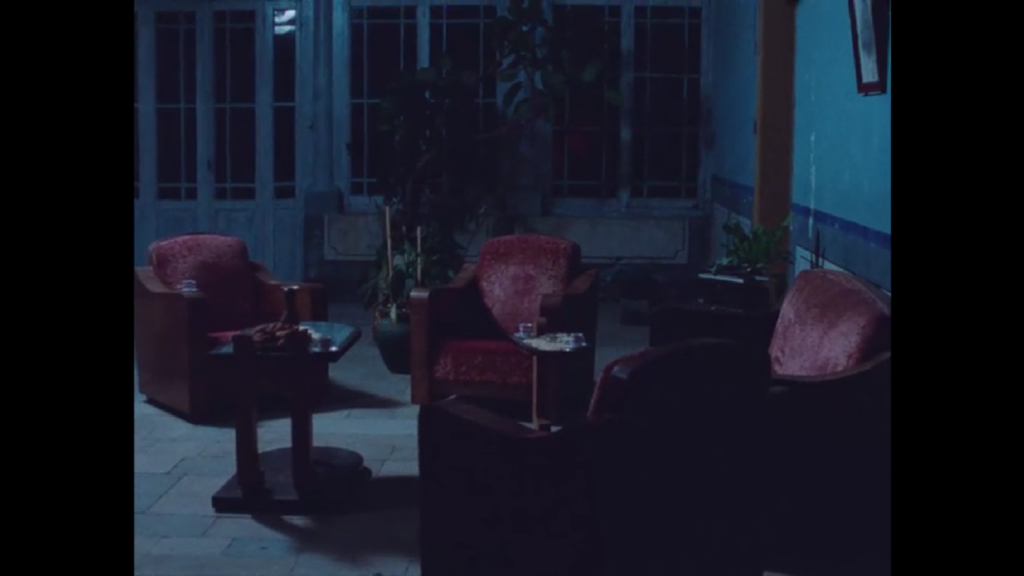
Leila and the Wolves is a classic example of looking back at something from the past (something over 40 years old) and watching as it feels all too familiar, even in our current day and age. We look upon the ruins of war and unrest along the eastern Mediterranean, blocks of buildings with no windows that may one day be rebuilt, or the once bustling patio of a restaurant now seen dilapidated and abandoned, as seen above. Now we see photos of cities along the West Bank, leveled by bombing.
We hear the woes of men from a patriarchal society who are contending with women who wish to prove themselves, fight for their people and their land, and to find their own power in a society that disenfranchises them, only to be rebuked for doing so and wanting more than a traditional role in a patriarchal system. As seen in the film, a woman is left for spending too much time sewing uniforms for the resistance. A woman is beaten by her husband only to be encouraged to pamper him so that he might not get a second wife or do even worse to her. A faceless man says, “I’ve been depressed. Since my office was hit, I’ve stayed at home like some woman.” He scoffs at the idea of living off his (presumably) wife’s money, saying, “I only feel like a man when I work and make money.” We hear these same sentiments now in calls for women to return to a more “traditional” role in the home and society.
Older generations cannot help but offer advice in support of a system that harms them, teaching the same lessons to the younger generation, even as they themselves remember how they experienced it with their upbringing and clearly yearn for change. An aunt tells her niece that her father is right to take her out of school and keep her at home, and when that niece seeks comfort with another maternal figure, she is met with “What can you do?” While that figure thinks, resigned, “Schooling makes no difference… She’ll end up married and spend her life having children.” Clearly, she is crestfallen by a fate that has befallen her, before getting beaten for burning food. Perhaps that’s an example that never changes; older generations resign themselves to their lot in life, trying to talk the young out of taking paths that would involve hardship, even when there is something clearly, terribly wrong.
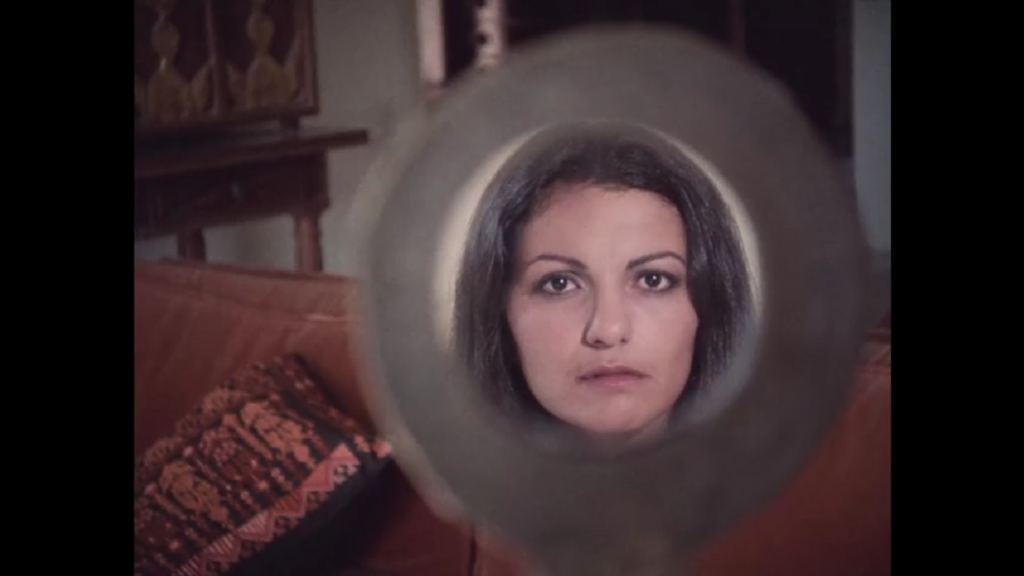
The film itself centers around a narrative of the main character, Leila, preparing for an exhibit about Palestinian and Lebanese resistance, but finds that there are no women in any of the photos in the exhibit. She then begins walking through time, envisioning the stories of Palestinian and Lebanese women as key parts of the resistance against occupation of their native lands by foreign and genocidal entities. These women use their skills and position to make more protected, hidden moves in the past, and take increasingly up-front roles in the resistance as time moves on and we reach the Lebanese Civil War.
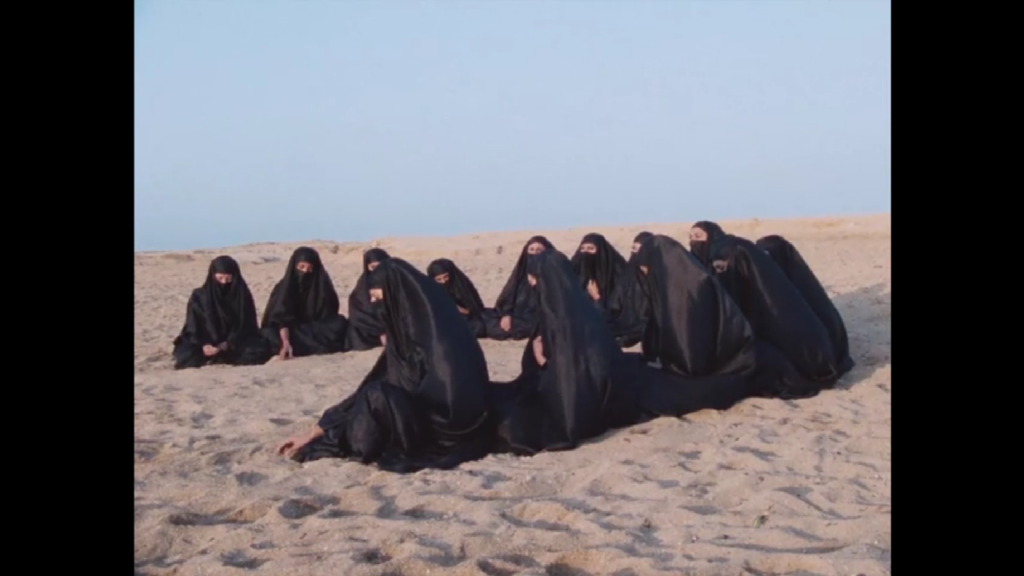
Throughout, Leila continuously returns to a scene where 13 women in black burqas sit in a semi-circle on the beach. While their husbands and sons lounge on the beach and play in the sea, these women sit cross-legged, patient, watching the men and boys of their life enjoying themselves while they are left to bake in the sun.
They grow increasingly uncomfortable and fidgety as the film goes on. Finally—well I won’t spoil it for you. But, needless to say, something must change. What that something is is for you to watch and find out, and interpret as you will. This film has a lot of very straightforward messaging throughout, and while this moment could also be taken as very straightforward as well, I think it also leaves room to discuss the nuance of the choice and exactly how it is executed.
I wrote a poem to accompany this piece, based on a moment in the film where they refer to Lebanon and Palestine historically belonging to a place known as the Land of Olive Groves, and that they were both once luminous with groves of oranges and olives.
Once olives grew,
Now ash,
As oranges
Now bleed.
These ancient fruits,
Now gone,
Leave Native’s hopes
Adrift.
Their history,
They mourn.
Generations
In grief.
Edited by Olga Tchepikova-Treon