
| Chris Polley |
Taking Off plays at the Trylon Cinema in glorious 35mm from Friday, December 26th, through Sunday, December 28th. For tickets, showtimes, and other series information, visit trylon.org.
“It was a street-theater spectacular that never stopped,” Czech-turned-American director Miloš Forman said of his time spent in Central Park during the summer of 1970 before and during the filming of his debut stateside feature Taking Off. In particular, he’s referring here to the meeting of what he dubs “hardcore hippies” and “weekend hippies,” and anyone who’s had a brush with any sort of counterculture element (even secondhand through pop culture) understands exactly what he means by this: the full-time devoted and the part-time posers. It’s a juxtaposition that arguably becomes the central thesis in his 1971 satire, and one that remains relevant and potent today—no matter how hip you are, outsiders will still be able to peg you from a mile away.
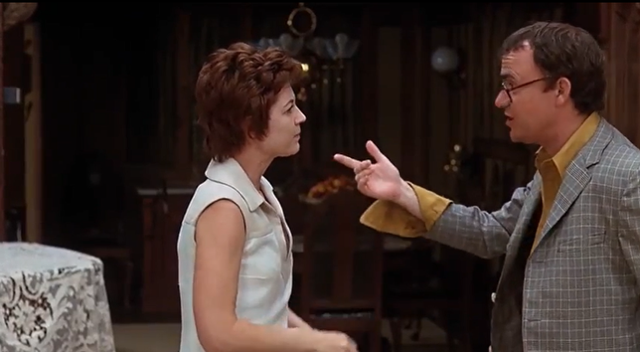
The premise of Taking Off is one that could easily veer into mean-spirited or shlocky: a married square couple (Larry and Lynn, played with warmth and wonder by Buck Henry and Lynn Carlin, respectively) grapple with a runaway daughter, who’s likely to have taken off with a band of hippies. This is certainly no after-school special, though, nor is it a treatise on class or intergenerational differences. The innovative and risk-taking Forman, known primarily for later iconic contributions to American cinema like One Flew Over the Cuckoo’s Nest and Amadeus, eschews both temptations every step of the way. As Alexander Ives writes about the film for Senses of Cinema, Forman “avoid[s] becoming a polemic and care equally for its characters, creating, in the process, a humane looseness that is more interested in people than politics.” As unflinching and mocking as the film is of both parent and child, both the Silent Generation and Baby Boomers, it is also extremely human and empathetic of its characters.
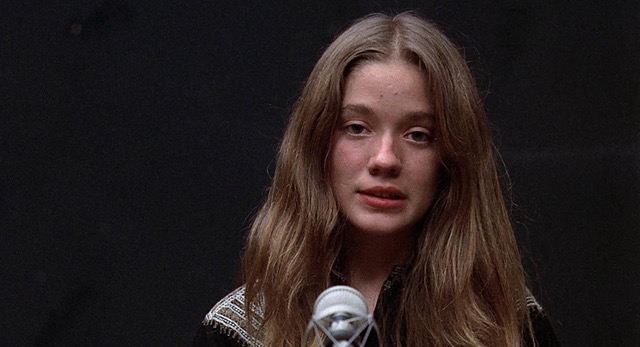
At the center of this send-up of bourgeois New England life amid women’s liberation, anti-war sentiment, and a hundred more disagreements between generations is Linnea Heacock as Jeannie, the escape artist daughter who’s constantly just-out-of-reach of her father and mother. Sad and aimless, Vincent Canby wrote for The New York Times about how slight yet magnanimous her performance is: an on-screen amateur “who hardly opens her mouth but whose eyes—large, beautiful, and often downcast—express quite enough.” One of the funniest and most vibrant gags in the movie is also one of its main salient points about raising teenagers in an emotionally volatile but relatively safe environment such as suburban New York—just as Larry and Lynn give up searching for Jeannie, they head home only to find she has returned unharmed and unmoved. She doesn’t seem okay internally, but she certainly doesn’t seem to be in dire straits. The punchline is that as soon as Larry and Lynn rest easy and regain their wits, Jeannie sneaks out again, either seemingly unable to stand staying in their presence or, perhaps, simply having more interesting places to be with less repressed people.
Also recurring throughout the film, though not necessarily as a gag per se, is one of the destinations Jeannie hops off to as Taking Off’s inciting incident—an open audition for young female singers. For what they are auditioning remains unclear throughout the film’s runtime, but it doesn’t really matter either. Jeannie and countless others, most notably a pre-fame pop songwriter Carly Simon (“whose presence is so potent it may have stopped the film cold had Forman let her whole performance play out,” writes Steven Lippman for Talkhouse) and a very young Kathy Bates (billed as Bobo Bates), are shooting their shot for the big time. This is the second of at least three or four meanings the film’s title alludes to, suggesting that as Jeannie and/or her parents take off from home, she and they are also hoping to see their lives finally take off as well.
Forman and editor John Carter (the first Black artist to join the American Cinema Editors society and who would go on to cut everything from Lean on Me to Friday) continually return to the mystery audition space even without Jeannie, and often in dreamy, stuttering rhythms that feel out of a more experimental concert film. This, debatably, is where the film is at its most arresting and singular. Likewise, these are also the segments that hold Taking Off together as utterly sincere and meditative, even as it interrupts the clever pratfalls and genuinely laugh-out-loud moments related to the quest for Jeannie and the various distractions Larry and Lynn encounter along the way. The two aesthetics coalesce and climax when Larry, in a fit of frustration over not knowing where to look for his daughter, decides she must be out somewhere having fun, and he and Lynn should be doing the same. They spontaneously attend a musical revue featuring Ike and Tina Turner, and for anyone familiar with the legendary R&B chanteuse’s spellbinding performance in the watershed Rolling Stones documentary Gimme Shelter, she provides a similarly showstopping number that binds and hypnotizes the young and old alike, as if to suggest that for all of life’s struggles and pain, music is one of the only true salves.
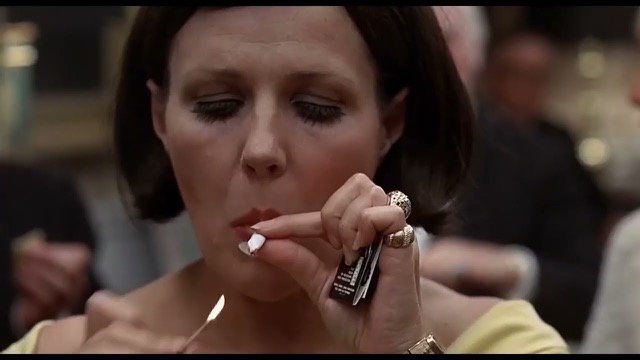
At a brisk and breakneck 93 minutes, Forman manages to cover more ground than most three-hour epics, and with a film that is essentially a comedy at its heart. And yet, for as many moving pieces and interlocking themes that he is able to puzzle together, its most dynamite scene comes toward the end, and is essentially an exquisitely performed, shot, and written Saturday Night Live sketch nestled into the lost-child narrative. In an attempt to find compassion and understanding with other parents who have “fugitive” sons and daughters, Larry and Lynn attend a conference wherein attendees are taught about the magical allure and seduction of one of youth’s greatest demons: marijuana. And yes, the keynote speaker (played with mechanical precision and charming assuredness by beloved character actor Vincent Schiavelli) even encourages parents to try the stuff that has so possessed their children. Without spoiling too much for those considering pressing play on this underseen classic, just know that it’s the kind of sequence that comes around in movies maybe once a decade. Fifty-four years later, it crackles and elicits giggles just as naturally as a David Gordon Green or Richard Linklater joint (pun intended). Oh, and yeah, there’s one more meaning for the film’s title for you too: early 70s parents in a hotel ballroom taking off, or getting lifted, together with the help of the science teacher from Fast Times at Ridgemont High.
While it should come as no surprise that the man responsible for one of the saddest films about one of America’s funniest men (1999’s underrated Andy Kaufman biopic Man on the Moon) has had this card up his sleeve since he immigrated to New York City nearly thirty years prior, it’s a moving and electric reminder of what an insightful outsider can bring to light with the right resources. Taking Off is an unassuming tour de force of filmmaking and exactly the kind of art that is vital to revisit as we live through yet another age of intergenerational woes, fractured understanding of the other, and incessant second-guessing about how much to rebel against societal norms. Figuring out where to go and what to do, both literally and figuratively, is certainly no walk in the park.
Edited by Olga Tchepikova-Treon