
|Zach Staads|
Brazil plays Saturday, March 14th at Emagine Willow Creek. For tickets, showtimes, and other series information, visit emagine-entertainment.com.
“Sam, you’ll never get anywhere in a suit like that.” – Officer 412-L
Wiser words have never been spoken. If you really want to make a statement, affect some real change and be an upstanding, ambitious member of the bureaucratic body that keeps the lights on,* you should know the importance of bureau fashion and the role it plays in distinguishing the different rungs of the government ladder. (*There is no guarantee that the bureaus can keep the lights on.)
At the bottom of that ladder, the backbone of this nation, are the mail boys. A mail boy has a very distinct style that is practical and eye-catching, which makes them easy to pick out of a crowd when you need their service, and also makes certain that they do not get caught under the foot of any assistant junior managerial bureaucrats or the junior managerial bureaucrat assistants or the managerial bureaucrats of the junior assistants and assistant juniors.
From the bottom up, these mail boys have black pleather oxfords on their feet, hand-me-downs provided from their predecessors that are a government-patented One-Size-Fits-YouTM that are meant to be grown into, and protected against by a pair of shin-length nylon stockings. Up their legs run a pair of deep, charcoal polyester slacks that emulate the dark suits of executive officers of the highest rank, keeping aspirations alive in the easily broken young minds of our nation’s ambitious youth. (These trousers also gird the loins of all mail boys with anti-chafe technology, created and put in place after the famous Bureau of Records v. Spermatozoa of This Nation’s Youth, Inc ruling.) On the trunk, they wear a dark grey, polyester button-up that instills a sense of humbleness, showing they are not yet trusted with wearing a white shirt, and a clip-on polyester tie, the tie is striped for junior mail boys with 0-3 years experience and solid for senior mail boys with 4-10 years experience. Over their shirt and tie, they wear a sweater vest made of untreated wool, each slightly different in color and style for easy identification at a distance so they can accurately be punished when they inevitably make mistakes and must face the requisite pay dock, amount based upon the severity of the infraction. Finally, they wear a pair of spectacles, with or without lenses, and keep their hair plastered to the scalp in a shiny black lump with a 2-in-1 hair jelly & no-wash dye which finishes off the signature mail boy look.
The most, most important part of the outfit is the unique, untreated wool sweater vest. Notice that it is the one piece of clothing made with natural fibers, and the only piece which strongly distinguishes one boy from another—something not seen in the higher ranks of government employees. Why do you think this is? I’ll tell you why. It gives these lads a rough reminder of the cost of individualism. The untreated wool fibers easily pierce through the polyester of their shirts and create a terrible itching sensation that creates, over time, a numbness that shapes these boys from sensitive, idealistic dreamers, into pragmatic, efficient, obedient, and dull young men who no longer think of dreams, but look forward to focusing on their work instead of the immense discomfort of existence. If they do dream, it’s about shedding their vests and enjoying the perks of the junior managerial suite.
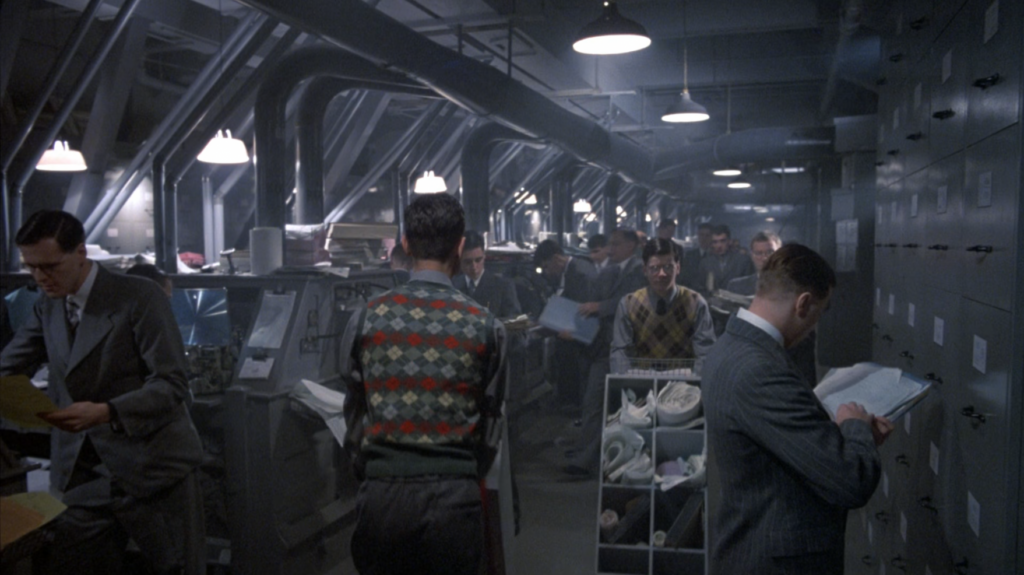
Here, we find the assistant junior managerial bureaucrats and the junior managerial bureaucrat assistants. The outfits between these two positions are largely the same, each made up of a two-piece pinstripe suit in a medium grey color with a textured look that lives somewhere between a twill and a tweed, and is comprised of a blend of 85% polyester, 10% cotton, and 5% wool. (The 5% wool is to make sure that these bureaucrats keep on their toes and don’t forget to take good care of these suits, lest they be reminded of their sweater vest woes from days past.) Underneath this suit is a simple white cotton button-up, and a pair of black and grey grosgrain button-bracers. This look is finished up with loose, black, cotton tube-socks, and the government’s patent-pending Shrink-To-Fit© black pig leather oxfords. The two positions are only differentiated by their polyester ties which follow the mail boy standard of striped ties for the AJMBs and solid ties for the JMBAs, both tied in a classic four-in-hand knot.
These outfits have two noticeable changes: no spectacles and the lack of regulation surrounding hair style. Prescription eyeglasses are not permitted for members of the junior managerial suite due to the delays that would arise if the glasses were to ever break. Therefore, new members of this suite must receive any necessary corrective surgery and pay the bureau back for any missed work during the mandatory 8-week recovery period. (Smart, driven mail boys remove their glasses for portions of the work day in order to “train their eyes” that they might see more effectively and be better prepared for an AJMB or JMBA position and avoid any costs that may be incurred from surgery.) The reason that an employee’s hair is not regulated, as it is for mail boys, is due to the deep psychological implications of the different ways an employee cares for, or does not care for, the look of their hair. To find out more about the deep psychological implications of these variations in hair care, you will need form RZ8-9-1912 from the Department of Psychological Research and Torture, not to be confused with the Department of Physical Research and Torture, a subset/partner of the executive offices of the Department of Information Retrieval.
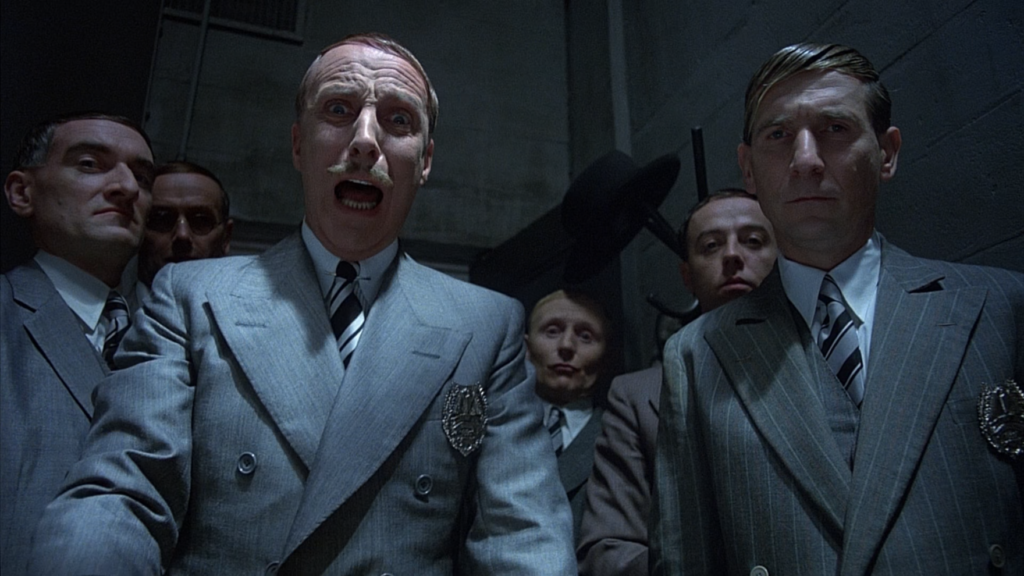
The next rung on the ladder—our luscious ladder—is populated by the very salt of the bureaucratic earth, bureau officers. These men are the T-Cells within the government body that make sure that no bad apples slip through the cracks. To show appreciation for their work, the white button-up is upgraded to a stiffer cotton, complete with a faux, non-detachable Arrow collar, a waistcoat is added to the medium grey pinstripe suit, and an officer’s hair is generally slicked down or back with a small amount of government-subsidized hair pomade.
Don’t let those changes make you think that everything is all bangers and mash for these officers! To make sure that their crucial work may be focused on, officers are isolated into individual offices where they must share a desk with another officer via a convenient desk-shaped slit in a shared wall. Additionally, birth names become purely a formality. From day one, bureau officers will be referred to by their officer identification number. If any shred of that pesky individualism happens to still be present when they start, getting rid of that should do just the trick! These measures have proved to be incredible boons for productivity as officers have shown a 500% increase in work completed, which has only been countered by a slight, 60% increase in the number of bureau officers who have retired to the care of government rest homes where they are given private rooms to live out their days in relative comfort.
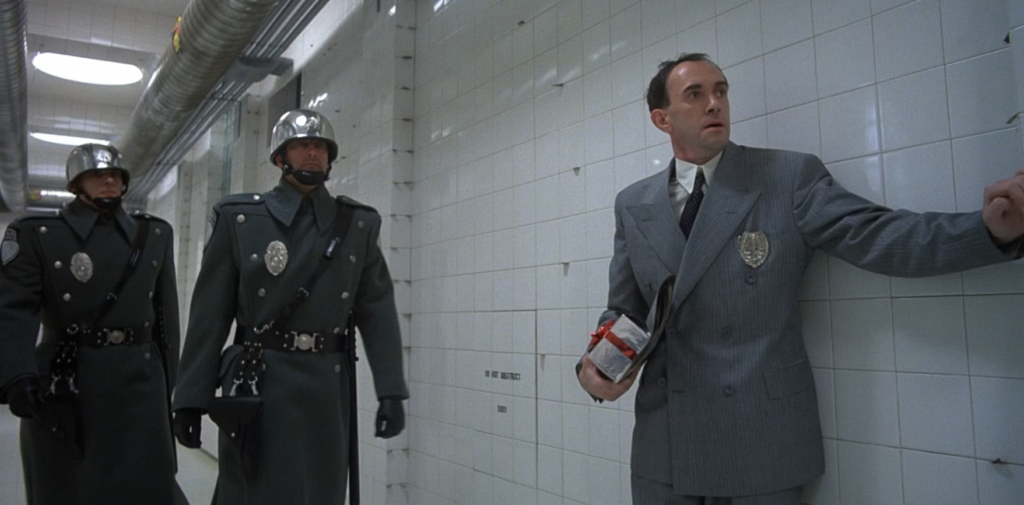
When an AJMB or JMBA is promoted to a managerial bureaucrat of junior assistants and assistant juniors, or a bureau officer is seeking a higher executive position within a given department, they begin to wear a light grey, pinstripe three-piece suit. Aside from the lighter grey tone, the biggest change is that the jacket is changed to a double-breasted style to emulate a feeling of old-fashioned, military authority. For a brief sojourn before the final tier of fashion, let us take a dip into the gorgeous fashions of the military police.
These outfits take from the strong military fashions of central Europe in the mid-twentieth century, sporting leather harnesses, sharp lines, braid-adorned shoulders, black pig leather combat boots with white cotton puttees, and the classic silver stormtrooper and officer helmets. These are made of a heavy iron core that is nickel-plated, causing the helmet to ring like French porcelain when struck, and allows any foreign enemies, terrorists, dissidents, and jaywalking old ladies to see their own faces just before they are beaten and taken into custody, per military regulations. These men are also ready at a moment’s notice to serve at important formal functions in many forms of historical dress to be in keeping with the evening’s theme, though firearms will be anachronistic for those history buffs in the crowd!
Finally, the real deal, top tier, cream of the crop—the true executive suite.
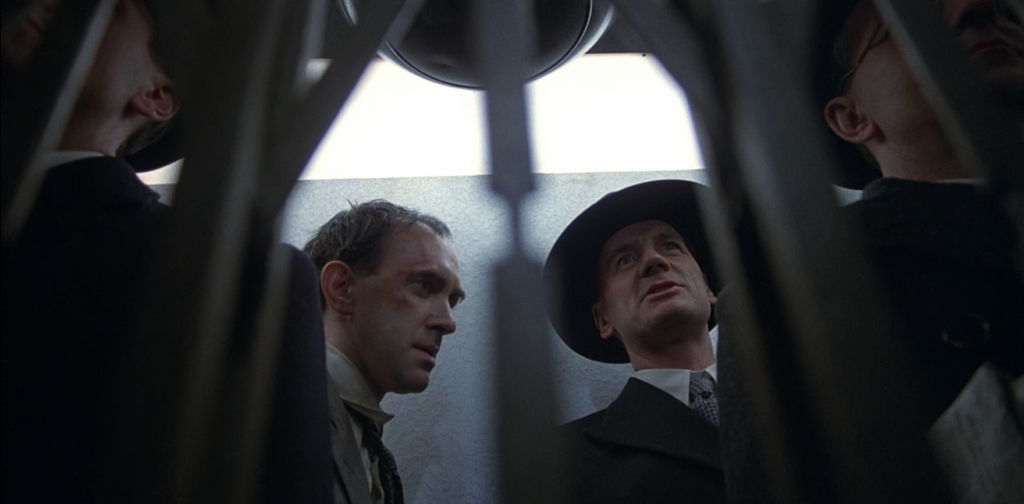
The pinnacle of government style lives here. The suits range the entire charcoal to black spectrum and need not be constrained to the pinstripe conformity of the tiers below, they are made of a supple 50/50 cotton-poly blend, their button-bracers also change to a fine silk or sturdy leather, and those polyester ties turn to sleek silk and are tied in a respectable half-windsor knot. These are the incredible fashion heights that are permitted at the top of the government ladder. When there is no i left undotted, no line left uncrossed, and no loyalty left untested: you are free to bask in the joy of everything you’ve done to get where you are… on top!
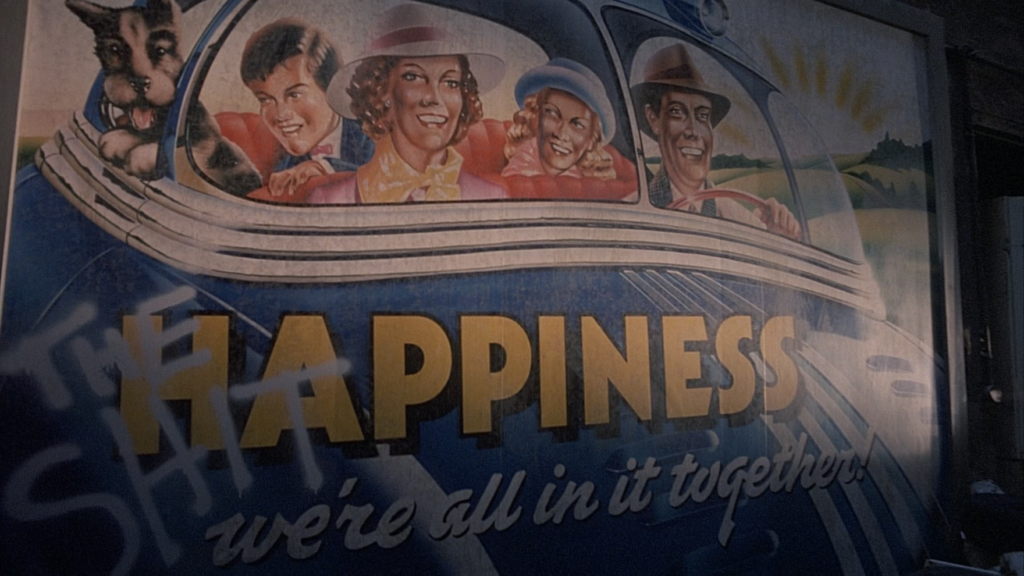
These fashions exist not only to mold frightened young boys into the upstanding milquetoast men of government bureaucracy. These fashions exist to remind the citizenry of this fine nation that when they see those silhouettes standing on the street corner, down the hall, or even at their very doors—that what they’re seeing is the commitment of bright young men of tomorrow who will do anything it takes to get the necessary results to keep costs down and efficiency high because—never forget—We’re all in it together!
Edited by Finn Odum