
| Dan Howard |
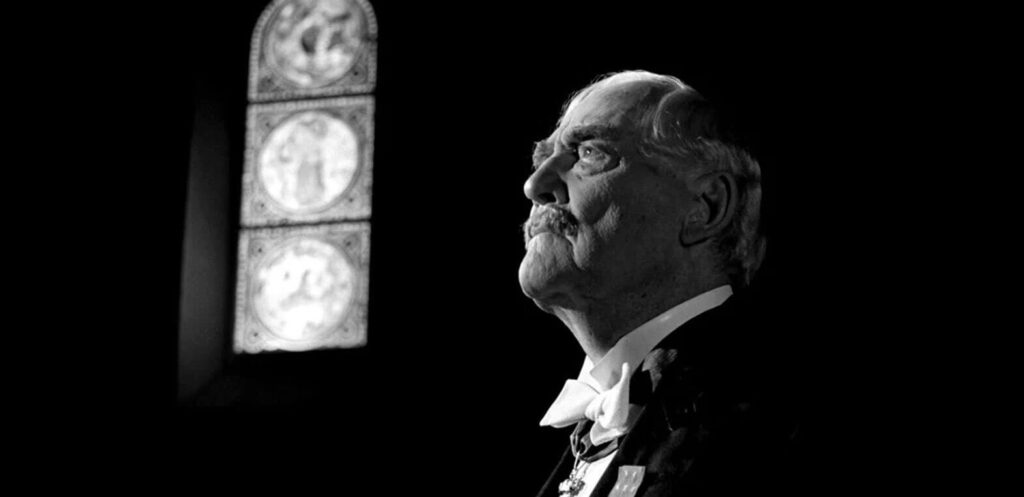
Wild Strawberries plays in glorious 35mm at the Trylon Cinema from Sunday, July 12th, through Tuesday, July 14th (our editor Finn’s birthday!). For tickets, showtimes, and other series information, visit trylon.org.
Oftentimes, it feels like younger people have been told all our lives by our elders to “never get old” and to appreciate the time we have while we have it. When we see how some people become more cynical with age, it lessens any desire to get that old. I believe we’ve all had our fair share of encountering jaded folks from older generations; those who seem so checked out from the world. Is it surprising that some people try to hold onto their young hearts for as long as they can? I have no doubt that Ingmar Bergman may have had the fear of growing colder in his old age himself as he was approaching his 40s. However, he became inspired during his own road trip across Sweden and stopping in his hometown of Uppsala, imagining walking into his old home and finding everything just the same from his younger days. That’s when he conceived his rare, most hope-filled masterpiece, Wild Strawberries.
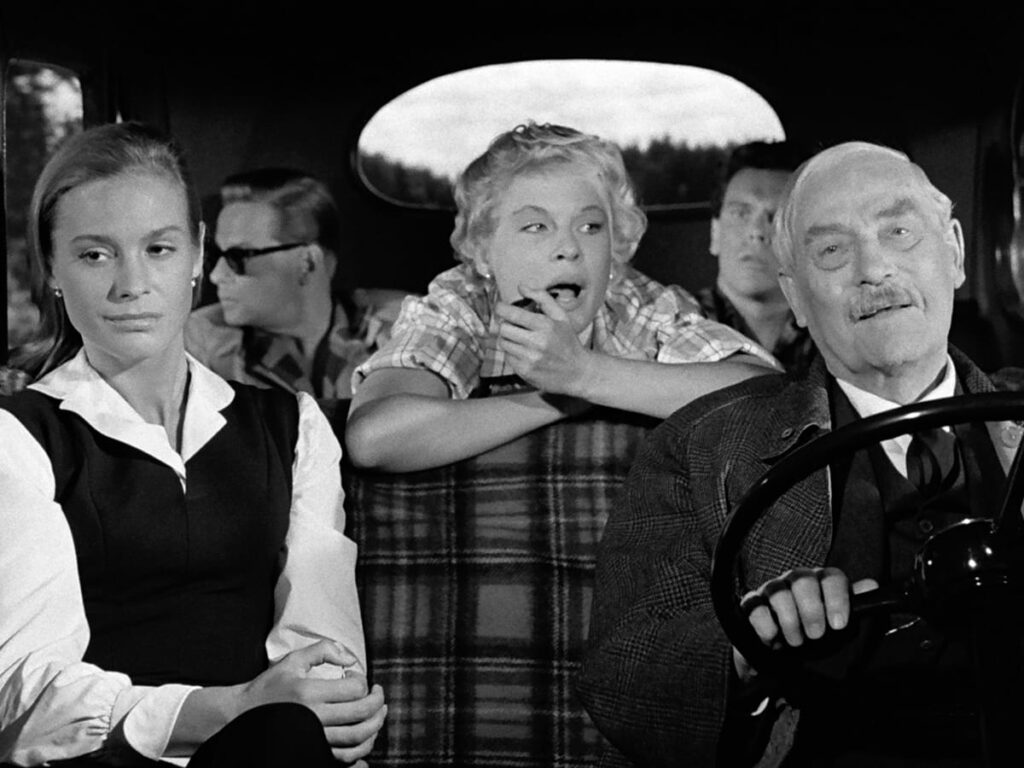
In Wild Strawberries, we follow the cynical Professor Isak Borg (Victor Sjöström) as he embarks on a road trip across Sweden after awakening from a deeply disturbing dream. He travels from Stockholm to Lund, accompanied his son’s wife, Marianne (Ingrid Thulin), to accept his honorary Doctor Jubilaris degree from his alma matter Lund University. As Isak and his daughter-in-law meet a group of young hitchhikers and a couple recouping from a car accident on their journey, he takes detours to places where he spent his childhood. Memories and fantasy begin to blur with reality while he recalls his family’s summer home, his former love Sara (Bibi Anderson), and begins to rediscover his humanity and love of life.
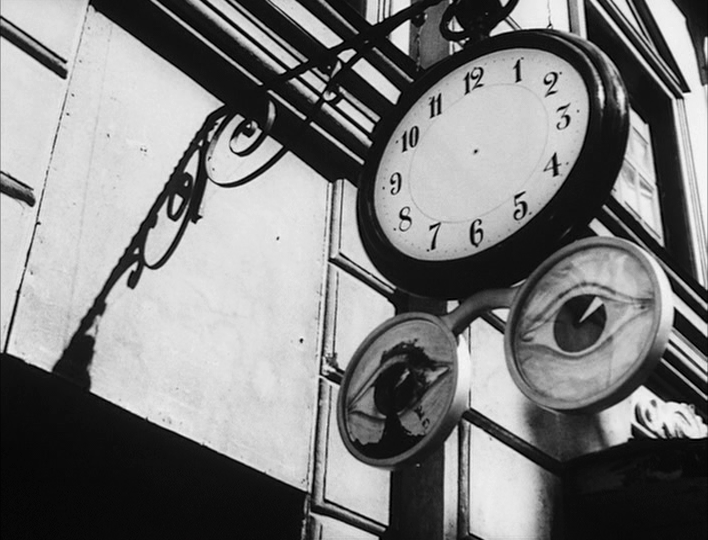
At the time Wild Strawberries began filming, both Ingmar Bergman and Victor Sjöström were each facing deteriorating health. Considering The Seventh Seal had been released 10 months prior, it’s clear that Bergman had death on his mind and was going through one of the darkest periods in his life. Bergman suffered from severe gastric ulcers (this is when he wrote the screenplay for the film while in the hospital), a failing marriage, and a general sense of alienation from the world. During this period, he experienced recurring dreams of a handless clock, the crash of a driverless hearse, coming face to face with a corpse, etc. All these motifs appear in the opening dream sequence to Wild Strawberries. After all, what better way for a filmmaker to confront his fears than by writing about it and sharing it with the world(aside from therapy)?
Despite his life being in an almost complete disarray, Bergman was able to cast one of his heroes, Victor Sjöström, in the main role of Professor Isak Borg. It was Sjöström’s film, The Phantom Carriage, that served as a key inspiration for Wild Strawberries, including the horseless carriage that appeared in Isak’s dream. However, getting Sjöström to say yes to the role was a struggle in itself. At 78, Sjöström was facing his own failing health, consistently forgetting his lines, becoming frustrated with the challenging shoot schedule, and demanding his days finish at 4:30pm. Bergman admitted that while seeing his idol age and slowly fading away, it fittingly mirrored the dreams of mortality in Wild Strawberries.
Yet, even with the tedious production, the two men still found solace in each other. They had already developed a good working relationship through Bergman’s first feature film, Torment, which Sjöström helped get to production. Their mutual adoration continued on the set of Wild Strawberries, where Bergman playfully referred to his idol as the “grand old man” while Sjöström teasingly exclaimed “I’ve been making movies since before you were born!” Bergman’s affection for the Sjöström reached such depths that both he and co-star, Ingrid Thulin, formed a secret pact that they themselves would take the blame whenever Sjöström fumbled his lines. I personally believe this mutual affection between the two artists not only made Wild Strawberries feel so magical and gave Sjöström the best performance of his career; his swan song.
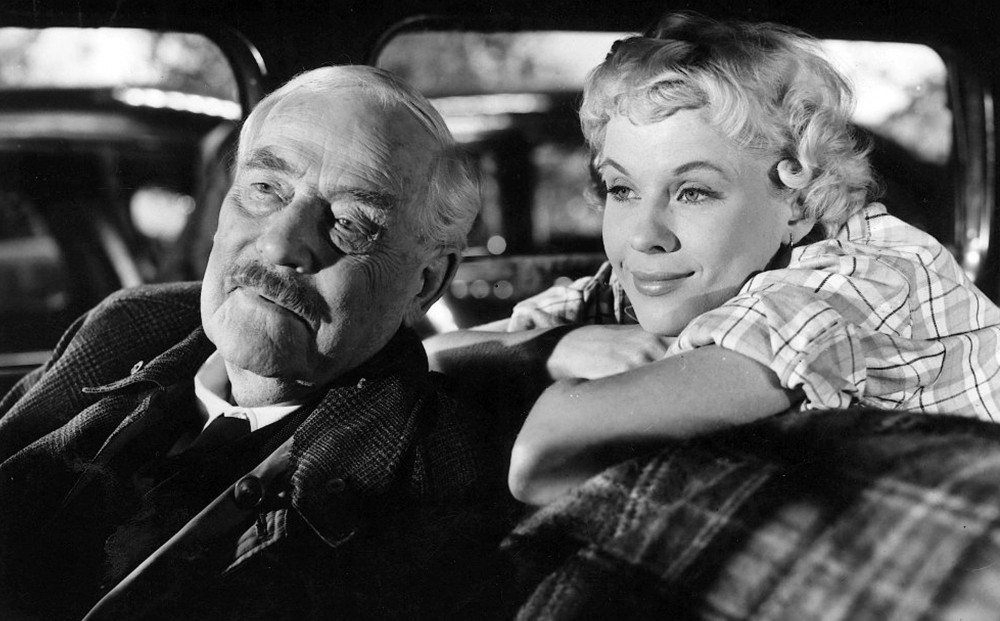
Making something as optimistic as Wild Strawberries seemed to give Bergman some of the peace of mind he had been seeking his whole life, even if it was temporary. In my mind, Wild Strawberries symbolizes various endings for the director: His affair with Bibi Anderson was coming to an end, an attempt to reconcile with his mother seemed to go nowhere, and his hero was on the verge of retirement. How could he not harbor some sadness about it all? However, Wild Strawberries displays his desire to heal; to reconcile with their past. Most importantly, it feels like Bergman was ready to close the chapter on his family’s generational bitterness, even basing the character Isak Borg on his father. It seems evident he had some hope his parents could change their ways. Yet, Bergman himself was an absent father in his own children’s lives even after Wild Strawberries’ release. Unfortunately, that never changed all throughout his and his children’s lives.
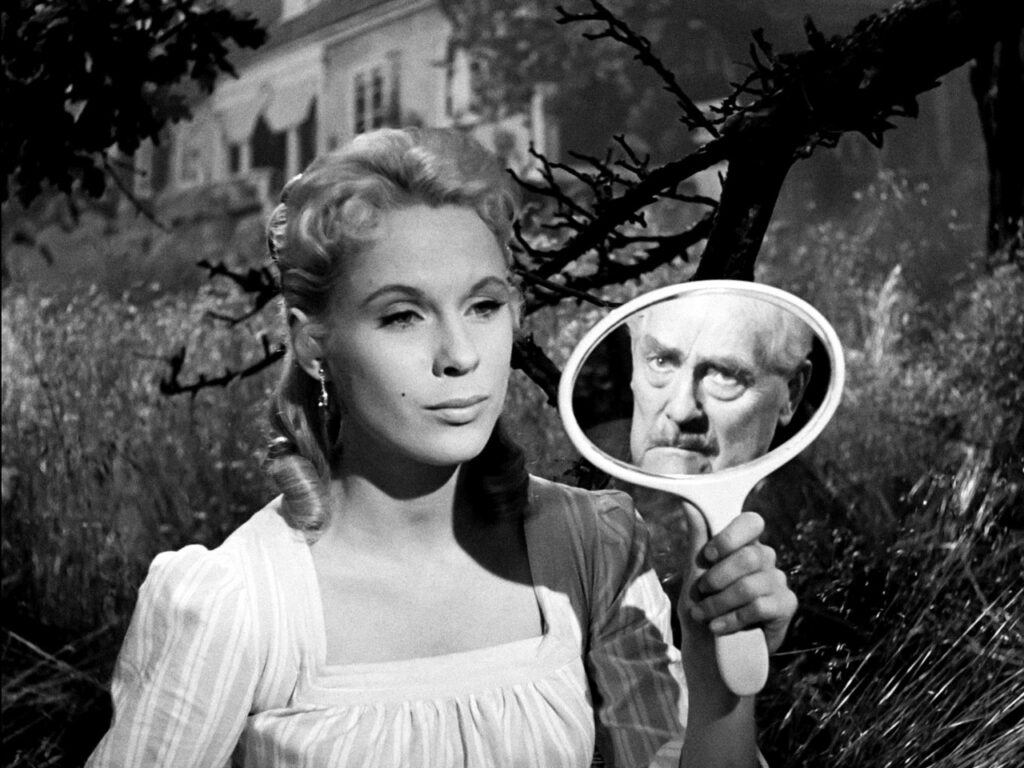
I think Bergman wanted to show that we can find and keep the joys we felt in our lives. That our past does not define us. Maybe Professor Borg did not achieve a full reconciliation with the people around him, but even Isak’s housekeeper, Agda (Jullan Kindahl) notices that a transformation had overcome the old codger. She just couldn’t put her finger on how. Was Bergman himself a perfect embodiment of this message? Not really. Yet, as imperfect a person as he was, his deep human desire for love and peace was on display for all to see. Thankfully, in his older years, friends and colleagues of his confirmed that he did find some personal joy in his life and routines while living on Fårö island, allowing his relationships and personal introspection in his solitude to thrive. With Bergman even admitting that he was “forever living in his childhood,” Wild Strawberries presents a rare glimpse at two masters’ tender sides. Making Sjöström’s final team-up with Bergman truly unforgettable; a film where one can find new meanings as we ourselves grow older and we find our own renewed sense of hope with each viewing.
Edited by Olga Tchepikova-Treon