
| Finn Odum |
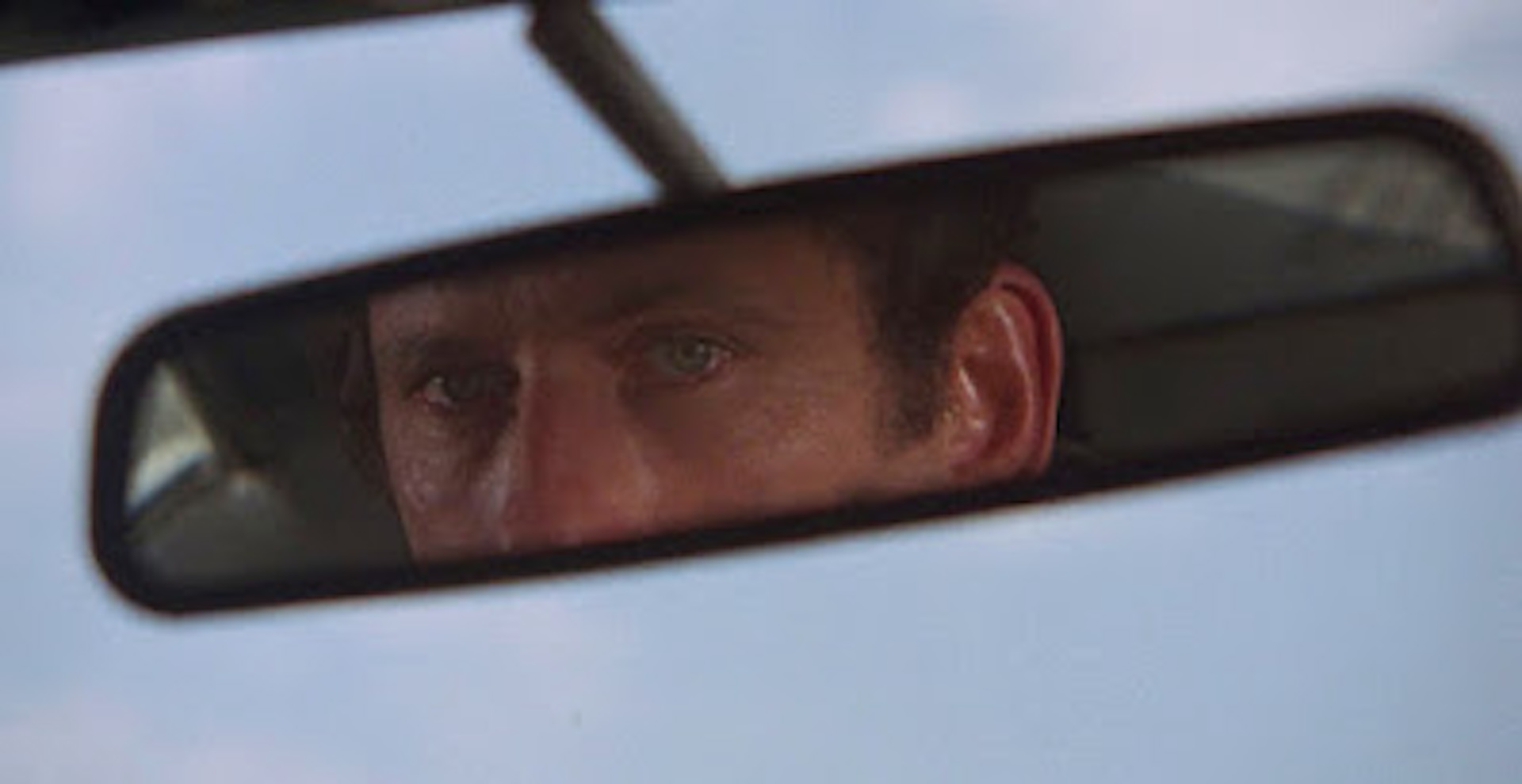
Vanishing Point plays at the Trylon from Sunday, July 5th, through Tuesday, July 7. For tickets, showtimes, and other series information, visit trylon.org.
I frequently dream about driving a car that’s lost control.
In these dreams, the driver is missing, and I am left trying to navigate a vehicle from the backseat. Usually, the car is in peril. I’m flying down a hill. Another car is in the way. I’m back in Milwaukee, driving down the Marquette interchange, but the off-ramp is broken and the gas pedal is stuck. The vehicle is hurtling out of control, and I’m desperate to grab the wheel. Sometimes I do. Sometimes I’m stuck. Sometimes there are no brakes, and sometimes I just don’t hit them, staring down death as I hurtle toward her.
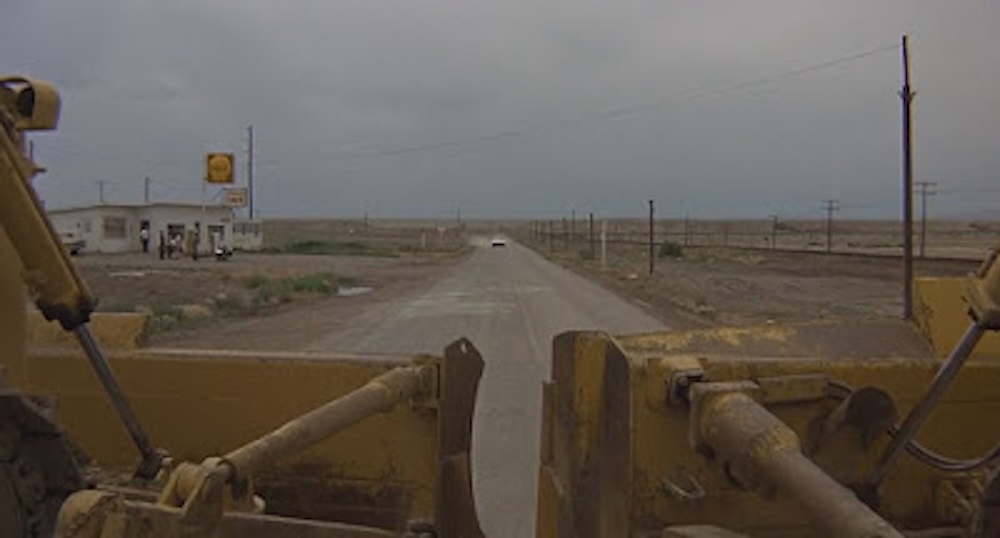
The beginning of 1971’s Vanishing Point is one of these dreams. A driver is in the front seat of a 1970 Dodge Challenger R/T 440 Magnum, barreling down the road at a breakneck speed, aiming for two massive bulldozers.
His name is Kowalski. He’s running on a mix of marijuana and amphetamines. He’s Polish, like me.
We have a lot in common, actually, if you don’t count the whole driving-while-on-speed thing. Much like my life of job/second job/burlesque performer/blog editor/etcetera, Kowalski’s worn a lot of hats. He was a racecar driver, a Vietnam War veteran, and a motorcycle racer. He was a cop, too, and got let go because he prevented a superior from sexually assaulting a young woman. (After this, he was unjustly fired from his position, letting you know just how this movie feels about the police and their politics).
At the beginning of the film, which begins with the end, we don’t know any of these things about Kowalski. When he sets out on his journey, all the world knows about Kowalski is that he 1. is a delivery driver who is 2. driving at high speeds from Colorado to an unknown destination. He may be an aimless drifter with no apparent motive. He may have avoided the police for much longer had it not been for the Jaguar.
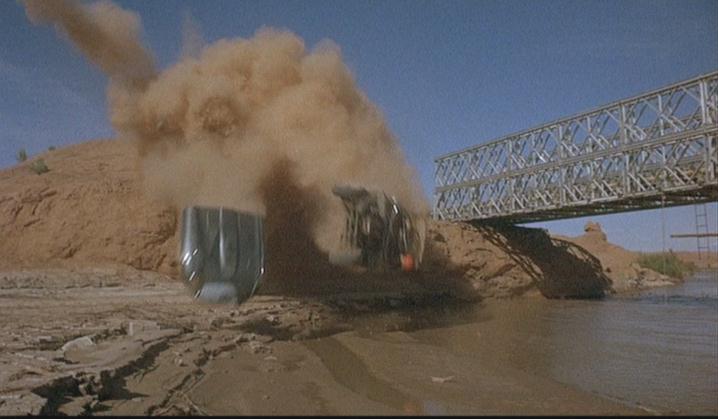
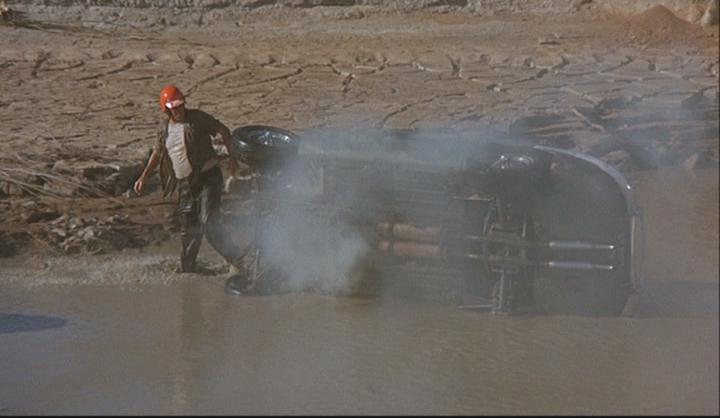
Shortly into his journey, a man driving a Jaguar roadster challenges Kowalski to a race. Kowalski nearly runs off the road—but he doesn’t, because this is nearly twenty minutes into the movie, and instead the Jaguar swerves and crashes into a river. The driver lives. The Jaguar dies.
The driver reports the crash but doesn’t press charges, and now the police are even more keyed in on Kowalski. A blind DJ named Super Soul learns of the new Polish speedster and starts calling out to him while on his journey. Every civilian from Colorado to California starts to care about Kowalski, a man they know nothing about. That’s his appeal—no one but the audience, Kowalski, and his dealer knows why he’s taking this trip. A missionless mission creates an American hero. Because he doesn’t kill the Jaguar driver, his only crime is dangerous driving, and with no apparent blood on his hands, the public deems him a folk hero.
I was struck when the Jaguar died. A film hinged on a drug-addled cross-country road trip should have at minimum one (1) character death. But the driver lives. He lives because Kowalski can’t kill him. If Kowalski kills him, even by accident, then he has a reason to run. His mission would have a purpose, and the purpose would reduce the mystique, the mystery, the appeal to the public. So the driver lives, and the Jaguar dies.
(When I dream about driving, it’s often because I’m feeling especially anxious or out of control. There’s something or someone else at the wheel—God, or gods, or just a sick little guy puppeting the world around me. Things are happening and it is either totally out of my power to stop them, or it wasn’t but I made the wrong decision. In Western divination traditions, dreaming about driving is often correlated with how you feel about cars. Shocking that someone who notably doesn’t drive has exclusively negative dreams about vehicles. The only positive quality I encounter is that no matter what happens, I live. The car crashes, I get thrown out of my seat, we hurtle off the bridge. I live. The car dies.)
Kowalski, much like me, encounters a lot of odd characters. Beyond the Jaguar and its driver, he meets a prospector whose truck is buried in the desert, two nefarious gay hitchhikers (happy pride), and a hippie who sells him speed. In almost every one of these situations, he’s the one who controls the car. The prospector (who’s selling snakes to rockin’ evangelicals) needs Kowalski’s help to get across the desert. The menacing queers are in need of a ride as their car has seemingly crashed; they try to rob him shortly after, suggesting that perhaps it was a ruse and they thought they’d control a kind stranger. The hippie never gets into the car—he’s one of the only characters who chooses to help Kowalski instead of asking for support himself. Everyone else—even Charlotte Rampling in an appearance cut out of the US version—needs someone else to drive the car. They’ve lost control. Kowalski hasn’t.
Or at least they think he hasn’t, because no one knows anything about him. The reality of his journey is that the car is the last piece of control he has. During flashbacks, we learn about how he lost his job. How many vehicles he’s crashed. We learn about his morals, what drove him, and what he lost. We meet a girlfriend he had five years ago. She drowned.
(Kowalski’s a Scorpio. We’re both water signs).
The only career that gave him “purpose” is ripped from him as quickly as the tide pulls his only saving grace from underneath her feet. The Challenger is the last thing that Kowalski can control. It’s a vessel for his final run. Every other car he encounters belongs to someone who is lost or out of control; despite road races and desert detours, the Challenger keeps running, because it’s fueled by a man with nothing else to lose. It is his final exertion of control over his life.
So when we return to the beginning at the end, and there’s a police barricade awaiting him, Kowalski hits the gas. He’s missed his deadline, anyway, for a bet that doesn’t matter and a story beat I’ve barely touched on. There is nothing for him in California. There never was. He’s desolate and lost and goddamn this is the one fucking thing he can do, the one decision that only he can make—no one is taking this away from him—and so he drives. Hurtles. Barrels down the dusty road. The Challenger collides with two bulldozers and everything erupts in flames.
Kowalski dies, and the Challenger goes with him. He’s smiling.
Vanishing Point is like my dreams in the way that it’s not about cars, not really. It’s about the loss of purpose and a lack of control. What it’s like to lose everything. A man who has nothing left. In reality, this may not be the case, but in my dreams, I am almost Kowalski. I don’t drive the car—I rarely get in that front seat—yet everything else is the same. I am hurtling toward something that will kill me.
But I live, and perhaps there’s something for me to learn from that; that I can always take control if I need to. I can always start driving. In my dreams, I kill the Jaguar. In my reality, neither of us needs to crash.
Edited by Olga Tchepikova-Treon