
| Lucas Hardwick |
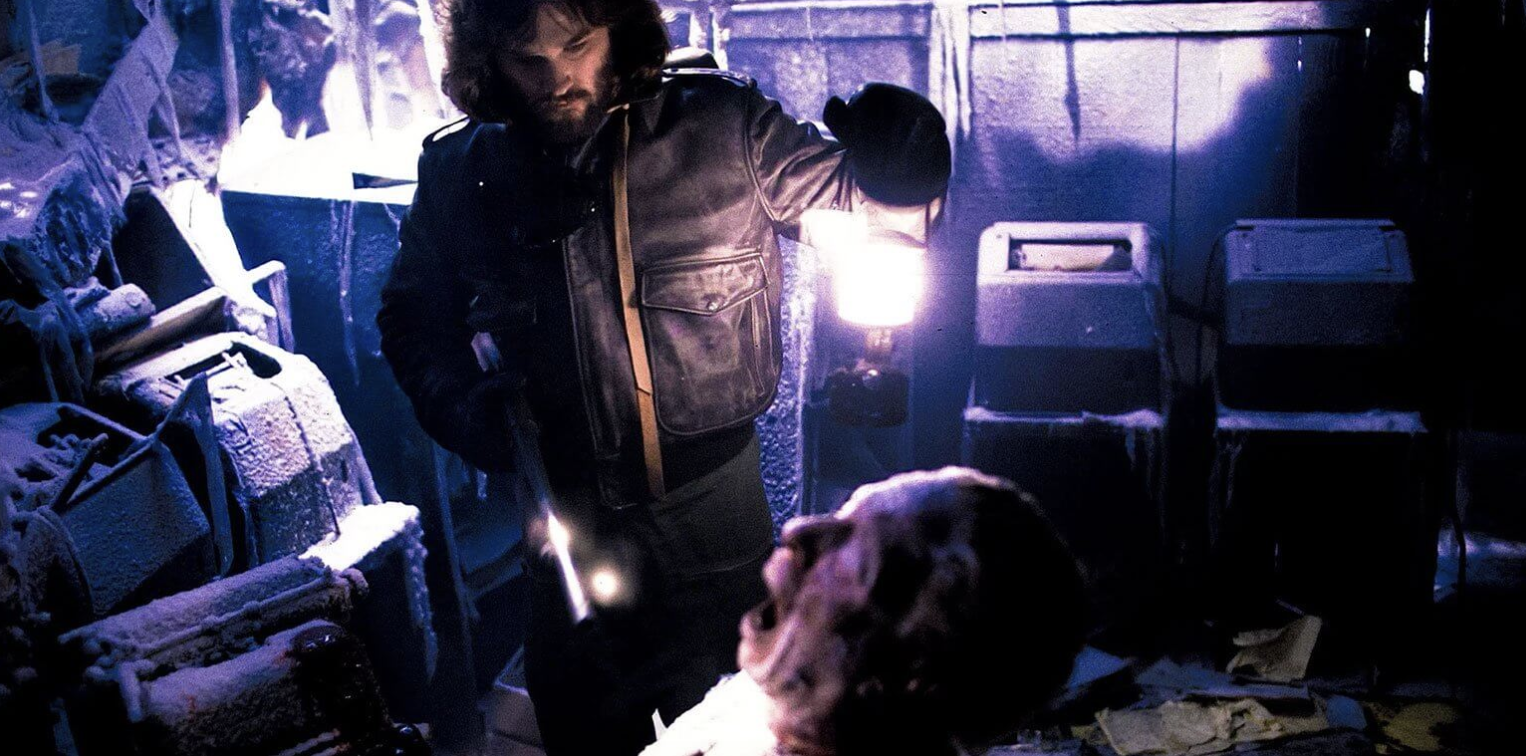
The Thing plays in 4K at the Trylon Cinema from Friday, June 3rd, to Sunday, June 5th. For tickets, showtimes, and other series information, visit trylon.org.
***Spoiler alert for The Thing and The Thing and a few other films***
When I was a kid my dad always said that if there was ever a World War III, he wanted the first bomb to drop on our house. He said it was because he didn’t want to live through what happened next. Did I miss World War III? Is the apocalypse manifesting in some way no one expected?
Consider the growing number of men who are currently attempting to reverse their circumcisions.
The first question on everyone’s mind is: how exactly do you get the toothpaste back in the tube? For the most part, it seems, one could simply look at the hand they were dealt and not even bother considering that something so audacious as regrowing flesh, much less in so sensitive an area would even be possible. I mean, it’s not like we’re talking about a bad haircut. But we’re living in the age of trauma and transplants and 3D printing, robot sex partners and face IDs that only work 40% of the time. This is the future, baby; you want it, the twenty-first century can make it happen.
Before we can even wonder how, we’re all dying to know why. Circumcision goes back to pretty much the beginning of time. Most of us are familiar with its religious implications from the Bible, signifying the physical covenant between God and the holy stock of Abraham. It wasn’t until much later that the health benefits became a thing. For example, circumcision is considered a critical measure in preventing the spread of HIV.
Let’s be honest, the utilitarian nature of the male member isn’t exactly the most handsome thing to lay eyes on. Studies show most women prefer their male partners to have a little taken off the top—and that’s worldwide. Meanwhile, most gay men have no preference one way or the other. I don’t make the rules, folks.
So if religion, health, and visual appeal aren’t your answers for the most obscure Family Feud category that’s never passed beneath Steve Harvey’s impressive cookie duster, why the rising concern with attempting to replace what conceivably cannot be replaced?
Survey says: reclaiming bodily autonomy! Thank goodness circumcision is something that’s done before anyone can remember the trauma of having it done. The emotional anguish of a clipped member is something that manifests much later, and is one of the most common reasons for unringing that bell. Of course, my late grandmother, who lived through the Depression in rural western Kentucky would often say, “We didn’t know we was poor because we were always poor.”
For as likely painful and physically harrowing as circumcision is, the methods for restoring foreskin seem just as horrifically barbaric. Circumcision reversal dates back to, well, also the beginning of time. The Greeks and Romans considered a complete set of male equipment a symbol of masculinity and civility. And since everyone walked around in bedsheets and nudity was more commonplace than the modern midwest, keeping the glans unexposed was most critical to broader decorum.
Since it’s impossible to actually regrow skin that’s been removed, the modern era has relied on good old-fashioned tissue expansion methods like various straps and tapes and daily tugging. My favorite device is the foreballs, which is exactly what it sounds like; a set of ball weights strapped to whatever you’re working with stretching it downward.
KOT—Keep On Tugging—is a common cheer among like-minded men on social media groups and message boards. Only after months and years can any consider these tactics successful, gaining up to 17mm of newfound swaddling, and then by grading on the Coverage Index—CI-1 as a great start, to CI-10 as a solid high-five achievement—preferably with the lights on.
And since we can 3D print doorstops and fidget toys, who says foreskins aren’t possible? Akroprint, that’s who. Founded by the folks who brought us Foregen, a foreskin transplant outfit, Akroprint anticipates the foreskin cadaver donor to popular demand ratio will be such that we’re definitely, for sure, gonna need to figure out how to print ‘em.
For some men, foreskin restoration is a world-defining predicament so specific to the male experience that it exists entirely outside the influence of women. It’s not made better or worse by a female presence. It is simply a man alone with a problem nobody else can solve for him.
Nobody understood this particular male anxiety better than John Carpenter in his first major studio film, The Thing, The story of a group of men trapped on the ice as they are each consumed by a replicating vomit-monster endures as the angriest movie ever made about men who can’t trust their own flesh.
A remake of the Howard Hawks produced 1951 horror classic The Thing from Another World (see my Perisphere piece on that one here), Carpenter’s take more closely follows the original John W. Campbell novella Who Goes There, but with lots more shouting and vomit-inducing skin stretching, and a lot less hope.
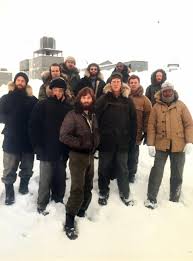
Antarctica Boys Club
A United States government-funded research outfit based in Antarctica has their day-to-day routine of substance abuse and ping pong interrupted when a Norwegian camp down the road tries to shoot its own dog, which has inconveniently escaped into the neighbors’ yard. Things go sour when the dog survives and its owner doesn’t, and before long our guys are scratching their heads over the crispy remains of a spaghetti-faced hose beast stinking up their dog pen.
A quick trip to the ruins of the Norwegian camp confirms the bad news: the find of the century from Planet X has likely infiltrated their camp, and its one superpower is making itself look and behave exactly like whoever’s flesh it worms its way into.
Trust becomes a commodity with diminishing returns in the face of a power struggle where someone needs to be in charge but no one wants the job. Tempers and flamethrowers flare as something from another world consumes each member of the American crew with an intensity that turns White Castle into a round trip.
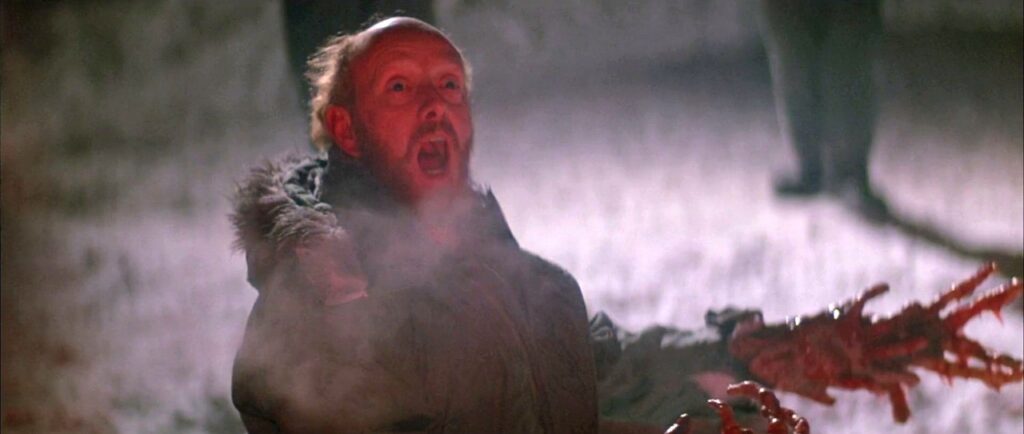
“Man is the warmest place to hide.”
The freezing isolation and escalating paranoia are all happening inside the closed system of a Y‑chromosome‑only murder of men. No women are present to bring down the temperature in the room or offer a distraction from the crew’s increasingly bleak predicament. And before you start with the hate mail about how sexist this sounds, hold your foreskins: the point of the film is not to instill a sense of hope or that anyone is gonna come out alive much less without becoming something that looks like what landlords plunge from the bathroom sink trap. The point becomes being the last man standing who can still say what he is.
You say, “That’s disgusting. Women can become the Thing too.” Of course they can. But before we start gender-balancing the alien, let’s look at what the simple addition of a woman does to this kind of story, starting with a couple of very famous female takeovers.
Probably the most notable woman to take on a glop monster from the cosmos is, of course, Ellen Ripley (Sigourney Weaver) in Ridley Scott’s Alien. Ripley ends up taking charge after the crew hauls an alien life form back to the ship. She’s the one insisting on quarantine, and she’s the one everybody ignores because it’s no fun to stand outside with a clipboard when you’re itching to dissect a facehugger.
Everyone quickly finds out they should’ve listened. One by one the crew is picked off by H. R. Giger nightmare fuel, until the only ones left breathing are Ripley and the cat. In the end, she faces the thing alone, blows it out the airlock, and nukes it with the lifeboat’s engines just to be sure.
Ripley became so good at killing acid‑bleeding perfect organisms that she did it three more times, and every time the fate of the species somehow ended up in her lap. It wasn’t a man saving humanity. All the men were dead or useless, and the closest thing to a man who actually helped when the chips were down was Lance Henriksen’s Bishop, and he was a robot.
And as for robots, no one hated them more than Sarah Connor (Linda Hamilton) in James Cameron’s The Terminator. When her boyfriend from the future shows up to tell Sarah she has to deliver the savior of the human race—indirectly making her the savior of the human race—an unstoppable killer toaster from 2029 chases her all over Los Angeles. Sarah doubles down on her inevitable resolve in Terminator 2 when an even more relentless machine from the future tries to kill her son. Again, the only man in the room that’s any help is the killer robot from the first film, and he’s making everyone a nervous wreck. The human race is saved once again by none other than the “fairer sex.”
These films extrapolate the “final girl” trope that’s been a staple in horror since Tobe Hooper’s The Texas Chain Saw Massacre. Even then, Sally Hardesty (Marilyn Burns) gets away and the movie gets a happy ending. Sure, Leatherface and family are still out there barbecuing people at their little roadside gas station, but Sally survived. The same cannot be said for the men of Outpost 31.
You say, “Well, what about the 2011 prequel to The Thing, The Thing that’s basically the same premise as The Thing but stars Mary Elizabeth Winstead?” I’m glad you asked. If you’ll notice, there’s a lot less yelling and a lot more patronizing. Winstead plays American paleontologist Kate Lloyd who is brought to the Norwegian research camp to offer her expertise on the massive spaceship that’s been sitting under the ice for a hundred thousand years. Boss man Dr. Sander Halvorson (Ulrich Thomsen) asks for Kate’s help and proceeds to dismiss her judgement throughout the entire film. And let’s not forget American helicopter pilot Sam Carter (Joel Edgerton), who gets butterflies in his stomach so bad around Kate, his best flirting tactic is asking her how the Cavs are doing.
In the 2011 The Thing, Kate is the only one doing the actual thinking when she realizes that the Thing can’t replicate inorganic objects like teeth fillings. While the ending is certainly ambiguous, it lands mildly hopeful because we don’t see Kate not surviving after turning Carter into smoked alien brisket when she realizes he’s not sporting the inorganic earring he’s had the entire movie. She climbs into an operating vehicle—we know because the windshield wipers work—and presumably drives to safety. The studio wouldn’t commit to a bleak ending so vaguely sanguine would have to do.
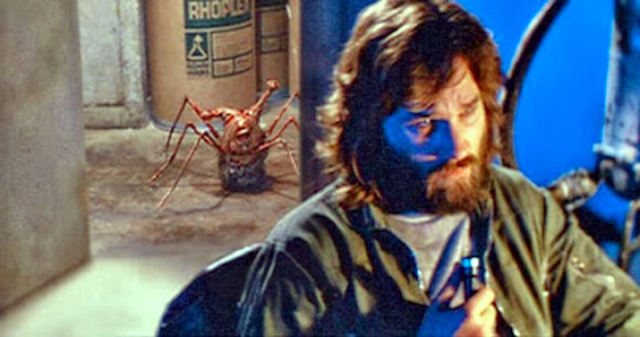
“You gotta be fucking kidding.”
Carpenter’s The Thing abandons hope early on. Our gang of guys figure out pretty quickly that if this thing gets off the ice it’s gonna wipe out planet earth in a few thousand hours. At this point, it’s not about hope, it’s strictly about survival. In fact, hope, in the form of Wilford Brimley’s Blair—the character who figures everything out—is locked out in a maintenance shack while the rest of the gang sorts out who gets to use the flamethrower when anyone fails the blood test they’ve concocted.
To introduce a female element would be a reminder of something from the outside world for these men. We don’t know anything about them besides what we see of them on this base. We don’t know their home lives, we don’t know their families. We don’t even really know what’s in their hearts. All we know is their inherent need to survive at all costs, and to survive means even more specifically, not to become the Thing. Surviving even means dying with the knowledge of knowing what you are. They’re so isolated, it doesn’t even matter that they’re men. They’re purely sexless survival instinct. To introduce a woman would be to force a social dynamic that would rob the film of the message it’s attempting. You could make the same film with only women, and it likely would play out in the same way. Women in movies actually get down to the business of saving the world but Carpenter didn’t want the world saved—that was the point. Not only are the men in The Thing not distracted by a female influence, they’re charged by their own microcosmic, primal definition of survival.
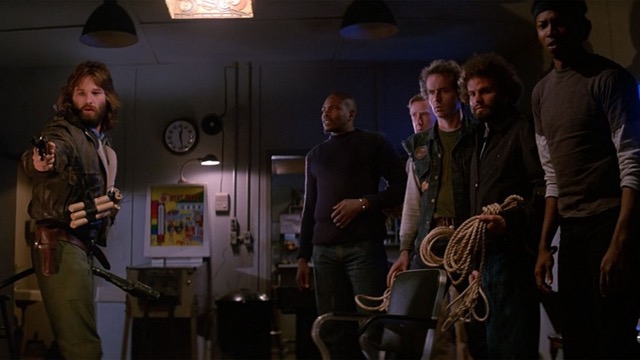
A game of spin-the-bottle goes sideways for our gang of reluctant heroes.
The film ends on the question of not if but when. MacReady and Childs (Kurt Russell and Keith David) are the only survivors and one of them is a hose beast in a man’s skin, and at that point, it’s a matter of who freezes first. A human won’t survive and we already know a few thousand years of ice won’t stop the Thing.
We don’t know if Mac or Childs turns out to be the Thing, and that’s the point—we were never supposed to know. What we do know is that both men are trying to hold on to what’s theirs. The question becomes one entirely stripped of the outside world: is what’s inside this body still mine?
My dad wished for the end before the world got strange. The world got strange anyway. These men—Mac, Childs, and circumcision revisionists alike—didn’t get a bomb for the apocalypse, they got the aftermath, cold and alone in a place where no one, least of all world‑saving women, could help them, just trying to hold onto whatever’s left of themselves.
Edited by Olga Tchepikova-Treon