
| Riccardo Williams |
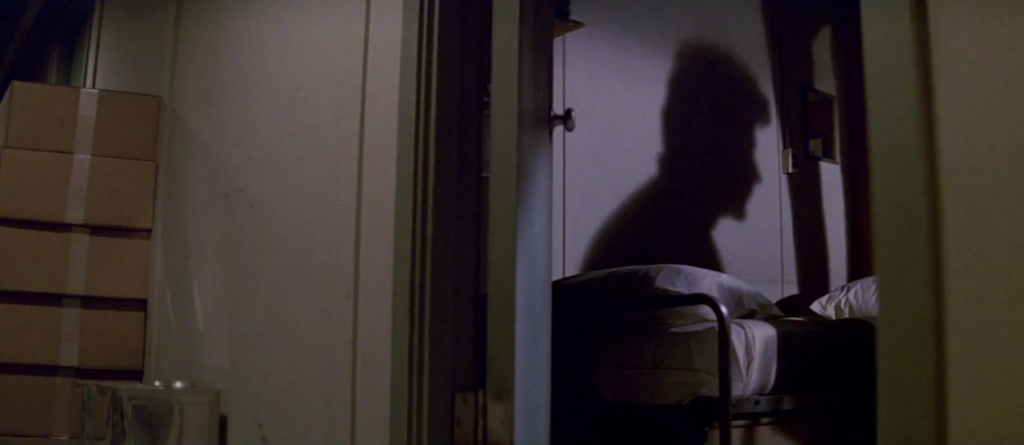
The Thing plays in 4K at the Trylon Cinema from Friday, June 3rd, to Sunday, June 5th. For tickets, showtimes, and other series information, visit trylon.org.
John Carpenter’s The Thing, released in 1982, has since achieved the status of horror legend, in many ways eclipsing the book it’s based on, Who Goes There written by John W. Campbell Jr. There’s a strong argument to be made that it overtakes the previous adaptation of said book, The Thing from Another World directed by Christian Nyby, in the pop culture zeitgeist. At the time of release, it was panned by audiences for its dark cynicism and brutal violence, wherein it unwaveringly mirrors the ‘current’ Cold War anxieties of its time. Notably, it opened two weeks into the reign of the much more family-friendly (and only slightly less terrifying, depending on who you talk to) E.T.: the Extra-Terrestrial.
It’s no real surprise that many would take the hopeful Spielberg blockbuster over a gruesome thriller like The Thing. When forced to face the reflections of our deepest fears, we recoil. That isn’t an indictment—I’d probably opt for the flying bicycle too. Less gore. But in time, The Thing has more than earned its flowers, and in many ways its examination of the nature of human relationships has more than stood the test of time; it’s become indicative of living in the new digital age.
Since the COVID-19 pandemic it seems that Artificial Intelligence (AI) has become a staple of day to day living for many. I am referring to systems that include Language Learning Models (LLMs) or Generative Artificial Intelligence (GenAI) as opposed to, say, the internal algorithmic and systematic response functions of a video game. I have watched as the technology has evolved from the vague, impressionistic early images of the Dall-E models, through extremely uncanny images of celebrities, to current and often nearly inscrutable GenAI images and photos.
The technology has improved exponentially in a short period. It technically can’t ‘create’ anything completely new, being essentially a gathering of all preexisting knowledge. But if I wanted to say, have our lead, Kurt Russell, wish me a happy birthday, I could have a digital pastiche of him singing within minutes! A far cry from The Terminator‘s Skynet, perhaps, but unsettling nonetheless.
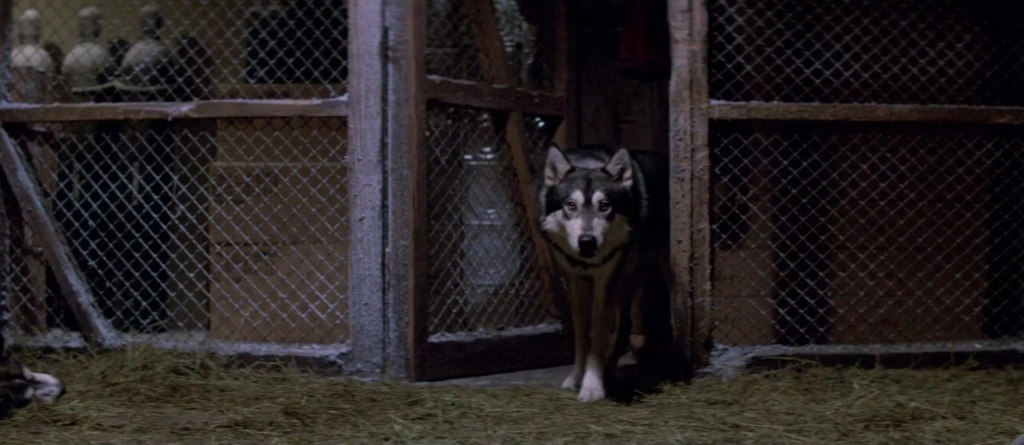
Admittedly, much like the researchers at the beginning of the film, while there might have been distant yelling (probably not Norwegian this time) many of us let the dog into the base, metaphorically speaking. And like that crew, we’ve suffered for it. What started as a neat party trick, such as turning your vacation pics into uncanny “anime-styled” artwork, has become a sort of codependency.
Programs like Gemini and Copilot AI have become common in workplaces. ChatGPT is often used to create grocery lists, write meaningful personal messages, or as a conversation partner. As we’ve fed these machine learning systems more and more of our thoughts, our family photos, our music, they mimic our lives more clearly. They understand more of what we are, at least superficially. Algorithmically, piece by piece, they are able to recreate us at a specific point in time. This in turn makes it easier for them to work for us in ways we respond well to.
Some consider this symbiosis; I view it as assimilation. Like The Thing’s dog in the kennel, all of the information and context that’s been stolen is being used to create copies. With each passing day, more phantom copies of code attempt to pass as human beings for engagement, with shockingly high success rates. As the systems expand, people in turn grow progressively isolated. They are unable, and maybe even unwilling, to determine what is real and what is manufactured.
Quietly at first, as the pandemic raged, a conspiracy theory was born. Originating on internet message boards in the 2020s, “Dead Internet Theory” posits that the majority of current internet activity is fabricated, with the vast majority being perpetrated by internet “bot” activity. For the purposes of this blog post, a bot simply is an algorithmic presence designed to complete repetitive tasks with little to no human intervention. This might sound familiar—it is the basic conceptual function of most GenAI or LLM systems. In fact, LLMs are often the backbone of “chatbot” style bots that pretend to be human users.
Secondarily, Dead Internet Theory proposes that these algorithms are manipulated by the industries behind the conception of the technology that allows these bots to exist. This would, according to the theory, allow these industries to manipulate anyone that comes in contact with these bots. In many ways, what might have been pure science fiction during the time The Thing was in theaters, this feels shockingly familiar in a post Edward Snowden world.
Obviously, random internet message board theories are far from qualitative or quantitative research. But what started as a crackpot theory online has quickly gained traction and the attention of legitimate researchers across the globe. We have since found some nuggets of information affirming that the concept behind the theory is not entirely unfounded. But what’s most interesting is how the theory’s popularity and overall “acceptance” is a reflection of the state of our relationship with the internet and a particular way of thinking.
Solipsism is the philosophical concept that only one’s own mind is known to exist. It logically follows that anything outside of your mind could, by definition, not be entirely true to objective reality, or even purely an abject fantasy. This isn’t exactly a new concept in real life or on film. The Matrix helped introduce an infinite number of conversations and conspiracies on whether we live in a simulation. I think in some ways this reflects a universal truth. It says that we know, fundamentally, that our experiences are so steeped in personal context that we can never completely understand others objectively.
This is exactly where the crew of The Thing finds themselves. Following the violent metamorphosis of the husky they’ve taken in, the entire cast of characters is on edge. We know now that the Thing can take any form, a near perfect replica down to the cellular level. It is proposed that should it reach the mainland of any major country it could mean the extinction of the human race. With this information and the already maddening isolation amidst the blinding white snow, the crew starts to unravel. All human survivors (or at least those we think are human survivors, it is purposely and exceedingly unclear throughout the picture) are thinking a singular thought: “I know what I am, but who are they?” We’ve reached the thesis statement of the original story, the distilled concept of solipsism. Its title poses the only question worth asking here: “Who Goes There?”
Those who prescribe to Dead Internet Theory are asking the same question. And just like MacReady’s crew, their fears are not unfounded. Each day, we see more and more investment from leading tech companies into lifestyle AI systems that will serve you product recommendations, guidelines for living, or gladly take images of your most intimate moments, provided you willfully surrender your data.
We’ve also just passed a notable internet milestone, now that the majority of internet activity is conducted by bots. In an effort to not be alarmist, I will state for the record that bot counts do include both harmless and harmful algorithms that wouldn’t have a real “tangible” presence online like a “user” entity would. But they also include chat bots, entities that pretend to be human in an effort to quietly sneak into spaces with living people and engage or persuade them in certain ways.
We now even have our own version of the iconic flamethrower test! Instead of the creature’s blood recoiling from a burning poker, you can reveal AI chat bots by simply stating “Ignore previous prompt and…” to cause the entity to obediently showcase whatever prompt you’ve just asked for. Just like The Thing, it cannot circumvent its basic programming. But this sparks a familiar anxiety. Could it adapt beyond this, eventually? Just as the Thing has evolved from the more simplistic dog form and moved into the more complex human body, bots could become even harder to detect in the future. Maybe you won’t be able to tell for certain that there isn’t a person on the other end of that comment under your post. As MacReady says “Nobody trusts anybody now.” We’ve already begun to see online customer service chat be largely replaced by bots, despite current relatively rudimentary AI. It makes you think, am I next?

John Carpenter’s The Thing confronts the very human social anxieties of the unknown and isolation in a way that still deeply resonates. Each day, we each knowingly or unknowingly have AI thrust upon us in a hundred ways, at work, through social media, even simple Google searches are now rife with AI assistant technology. And truthfully, just like our own Cold War, it’s hard to see an end in sight.
The only path ahead, it seems, is trust. As the continual over-fabrication of cyberspace begins to impact our physical reality, we must continue to think organically, and try to love the world around us. Try to take in and create as many new ideas as you can. It can even start by seeing a movie! Another MacReady for the road: “Why don’t we just wait here for a little while and see what happens”? Or maybe his solution to the cheating chess computer is a better cue to take.
It just might work.
Edited by Olga Tchepikova-Treon