
| Chris Polley |
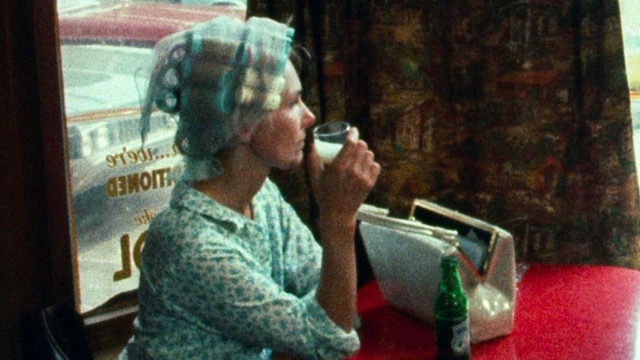
Wanda plays at the Trylon Cinema from Sunday, July 26th, through Tuesday, July 28th. For tickets, showtimes, and other series information, visit trylon.org.
My spouse often teases me for being drawn to films where “nothing really happens and then the bottom drops out from the main character’s life.” She’s not wrong. After all, right now, I have Eyes Without a Face, Sirāt, and Mikey & Nicky in my top four on Letterboxd (the last one is Cruel Intentions, which only does one of those things). I’ve talked about it in therapy and have come to the conclusion that where some might find this kind of narrative aggravating, I find it cathartic. Watching a trapped mouse in a rigged maze helps rid me of any illusions about the nature of existence. Yes, I’m depressed, but this is part of me managing that depression. (I promise I’m doing okay.) So, naturally, the chance to extoll the virtues of one such film in this personal head canon of mine is, ironically (fittingly?), quite a delight.
Filmmaker Barbara Loden’s sole fiction feature, Wanda, which she also wrote and starred in as the eponymous lead, is arguably one of the more vital works of cinema that hews to the aforementioned austere existential aesthetic. It also happened to be made by the wife of one of the most storied midcentury directors, McCarthyist snitch and unfortunately also master storyteller Elia Kazan, for whom she acted multiple times. And yet, her own behind-the-camera debut went long ignored by film historians and critics before a post-Y2K reappraisal, which unfortunately only mirrors the enigmatic but salient point Wanda makes: for women all around the world, life is indeed a rigged maze. For NPR, John Powers recalled, for instance, how even The New Yorker’s Pauline Kael “admired Loden’s integrity but said the film’s drab realism made novelist Émile Zola—a very grim realist—‘look like musical comedy.’”
Following the titular Wanda, a working-class mother and wife who has rid herself of at least the first two titles, adrift in a world that can’t understand her pain (and perhaps she can’t either), Kael’s critique is harsh but not exactly unfair. And yet, the misery is true, so why not depict it as such? When Wanda stumbles from diner to courthouse to movie theater to bar, anyone who’s ever wished they could just walk away from everything can empathize, even without knowing the details behind her aimlessness. And part of what makes it work is that this isn’t Hollywood cosplay: as Sadia Quraeshi Shepard writes about both Loden and the persona she plays int he film for In Transition, “Both [Loden and Wanda] hail from rural, economically depressed areas where their survival is dependent mainly on their ability to fulfill prescribed roles for women that society dictates for them. Both are aging out of the roles they have played in their lives until this point. Both are ‘directed’ by strong, older men.”
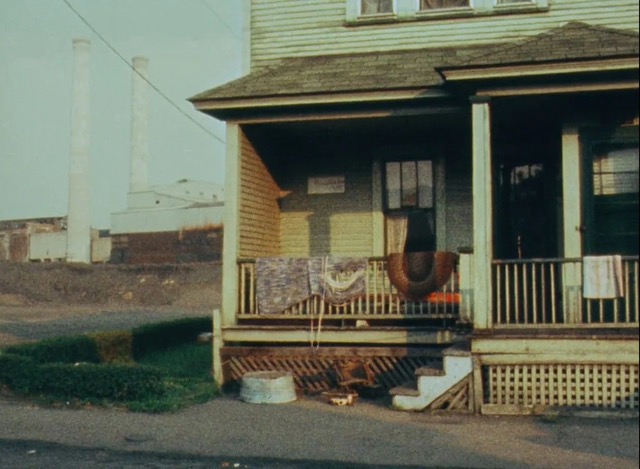
It’s in this deep empathy that the film earns both intellectual and emotional texture so rich that it feels unseemly to suggest there is anything going on here that is solely morbid or morose. Add this to the lush filmic texture of Wanda’s 16mm cinematography and the true indie spirit of its palpable four-person crew stitching together a down-to-earth tale of a woman’s broken American sojourn, and it’s a vibrant insight into a worldview rarely seen elsewhere in the 60s or 70s. “They’re too perfect to be believable,” Barbara Loden said of what she referred to as “slick pictures” to The New York Times in 1971. “I don’t mean just in the look. I mean in the rhythm, in the cutting, the music—everything. The slicker the technique is, the slicker the content becomes, until everything turns into Formica, including the people.” Even as the male auteurs of the 70s became known for their forays into the bleak aspects of American life (Taxi Driver, Chinatown, the list goes on), there remained an unmistakable authoritarian sheen even in these machismo masterpieces.
And not to argue with my spouse on main, but while on its surface, the first act of Wanda is surely a collection of vignettes, to say nothing happens once Michael Higgins shows up as Mr. Norman Dennis would be a bald-faced lie. In a darkly comic anti-meet-cute, Wanda and Norman find themselves resigned to become a more honest envisioning of Bonnie and Clyde, escaping on the road into a stupid foray of violence and misguidedness. As Molly Haskel intuits for Criterion, though, “There’s a kind of raw energy in the journey’s very futility. And in the fact that she remains mysterious and unknowable, reminding us afresh of the inadequacy of the categories by which we find meaning—and an illusion of mastery—in experience.” It becomes not so much a question of why Wanda sticks with Norman through this insanity, but rather a question of what else she would do that would provide her with any kind of better meaning in her life.
If the explosive and dimwitted Norman is a stand-in for Kazan, then it’s amazing that all the way until her death, he still espoused her greatness to the press, even a decade after the film was released to paltry acclaim and minor distribution. “There was always an element of improvisation, a surprise, in what she was doing,” Kazan said of his wife in an interview with Cahiers du Cinéma in 1980 shortly after Loden died of cancer. “The only one, as far as I know, who was like that is Brando when he was young. He never knew exactly what he was going to say, therefore everything would come out of his mouth very alive.” Comparing her to an actor that countless have called the best in the history of the medium even in the face of being depicted as her hapless, abusive controller in her only film where she had total authorial vision is some sweet next level playing-the-long-game revenge.
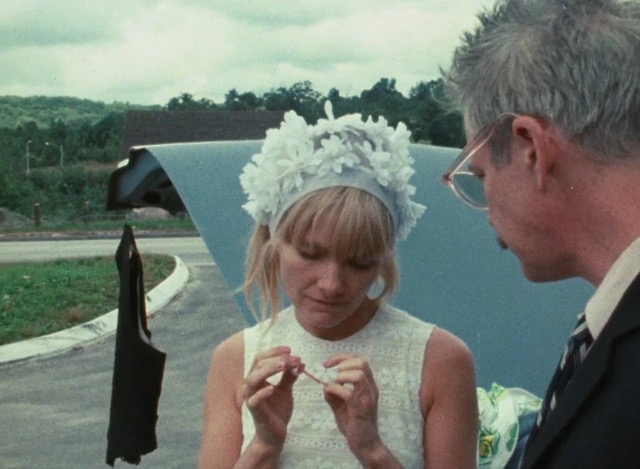
Of course, perhaps Loden saw herself just as lost as Wanda, so this backwards analysis might only work if it came out in her subconscious rather than intentionally from the get go. Or maybe what’s most important to get out of the film isn’t what she’s saying but what she’s not. “All Wanda seems to know is what she doesn’t want,” Scott Tobias writes for The Reveal. “Loden doesn’t play Wanda as a still-waters-run-deep type, but a woman who’s more plainly lost and in immediate practical need of someone to take her under his wing.” The film Wanda, then, could also have been a sort of cry for help in the dark of a patriarchal industry and artform. Either way, it packs a wallop, especially if you just let your mind and heart revel in its exploration of the rigamarole that is being alive, forever at a crossroads where every direction is as doomed as the other. So just free yourself of the lie and watch a sad movie to get over it! It works for me, anyway.
Edited by Olga Tchepikova-Treon