
|Matthew Tchepikova-Treon|
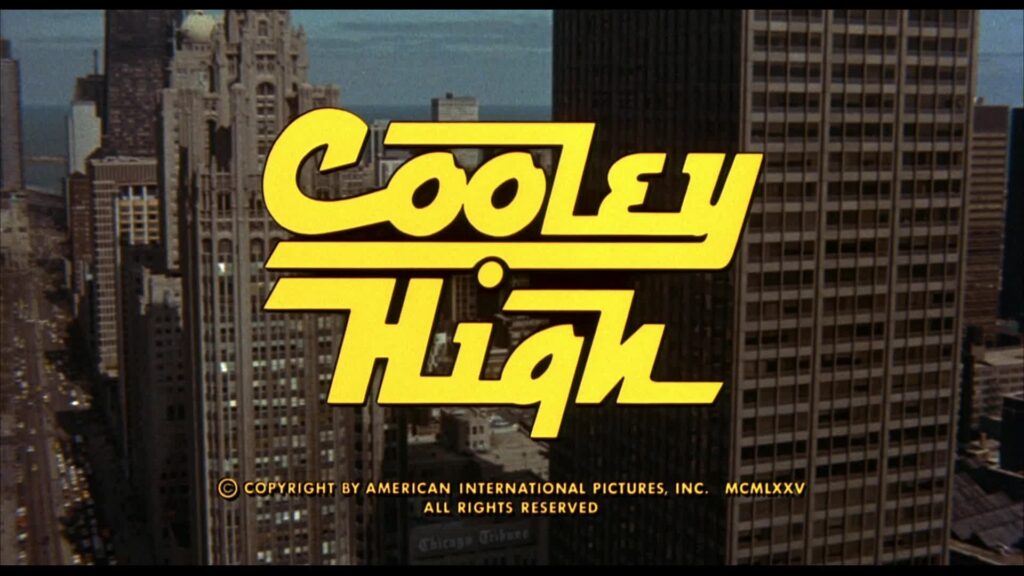
Cooley High plays at the Trylon Cinema from Friday, July 31, through Sunday, August 2nd. For tickets, showtimes, and other series information, visit trylon.org.
Her hands were on my shoulders, perhaps even clasped lightly behind my neck. I can’t remember for sure, all those middle school dances, so uneventful yet monumental at the same time. The sense memories slowly slip out of focus over the years. My first slow dance with Michelle D., she was twelve, I was eleven. My hands were respectfully, lightly on her hips, mostly certainly with the nervousness of a bomb squad technician. Even for an athletic kid who knew how to dance, these moments were high stakes, because, if you had a girl- or boyfriend in the sixth grade, the spring dance was when all the hallway flirting, neighborhood bike-riding, and afternoon phone-calling suddenly got real. Let’s see what you got.
This was the late-mid-1990s, a time when, even if your Sony Walkman was steady wearing out hand-me-down cassettes of Appetite for Destruction, Nevermind, or Bricks Are Heavy, the musical wallpaper of social life still featured four boys ready to be men. I’m sure the townie DJ-for-hire that evening had already gotten us hyped with “Motownphilly” amidst some cuts from Salt-N-Pepa, probably some TLC, maybe even a little Tag Team (if the school administrators allowed it). But then, and we knew it eventually would, what had become the national anthem of adolescent yearning came on: Boyz II Men’s a cappella rendition of “It’s So Hard to Say Goodbye to Yesterday,” from their smash debut album Cooleyhighharmony.
Like pavlovian hormone antennae, we all floated closer to the center of the room, pre-teens inhabiting that awkward transitional territory between childhood and whatever came next, pretending at a maturity we did not yet possess. Under the low-voltage hum of fluorescent lights that were dimmed but still too bright (lest shadowy things happen under the cover of dark), Michelle and I engaged in that strange middle-school clutch, the slow dance, a ritual of wanting to experience physical closeness but fearing the emotional friction of too much actual contact. With each counter-clockwise turn, we got a little less clumsy, a little more confident. “And I don’t know / Where this road is going to lead…” Sing it, Nathan Morris! But then one of us misstepped.
Her light-yellow painted toe nails, barely covered by black strappy sandals, were under one of my faded-red Converse high-tops, I don’t remember which foot, and I misstepped. The typical American middle school cafeteria, already a space aggressively hostile to human dignity (at least as I knew it in my small Texas town), was now a theater of dread. Two of Michelle’s friends would eventually find me over by the raggedy foosball table in the hallway to tell me that she wanted to break up, but that was just a formality, little more than requisite paperwork. I’d already known it was over in the moment. It was the kindness of Michelle’s polite smile when I apologized for stepping on her toes, the way she said it was okay, that actually told me our short-lived romance wasn’t making it out of the cafeteria that night. “And I’ll take with me the memories / To be my sunshine after the rain / It’s so hard to say goodbye to yesterday / To yesterday.” We politely danced to the song’s conclusion. Then, as if young bodies were somehow able to cross dissolve through physical space, we simply faded to opposite sides of the room. Next scene.
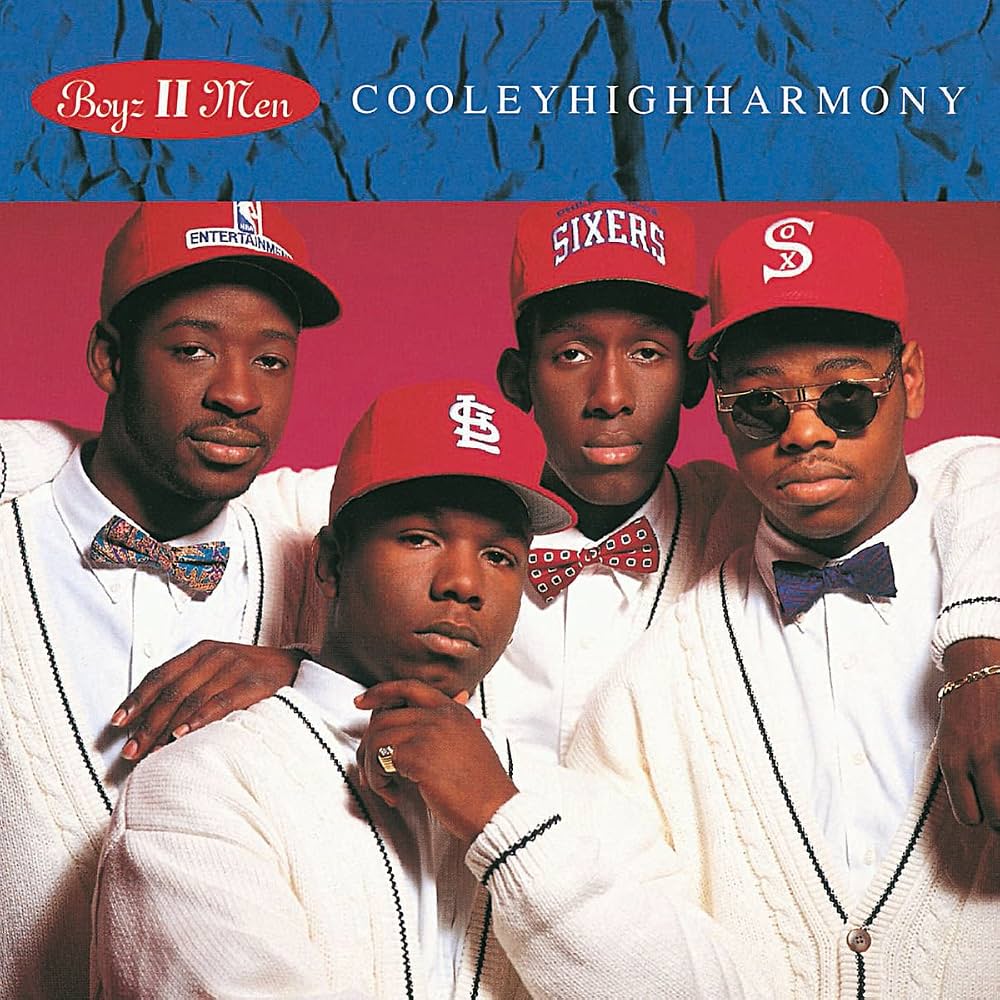
I remember owning a copy of Cooleyhighharmony on CD. Or perhaps it was my older sister’s? Either way, back then, I had no idea what the album’s title was referencing. I didn’t know “It’s So Hard to Say Goodbye to Yesterday” was a cover, and I certainly wasn’t aware that it originally belonged to Michael Schultz’s 1975 landmark film, Cooley High. In fact, despite my dramatic retelling above, I’m pretty sure my tender bruise of a memory from that middle school dance floor had actually been lying dormant in my mind for years until I saw Cooley High for the first time in college. Admittedly, I wasn’t even “in college,” per se; I was eighteen, just out of high school myself, living in Austin, TX, barely making rent as a fledgling musician. But I was lucky enough to have friends in UT’s film program, where I would regularly sneak into large class screenings, free-riding my way to a film education sort of just as great entertainment.
Set in 1964, Cooley High captures a very specific historical portrait of black working-class youth in postwar American cities. Written by Eric Monte and directed with a loose, kinetic grace by Michael Schultz, the film centers on Cooley Vocational High School, a towering brick institution on Chicago’s Near North Side that drew many of its students from the proximate Cabrini-Green housing projects where Monte grew up and attended the real CVHS. By the time Cooley High hit theaters in the summer of 1975, however, the school itself was a ghost in waiting. The Chicago Board of Education had already scheduled it for permanent closure, a casualty of administrative neglect and economic disenfranchisement, plus the changing demographics of a city that was busy rapidly re-segregating itself.
When the Cooley High building was demolished just four years later, Cabrini-Green had already become a national symbol for urban decay. Indeed, the dramatic irony of this time-shift imbues the film with a quiet, persistent undercurrent of preemptive grief, which the story’s climax makes unmistakably clear. Yet still, what I find so moving about Cooley High is that, in Monte’s script, Cabrini-Green is in no way reduced to shorthand for the failures of public housing. When we watch Leroy “Preach” Jackson (Glynn Turman) and Richard “Cochise” Morris (Lawrence Hilton-Jacobs) pulling pranks in the classroom, ditching school to run through the Lincoln Park Zoo, dancing in basement parties, trying to pick up girls at the local diner, shooting craps, joy-riding, and doo-wopping on street corners, we see a vibrant neighborhood where joy and possibility get an equal claim to occupy a stoop or two, with at least a fighting chance to stand their ground.
Again, the historical time-shift at play in this film is meant as tragedy. After all, these teenagers have no idea that their school, their neighborhood, and their way of life are about to be taken off the map. But there’s an important difference between nostalgia and grief. For example, while George Lucas grounded his nostalgia-fueled American Graffiti (1973) in a cozy soundtrack of 1950s radio hits, Schultz used Motown as a sharp reminder of the gravity of time itself. In 1964, songs like Stevie Wonder’s “Fingertips,” Martha and the Vandellas’ “Dancing in the Street,” The Four Tops’ “I Can’t Help Myself,” Barrett Strong’s “Money (That’s What I Want),” et al, were a triumphant assertion of joy and cultural ascendence. But when played in 1975, after the assassinations, after the riots that tore apart Chicago’s West and South Sides, after the promise of the Great Society had been fully eclipsed in Nixon’s shadow, these same tracks couldn’t help but sound like dispatches from a future that had been violently snatched away.
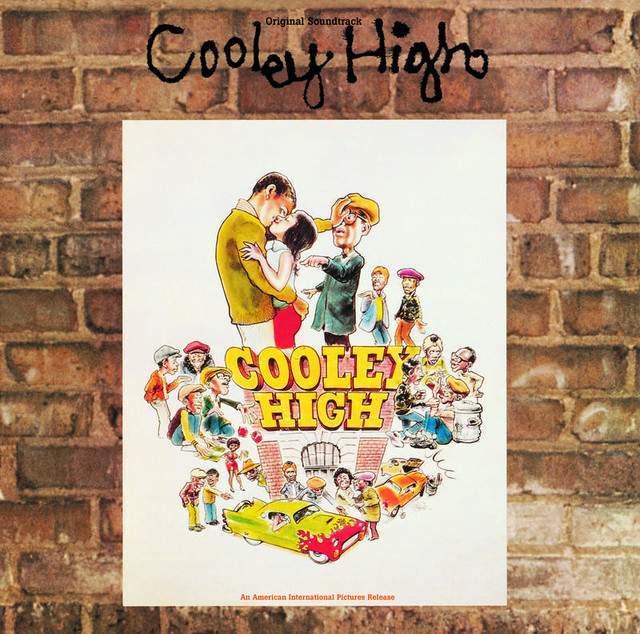
In Cooley High’s sole original song, “It’s So Hard to Say Goodbye to Yesterday,” Motown vet G.C. Cameron sings like he’s demanding to know what happened to the world he’d been promised, long before Boyz II Men turned it into a polished, Sunday-best lament for filling chaperoned dance floors. There are no sleek four-part harmonies here. In Cameron’s original eulogy (written by Freddie Perren and Christine Yarian), his voice is ragged, cracking under the weight of true grief and the heavy toll of survival. Decades later, Boyz II Men’s platinum-selling rendition occupied the Billboard Hot 100 for what felt like several years and was responsible for an estimated 400% increase in adolescent hand-holding and/or nervous hand-wringing nationwide. The edges that had been sanded off the song wouldn’t reveal themselves for a long time. But at eleven, if you’re fortunate, you aren’t expected to know what saying “goodbye” really means, at least not the way Cameron meant it.
One of the strange, sometimes uncomfortable, joys of early adulthood involves the slow-then-sudden unfolding of your own skull-sized sense of the world, when so many cultural reference points, all arranged in barely shared constellations of personal history, suddenly get messed-, mixed-, and mashed up. To this day I can’t hear The Temptations 1964 hit song, “My Girl” (also featured in Cooley High), without thinking of Vada Sultenfuss and Thomas J. as eleven-year-olds in the summer of 1972, an idyllic summer I relived on screen so many times in 1991 (the same year as Coolyhighharmony) that my amygdala and neocortex almost certainly have moments from My Girl filed away as lived experiences from my own childhood. The following year brought us Candyman(1992), a film that loomed large in my imagination for a long time, possibly even before the movie came out, somehow. I feel like I remember the lore of saying his name three times being discussed in front of school bathroom mirrors before seeing the film itself.
All the same, when I eventually snuck into a large lecture hall on the UT campus to watch a free movie with friends a few years into the new century, all of us horror-obsessed 90s kids, my conception of Cabrini-Green (and thus the geographic reality of millions of actual lives lived there) hardly expanded beyond the frame of Candyman’s tragic story. Which made watching and listening to Cooley High for the first time all the more powerful. This film remains a love letter to a place and time aware of its own eventual fate while insisting it wasn’t always inevitable. If you’ve got a bottle of cheap wine on hand, cheers.
Edited by Olga Tchepikova-Treon