
|Ben Tuthill|
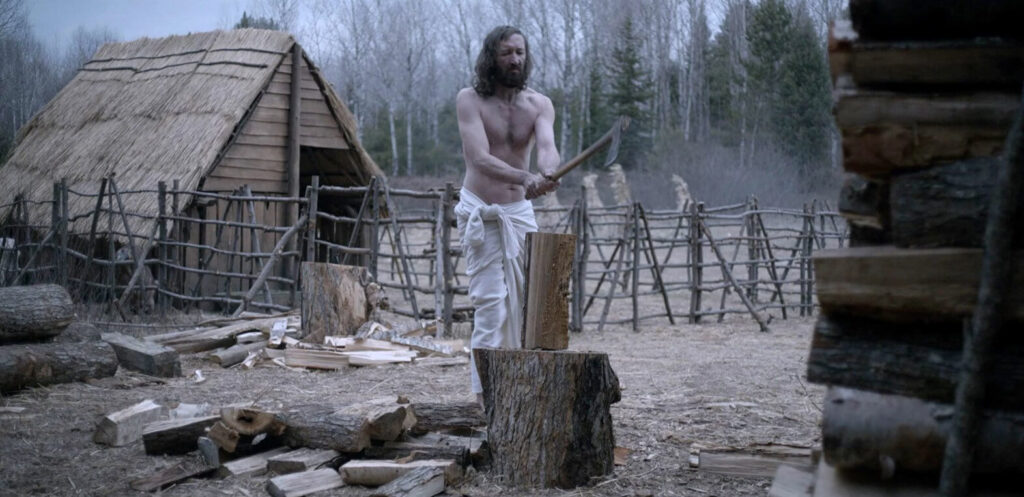
The VVitch plays at the Trylon Cinema from Friday, October 2, through Sunday, October 4. For tickets, showtimes, and other series information, visit trylon.org.
For a country obsessed with our colonial heritage, we’re astonishingly bad at making movies about it. Once upon a time, we put out a French and Indian War movie every other year. The practice fell out around the time of the Bicentennial, and since then our pre-Revolutionary historical features have been pretty much limited to:
– Bruce Beresford’s The Black Robe (technically about Canada)
– Gore Verbinski’s Pirates of the Caribbean (technically about the Caribbean)
– Michael Mann’s The Last of the Mohicans
– Terence Malick’s The New World
– Disney’s Pocahontas
– Robert Eggers’s The VVitch
Teaching colonial America has always been a slog, and it’s maybe unsurprising that making fiction about it isn’t much better. Our English class staples on the subject (The Scarlet Letter, The Crucible) say more about their contemporary moments than their subject matter, and the movies on the subject similarly tend toward the romances and concerns of an empire that can sense its best days might be behind it.
Most of the above films play out a Fall from Eden narrative, a story best encompassed by the historically questionable “Pocahontas” story, probably most familiar to Americans born after 1985 through the Disney animated feature Pocahontas. That movie is about one nostalgia cycle away from being Song of the South-ed. Terrence Malick’s The New World isn’t all that much better. It’s astonishingly beautiful and grounded in something resembling history, but it’s hard to escape the fact that it centers on a love triangle between a teenage captive, a war criminal, and a tobacco baron. Michael Mann’s The Last of the Mohicans is also beautiful, but essentially all it tells you about history is that there was a war you already knew about, but what if there was a guy in it who was really hot? Really if there’s a theme to these movies it’s hot colonial men who frequently leave their shirts three-fourths unbuttoned. Their chests are surrounded by nods toward historical accuracy, but also by slipshod accent work and exoticizing representations of Native peoples. All of them lean toward a time when America was pure and men were hot, a momentary grasp at Eden before the apple of commercialization sent us all downhill.
Maybe there’s an element of truth to that story, but it tells us much more about our contemporary shame than the life and minds of the Americans of the 1600s. To get there demands a leaning into a myopia that denies historical perspective in favor of pre-industrial madness. The only movie that attempts to capture the proto-American madness is Robert Egger’s The VVitch.
It’s fitting then that The VVitch starts with an experiment in object permanence. The game of peekaboo works because babies experience some degree of temporary terror when their parents’ eyes disappear and then a rush of delight when the parent returns. The VVitch starts with the inversion of that terror, and then proposes that it’s actually true: the eyes are uncovered, the baby is present, the eyes are covered again and uncovered, the baby is gone. The scenario is absurd to modern eyes because our understanding of what can and cannot travel through space is fixed on laws of physicality. But the horror of the disappearing baby opens the viewer to the mentality of a person for whom this could happen–a person who truly has no idea what is going on in the woods, is very much open to Satanic presence in the form of a goat, is actively concerned that their daughter/sister/parent might be engaged in witchcraft. A hundred years of The Crucible being our primary entry point to the Salem Witch Trials has taught us that the beliefs of these people were akin to media frenzies and political manipulation. What we forget is that divine terror for the people who believed it was completely real.
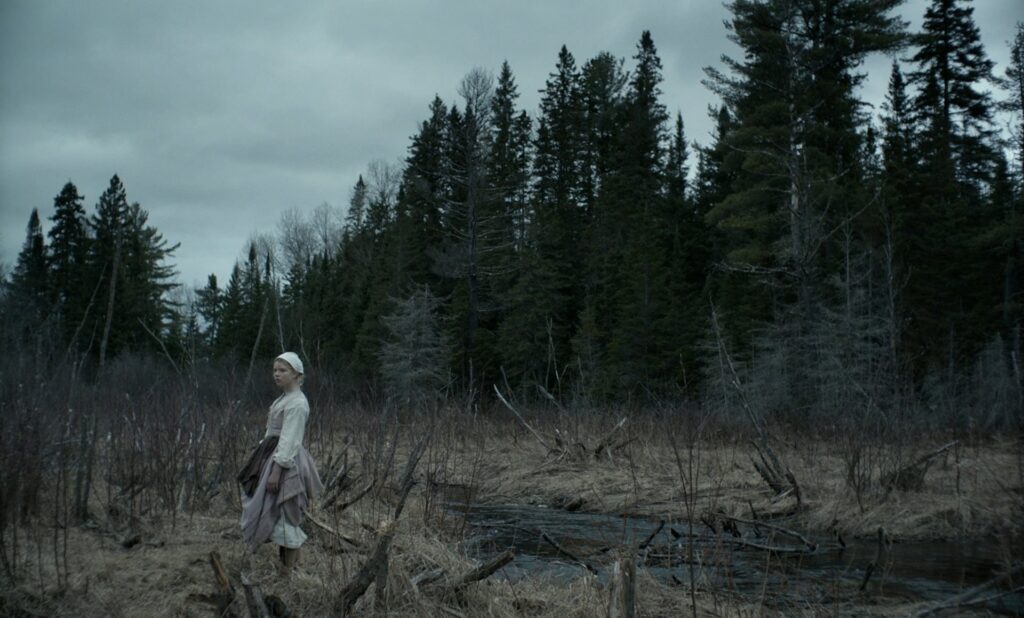
The lack of object permanence speaks to the myopia that The VVitch captures in a way that the Fall From Eden narratives can’t. There’s no sense of timeline, and there’s no historical narrative in place. Thomasin and her family are stuck in their moment, their sense of the past primarily shaped by Biblical narratives and fading memories of another continent. They’re Moses in the desert, not colonizers. They trade with Native people and they make offhand comments about their magic, but they have no sense that they’ve arrived in this place for the purpose of genocide and ecoterrorism, that they’re the Serpent in the Garden. The narrative they experience is their relationship with God and Satan. The primary concern is to rise beyond corruption. To praise God adequately is worth abandoning shelter, travelling into the woods, refusing the support of a neighbor who can tell you that locking your children in a goat barn is a sign that you should probably get some rest.
It’s only this myopia that could lead to a country as founded on originary madness as America. It’s only a blindness to one’s historical and ecological surroundings that can allow the obvious injustice of the English colonies and their treatment of the Americas. We like to narrativize the Puritans as the bad guys on one hand and to celebrate their contributions to public school, universal literacy, and democratic voting systems on the other. We deal with this by pumping out narratives and counternarratives about a first Thanksgiving that never happened, an essential balancing act of the cruelty of colonization and the tenacity of the Pilgrim spirit. These people are bad, no, these people are good. What we ignore is that they were driven by impulses that make no sense to us, and that these forgotten impulses are a core component of the constructed identity that continues to be forced upon us.
It’s hard to wrap one’s mind around that mentality without fiction. The VVitch is one of our best attempts. The first people who crossed over from England were a deeply strange collection of exiles with a set of assumptions about the physical world that are alien to even the handful of remaining orthodox Calvinist hardliners. American Belief in the literal devil is supposedly more common than most people think, but I think modern Americans who have an active concern that their pets are possessing their children are few and far between. But the people who set up shop here despite hostility, famine, and warfare were an exceptionally different bunch. Their focus defied their moral code’s capacity to realize that they were living in contradiction. If you want to understand the fundamental contradiction of the American spirit, the bleat of a goat against the imagined crunch of a mortar-and-pestled baby is a pretty good place to start.
Unfortunately for aspiring and tenured history teachers alike, showing The VVitch in a classroom is a great way to get yourself fired. Maybe someday A24 will bless us with a classroom cut like the Pepsi-sponsored Educational Edit of Glory we all watched in 7th grade. But until then, kids who want to understand the Puritan mind will have to sneak into the Trylon next weekend. Maybe it will help them comprehend a little bit better who they are.
Edited by Finn Odum