
| Patrick Clifford |
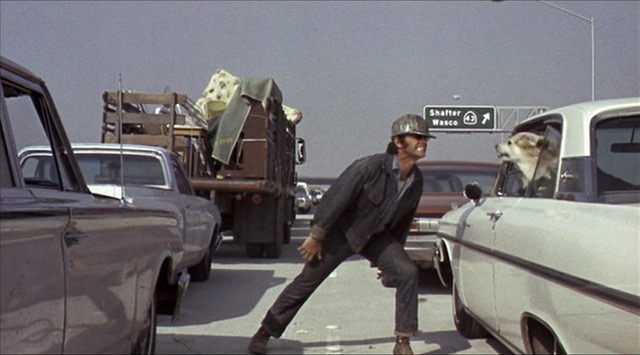
Five Easy Pieces plays at the Trylon Cinema from Friday, December 19th, through Sunday, December 21st. For tickets, showtimes, and other series information, visit trylon.org.
It ain’t easy. The stuff of life. The things that continually seem to come with difficulty. Paying rent. Getting along with family. Loving somebody and accepting love in return. No matter how simple we try and keep it, we always complicate it by wondering if there might be something different. Something better.
Five Easy Pieces is a film that follows a small but incredibly telling portion of the life of Bobby Dupea. In a star-defining performance by Jack Nicholson, Bobby’s ongoing quest for something different is a whirlwind journey that always ends the same way. The characters that keep Bobby in this spin-cycle are what make Five Easy Pieces a perfect film.
Made in 1970, Five Easy Pieces was written by Carole Eastman and Bob Rafelson. By this time, Nicholson, Eastman, and Rafelson had formed a close artistic relationship and were clearly influenced by European films that were “quietly contemplative and patiently observant of characters and places.”1 The trio had a keen eye for an America that the 60s was still freshly unpacking. There were plenty of interesting characters roaming the country, but no one seemed to know where they were going. Or why. In Five Easy Pieces, Eastman, Rafelson, and Nicholson give us the time and privilege to hang out with the characters and places that uniquely reveal Bobby’s “discontent with the choices (he’s) offered.”2
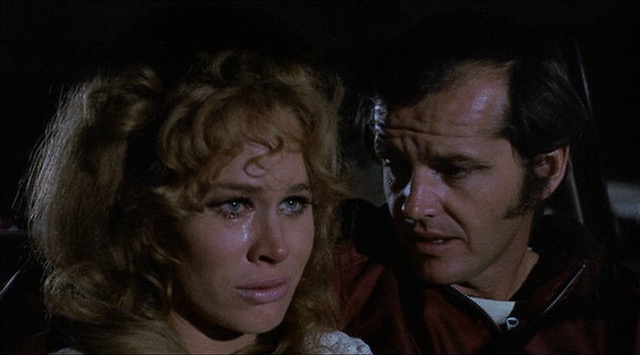
The first and most persistent character we meet in Bobby’s life is Rayette, his on and off again girlfriend. Played with heartbreaking conviction by Karen Black, Rayette is a Tammy Wynette singing diner waitress devoted to loving and taking care of Bobby better’n anyone else can. Black was nominated for, and should have won, an Oscar for the performance. I would have given it to her the moment she batted her enormous, mascaraed eyes and blew kisses to Bobby from the passenger seat of the car he’s driving. She sings beautifully and often gratingly for Bobby. She is an awful bowler but has a better time than every other person on the lanes. She wants what she’s supposed to want: Happiness and contentment that comes from a simple life and a loving marriage. Ray and Bobby battle the blue-collar grind in Bakersfield, California, chasing good times with Bobby’s cackling oil rig coworker Elton and his wife Stoney. Elton and Stoney seem more than content with the trade-offs cheap booze and easy laughs offer to screaming kids and a paycheck-to-paycheck routine. Bobby wants something different. Although he enjoys playing in the sandbox of their simple life, he is starting to feel the confinement of the box. When Bobby gets a call from distant family beckoning a return home, he sees a way out. But when he breaks the news of his escape to Ray, he finds that he can’t erase everyone and everything in Bakersfield as easily as he hopes. Not just yet anyway.
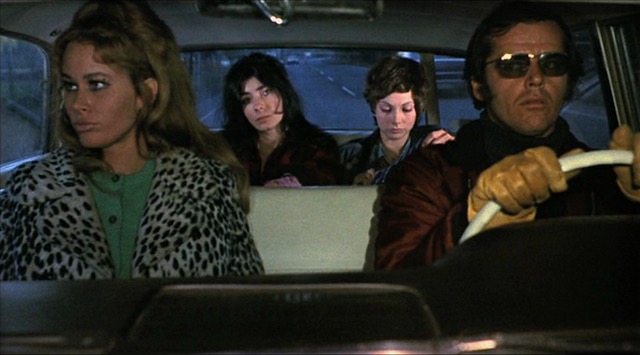
The characters that Bobby and Ray fleetingly come across on their road trip in the second act of Five Easy Pieces make the film both hilarious and an undeniably honest portrait of America. From the moment they pick up two stranded lesbians making their way to Alaska by the side of the road, Bobby and Ray get an earful from a character who virtually steals the movie for me. Her name is Palm Apodaca, played with deadpan zeal by Helena Kallianiotes. Her diatribe on the inescapable crap and filth that consumes America flows so effortlessly from her mouth that she can’t seem to stop, despite multiple reminders that she doesn’t even want to talk about it. Much has been written about the famous diner scene in this section of the film. And it is Palm who revels in it with us, telling Bobby how great it was to watch him so cleverly foil the waitress to get what he wants. But Bobby reminds her, and all of us, that he didn’t get what he wanted. Maybe he never will. If a roadside diner won’t budge on substitutions from their menu, how is Bobby supposed to find what he’s looking for?
Bobby knows he can only attempt to answer that question by returning to what he’s been running from. His upbringing. An island off the coast of Washington where his upper-class family of musicians still reside. Here the characters reveal a different type of disconnect for Bobby. His brother and sister seem stuck in ticks and mannerisms that have clearly been drilled into them by a father who has demanded an isolating and practiced route to excellence. These repetitious demands and the perceived intellectual superiority they are meant to deliver strike a nerve at the core of Bobby’s discontent. After haphazardly and unsuccessfully attempting to steal his brother’s lover, Bobby finally confronts his ailing father, who can no longer speak. In a scene written on set by Nicholson, he confesses what’s at the heart of his unquenchable desire to run and admits to his father that he is sorry it didn’t work out.
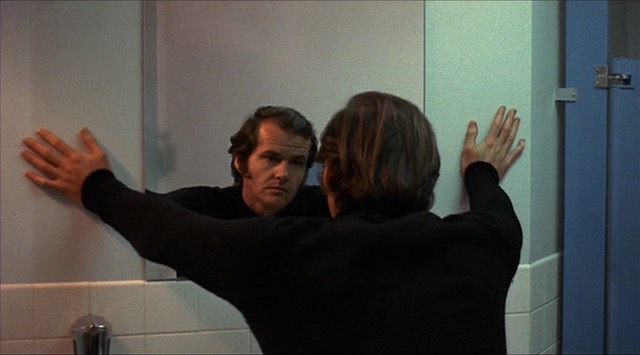
Nicholson’s masterful performance as Bobby Dupea gave America an entirely new and different type of Hollywood star. A star that was passionately invested in unearthing character traits that all of us, at one time or another, may have wrestled with or come across. Five Easy Pieces isn’t a film that seeks to answer what makes us happy or sad, kind or mean. It just admits that at some point, we’re all a little discontent with our choices, no matter how much the characters and places we live with might offer something else.
Footnotes
1 Kent Jones, Nov. 2010, Five Easy Pieces: The Solitude, The Criterion Collection, www.criterion.com/current/posts/1668-five-easy-pieces-the-solitude
2 Kent Jones, Nov. 2010, Five Easy Pieces: The Solitude, The Criterion Collection, www.criterion.com/current/posts/1668-five-easy-pieces-the-solitude
Edited by Olga Tchepikova-Treon