
| Louis Gagnon |
Dark Days plays in glorious 35mm at the Trylon Cinema from Friday, August 7th, through Sunday, August 9th. For tickets, showtimes, and other series information, visit trylon.org.
On July 8th, St. Paul mayor Khaoly Her announced her plan to evict the city’s homeless encampments. This is set to begin on August 5th. Upwards of 400 people will be displaced and have their belongings confiscated by the cleaning crews. The city is going ahead with this plan despite the lack of adequate shelter space or public housing for the soon-to-be-displaced residents. It’s grim happenstance that the Trylon is screening two documentaries about homelessness that same week: Martin Bell’s Streetwise (1984) and Marc Singer’s Dark Days (2000).
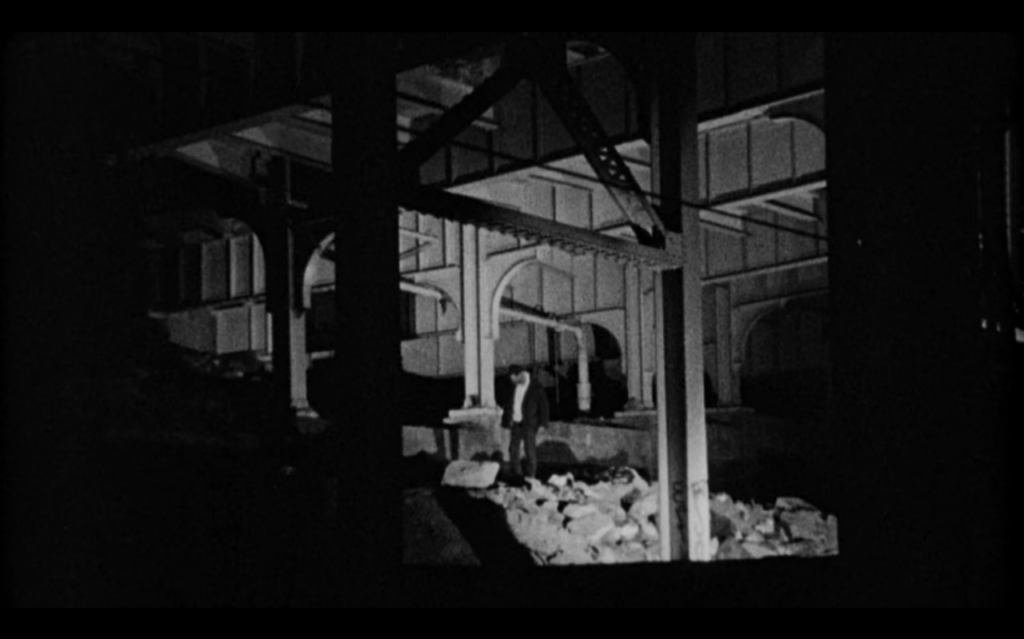
Dark Days is about a community of unhoused people squatting in the Freedom Tunnel, a railway tunnel beneath Manhattan. The film explores the lives of the tunnel’s inhabitants and the dwellings they’ve built for themselves. It was shot over a period of 2 and a half years and premiered theatrically in 2000, shortly after the residents were evicted by city authorities at the behest of Amtrak. It’s interesting to reflect on the footage almost 30 years later. The technology and fashion have changed, but the social causes of homelessness are the same as they ever were. Except now it’s been accelerated by climate crises, the global pandemic, and out-of-control living costs.
The film’s action takes place around the time Bill Clinton won his second term in office. What we’re seeing are the downstream effects of his administration’s neoliberal policies. He advocated for mass incarceration, “tough-on-crime” policing, and “the end of welfare as we know it.” In practice, he was gutting social programs meant to protect the vulnerable, and funneling ever more money into law enforcement. This approach fed the growing ranks of the unhoused. You can see the continuity from Clinton to Trump with the latter’s dismantling of the federal regulatory state, as well as his 2025 executive order criminalizing homelessness. Dark Days set the tone for the century to come. The social ills shown in the film have only become more commonplace.

Tito and Ralph
I’m always struck by the trivia that Marc Singer wasn’t a filmmaker by trade. He was just a guy living in NYC who met and befriended the folks living in the Freedom Tunnel. Singer said in an interview that the idea to make a film was proposed by one of the residents, Ralph (people’s surnames were withheld out of respect for their privacy). This is a movie where the filmmaker’s lack of expertise adds texture to the viewing experience. Amateurishness blends with authenticity to lend the film its style. The residents volunteered to be Singer’s crew in addition to serving as the film’s interviewees. That makes it fascinating as a work of ethnography. What does it look like when the subjects of a documentary are invited to participate in their own documentation?
It’s crucial that Singer had already built relationships with the residents before he decided to make the film. He was a trusted compatriot of the residents first and a documentarian second. He puts the ball in their court for each interview, allowing them to explain their situation in their own words. Singer’s commentary is minimal. The lens is candid but empathetic. The residents’ past mistakes and struggles with addiction are presented without moral judgement.
The Trylon playbill for the film describes the footage as “harrowing.” It certainly is at many points, but I’m also struck by the moments of joy and pathos interspersed in the hardship. The film wouldn’t be as effective or humanizing if it was just nonstop sensationalist misery. The folks Singer interviews have quite a wry sense of humor. I love the story that one resident, Julio, tells about the phenomenon of hamsters eating each other (“…how the fuck are there so many of them then?!”).

Even in the depths of this literal underworld, the human spirit perseveres. You see that with the ingenuity the residents showed in staying alive underground. The shacks they built had running electricity and light fixtures. The residents also constructed the makeshift rig that was used for the dolly shot near the opening of the film. It’s something I’ve observed from my own work as a community organizer. People can do a lot with limited material means. Humans have a drive to survive and thrive, even under conditions of extreme deprivation. As Greg says at one point, “You’d be surprised what the human mind and the human body can adjust to.”
Supporters of sweeps (such as the ones proposed by Khaoly Her) often cite safety and health risks at camps as reasons they need to be closed. But when rents are unaffordable and the public vouchers have waitlists spanning years, it’s only logical that people will build encampments. It seems counter-intuitive that so many people would choose a railway tunnel over a shelter until you’ve actually tried to gain entry to one yourself. When they’re not at capacity (which most of the ones in the Twin Cities are), they impose significant restrictions on what you’re allowed to bring in with you. A lot of them don’t allow pets. They’re also frequently not safe or comfortable places to stay in, as Ralph notes later in the film. Camps are at least places where people can live on their own terms.
The film ends on a hopeful note, with the residents having secured public housing vouchers. On the bonus features for the 2011 anniversary DVD re-release, Singer discusses what became of the residents in the intervening years. Some continued to struggle with personal demons and succumbed to health struggles, but most went on to stability and found employment.
What makes it bittersweet for me is that the residents had to actively fight to secure housing. They enlisted the Coalition for the Homeless to petition the Department of Housing and Urban Development for vouchers. The city’s original plan would’ve just been to dump them in the street after bulldozing the encampment. That’s more or less what Jacob Frey did in Minneapolis. The city of St. Paul is planning to do the same on August 5th. These aren’t solutions to homelessness. Nothing will change until housing is made available to the unhoused. The sweeps will just add to their misery. The encampments will appear again in due to time if mayor Her evicts them.

Edited by Olga Tchepikova-Treon
Nice piece, Louis. I think you captured the heavy dread of what is going on in St. Paul with the encampment eviction right now with clarity. I really appreciate how you brought in policy discussion from Clinton to where we are now, both at a macro and micro level.
Thank you! Sheds light on the complexity of homelessness. Housing and other services are needed in full force to help those in need!