
| Chris Polley |
Je Tu Il Elle plays at the Trylon from Sunday, September 27th, through Tuesday, September 29th. For tickets, showtimes, and other series information, visit trylon.org.
“Making films is very much about frontality, about facing off,” legendary director Chantal Akerman told Mousse Magazine in 2011, less than four years before her death by suicide. Decades removed from her stunning black-and-white debut Je Tu Il Elle in 1974, this was arguably one of her work’s most pronounced throughlines: the character faces off against their world, and in like kind, the viewer faces off against the character and their world, the silver screen named as such due to its mirror-like qualities. Some think the flickering light is an escape from their own life, a window into utter fantasy, while real ones understand it’s nearly always a reflection back onto the self—consciously or otherwise.
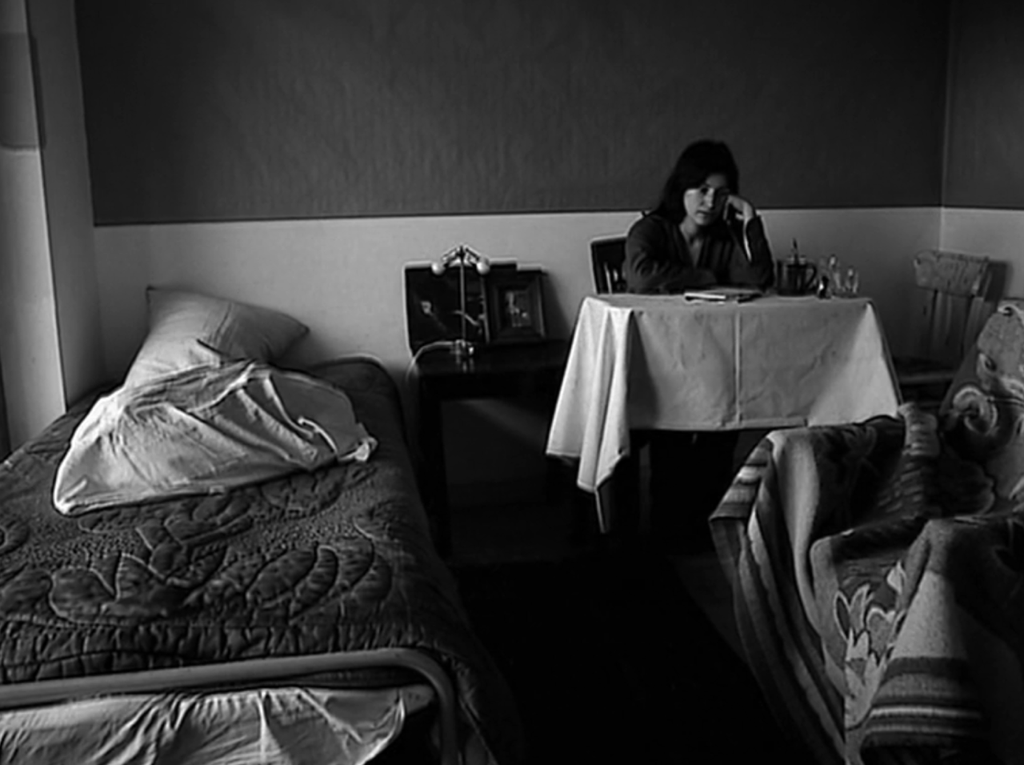
Je Tu Il Elle, which translates awkwardly to I You He She, hits this message hard right out of the gate, with Akerman playing Julie, a depressed but magnetic hermit who has willingly locked herself up in a small apartment that strangely and prominently features a floor-to-ceiling window to the outside world. Stilted voiceover suggests she is a lover spurned, determined to be cursed to three walls and the glimpse of freedom (or perhaps its function is for onlookers and passersby to gaze upon her and her pain). Equipped with nothing but a mattress on the ground, paper and pencil, and a bag of sugar with a spoon, Julie spends much of the triptych’s opening 30 minutes partially clothed or entirely disrobed, leaving the viewers (both on the other side of the window as well as the other side of the screen) with no choice but to view her as a familiar sad sack; when left to our own devices, we all struggle with boredom and discomfort—often by choice and at our own peril. As Farah Elattar writes for The Hot Pink Pen, “Chantal Ackerman’s decision to depict the protagonist performing mundane tasks emphasizes the monotony of daily life, and forces the viewer to be faced with it.” We, the viewer, then, are faced with ourselves.
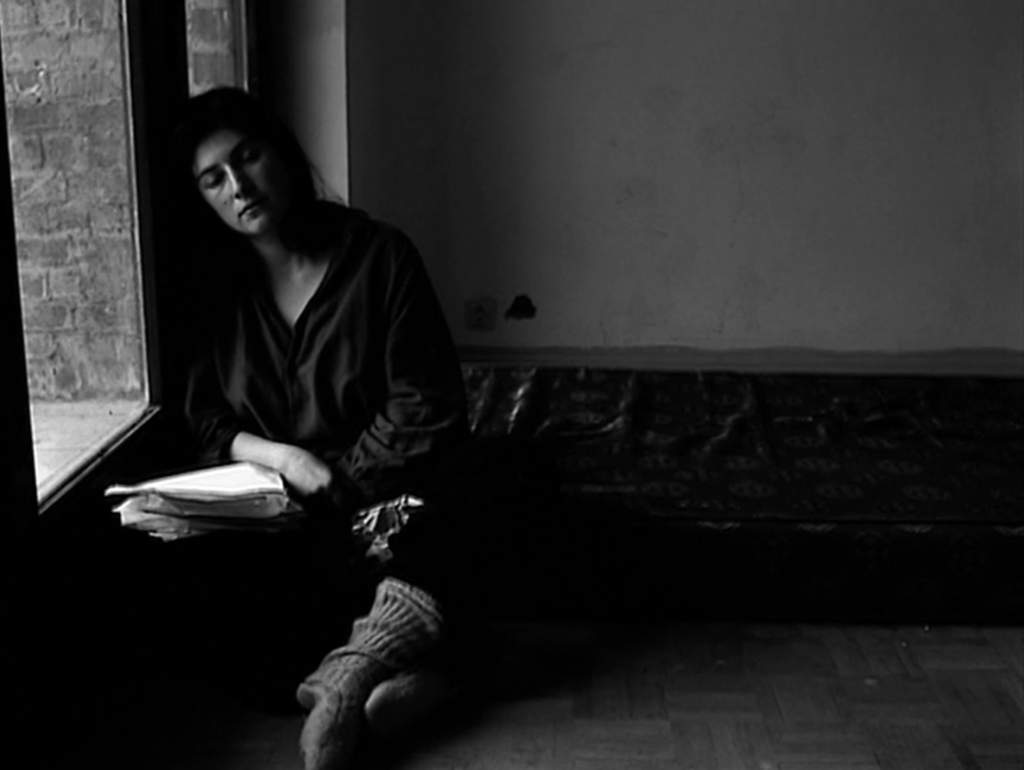
Of course, just as Julie comes up to the edge of her limit during her self-imposed isolation, and just as we the viewer might be tempted to leave the theater or see what else our infinity of streaming services can offer us, our protagonist bursts out of her apartment and into the unknown. The film’s second act feels like a relief at first, but as soon as we meet our second character—a dirtbag trucker with no name (played by Niels Arestrup), it’s only a matter of minutes before we wish Julie was back at home moping about and succumbing to her sweet tooth. Rambling about his life of victimizing his wife and child, it becomes clear that this truck driver picked Akerman’s character up because his own loneliness on the road (and maleness) has turned him into a cruel dominator. He doesn’t want a passenger; he wants a subjugate. And for a while, she and we, the viewer, give him that. “Due to Julie’s silence, the truck driver’s monologue seems to be directed to the audience,” Ceren Yildirim observes in her ebook Minor Cinema. We are watching him perform his most misogynist, most lascivious, and most cruel routines—thus, we are his victims too.
That Julie submits to the trucker’s advances after aimlessly riding with him and listening to him isn’t as shocking as it is an obvious act of resignation, though. She’s painfully on the rebound and looking for something, anything, to fill the void. The driver’s phallus is arguably no different than the spoon for the sugar from the previous act. It’s like trying to fill the Grand Canyon with canned air or Sisyphus pushing that rock up the hill with petroleum jelly all over his hands—emptiness within emptiness. And yet, it’s also a common act of rebellion and liberation, considering the time period. Akerman herself said to Lola Journal looking back on Je Tu’s autobiographical elements, “I hitchhiked back to Brussels to see the girl, Claire, who’s in the film, and I had all sorts of adventures with the truck drivers who picked me up. It was dangerous. But that’s how we lived at the time.” It was the 70s, after all, but romanticization is certainly not Akerman’s calling card.
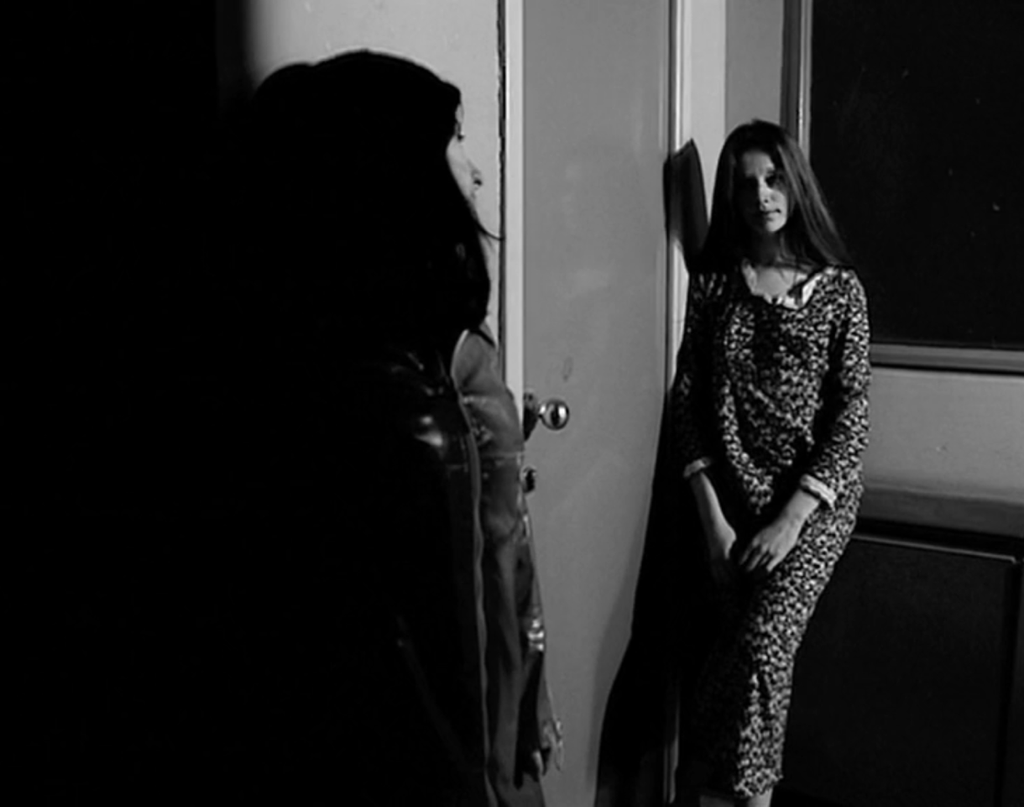
However, the film’s final third is so revolutionary that it’s both still discourse-worthy today and such a powerful depiction of love and sex, so it certainly can be viewed as romantic. When Julie finally rids herself of the nameless trucker, she finds herself thrust back to the lover who left her before the film’s start. The aforementioned Claire (Wauthion, whose character name is once again unmentioned) doesn’t so much welcome Julie as much as she doesn’t stop her from entering. Julie blankly announces her hunger pretty immediately, and her ex-lover calmly and lovingly prepares a sandwich for her—and then another. So little is said, quite literally, and yet the tenderness, care, and sexual tension is so thick you could cut it with the very knife that is used to spread the Nutella. There is an air of sadness in the proceedings too, but it only makes the couple’s connection more palpable. Emily Ruuskanen muses for Far Out, “Despite grieving this relationship in her own way and attempting to move on, we almost feel a sense of relief that she is back with someone who actually sees her and reflects the type of connection she yearns for.” And this is before the two even undress.
While it is a hypnotic but also challenging scene, it’s almost too easy to declare the extended lovemaking scene that comes next as the fulcrum of the film, especially when every other shot is just as well-composed and arresting as this one. What makes Akerman such an explosive talent even with just her first film, though, is that she is able to hew to a traditional structure of rising action and (please forgive me) climax even as she navigates the art form in a minimalist, one-of-a-kind fashion. When the two women wrap themselves around each other in bed, bare and impassioned, it’s both cathartic and defiant. “Here we are reminded of our uncomfortable position as viewer by being exposed head-on to the two intertwined bodies wrestling within the frame, shot from three different angles, but never aligned with a character’s perspective,” Ros Murray notes for Feral Feminisms. The “il” or “he” from the film’s title is excised, as are the “je” and tu” (or “I” and “you”) because this conclusion is neither an avatar nor a mirror. Remarkable too, is that there are no plurals involved. The final pronoun, “elle” or “she,” is singular. And the peek behind the curtain reveals two bodies, yes, but only as they resemble and ultimately become one in this carnal act. It’s a queer revolt, sure, but it’s also a revolt against being alone. And when you’re at the movies, naturally, you’re never alone.
Edited by Olga Tchepikova-Treon