
|Jay Ditzer|
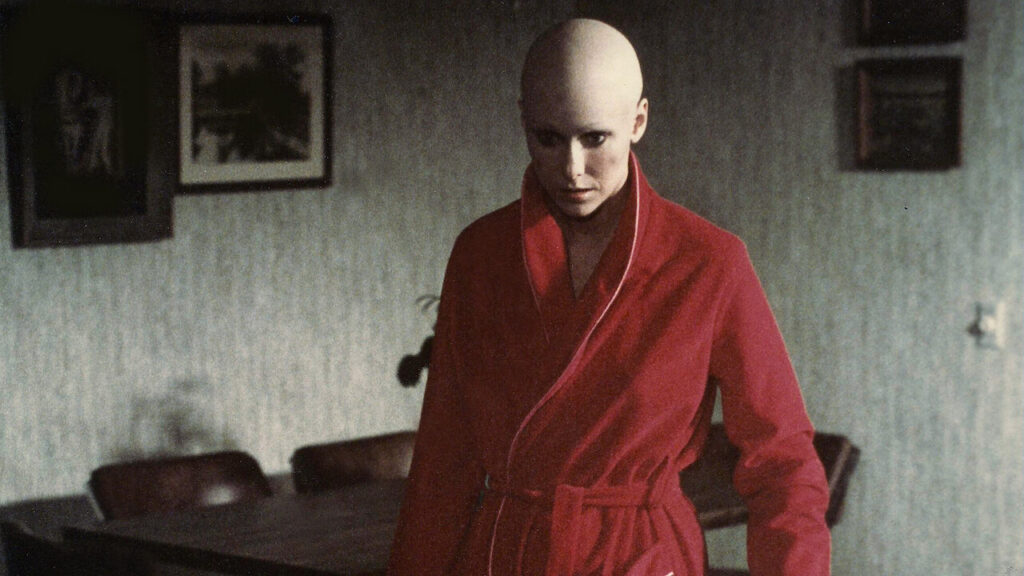
Horrorthon X happens in three iterations at the Trylon Cinema Friday, October 9 and Saturday, October 10. For tickets and other series information, visit trylon.org.
What to eat, when to drink caffeine, where to sit, and how to not be the worst person in the theater.
In Teenage Sex and Death at Camp Miasma, indie filmmaker Kris (Hannah Einbinder) has been hired to reboot Camp Miasma, an in-universe cult slasher franchise. Early in the film, she stops at a remote gas station, buys a DVD of Camp Miasma Part VI: A New Beginning, and fills a shopping cart with a mountain, or at least a hill, of candy. She later watches the DVD from her hotel bed, surrounded by her haul. At the end of the movie, there’s a callback in which she returns to the gas station and buys more candy, delightedly declaring, “We’re living in the golden age of gummy candy!”
If you’re attending one of Trylon’s three Horrorthon sessions this year, you cannot be like Kris.
You don’t need to adopt an ascetic diet or smuggle in a bowl of quinoa (rest in power, David Lynch), but you are about to spend eight hours sitting in a movie theater—the last thing you want to do is mistake a sugar buzz for nutrition. Instead, eat a decent, balanced meal before the marathon and save the hyperglycemia for another day.
The first rule of Horrorthon is to think of it less like going to the movies and more like an endurance test. You will get hungry, fidgety, and tired—perhaps simultaneously. You will wonder what time it is. You will probably see at least one movie that makes you question the judgment of the people who programmed it. And you’ll still have hours to go.
Trylon’s annual Horrorthon returns the weekend of Oct. 9 for its 10th edition, an eight-hour horror-movie marathon built around a simple proposition: Sit in a movie theater and watch a bunch of horror movies chosen by Trylon in collaboration with the Cult Film Collective. The catch is that you don’t know exactly what you’re going to see.
Mystery movie marathons aren’t exactly a revolutionary concept. Theaters have been running surprise screenings and mystery programming for decades. But the mystery is a large part of Horrorthon’s appeal. There’s something different about watching eight hours of horror movies with a theater full of strangers.
Paraphrasing Trylon manager Barry Kryshka: You can drink alone in your basement, but bars are there for a reason.
“You have to take each movie as it is,” Trylon programmer John Moret says. “You can’t answer email or look up trivia on IMDb.”
And after four movies plus assorted shorts, trailers, and Easter eggs, Moret says, the experience becomes something else entirely: “a cinema team-building exercise.”
Horrorthon began 10 years ago as a way to raise money and attention for Trylon as the theater prepared to expand from 50 to 90 seats. Moret says he was excited by the prospect of doing something nobody else in the Twin Cities seemed to be doing at that time: creating a serious horror-movie culture.
Of course, Trylon had regularly screened horror movies before launching Horrorthon: a Mario Bava series, French horror, Japanese horror, and so on. But the idea was to expand people’s understanding of what a horror movie series could be.
The first event was also, by Moret’s own admission, a little insane. It was a fundraiser in which people could get financial pledges based on how many movies they sat through, kind of like how you could raise money for your grade-school library by reading X number of books over the Christmas break. The good news: Horrorthon V.1 sold out;. The bad news: There were too many movies, there were donuts, and the event finally petered out around 8:30 in the morning.
Moret, Trylon, and the Cult Film Collective have applied the lessons the first Horrorthon taught them to each successive iteration, and the main lesson is that programming a movie marathon requires a different mindset than programming an ordinary film series.
Think of it like a roller coaster. A roller coaster can’t consist entirely of giant drops. If it did, eventually the giant drops would stop feeling like giant drops. You need the climb; you need the stretch where you’re catching your breath; you need the weird little baby hill that seems almost insulting after the last drop. Horrorthon works the same way.
“You need one great horror movie,” Moret says. “I like to put in something that’s a legitimately good movie and isn’t afraid to be scary. You need a ‘party movie,’ one the audience won’t take too seriously, to lighten the mood. And you need something that’s a major crowd-pleaser. [The audience should] let the movies come as they are. Don’t expect constant entertainment.”
Moret learned this from an unlikely source: attending a marathon of the original five Planet of the Apes movies. He says that the third movie in the series—1971’s Escape from the Planet of the Apes—is a stinker, but watching it as part of a whole demonstrated that you can’t simply stack classics and bangers on top of one another and expect the experience to flow. Sometimes you need an outlier that changes the temperature of the room.
Then again, that math doesn’t always add up. Moret cites Blue Sunshine (1977) as a movie the Horrorthon audience really disliked. He likes things about the movie—its director, the very 70s pacing, the combination of seriousness and goofiness—but it just didn’t resonate with attendees that year.
Then there was Alligator (1980), which opened one Horrorthon to an audience that initially seemed completely indifferent, but by the end, people were cheering, and it became the surprise hit of the event.
Moret says Horrorthon gives Trylon license to screen films people might otherwise avoid—movies that you might see in the theater’s quarterly schedule and think, “I don’t know about that one; I’m gonna skip it.”
The movies are also surrounded by an assortment of era-appropriate trailers, television commercials, and other oddities chosen to complement what you’re about to see, so don’t assume that anything on screen between the movies is disposable dead time.
“Nothing is ever on screen by accident,” Moret says, so pay attention.
Another limitation imposed by the mystery: Horrorthon can’t program the most punishing, transgressive horror imaginable and assume everyone will be on board with it. If you’re a fan of Martyrs or Henry: Portrait of a Serial Killer, for example, and you’re hoping for eight straight hours of that particular brand of intensity, you will be disappointed.
That doesn’t mean Horrorthon can’t show scary movies; it just means that “surprise” and “anything goes” aren’t the same thing. The programmers avoid material involving sexual or racial violence and give audiences a heads-up if necessary. Still, not every movie will land with the audience. One year, David Cronenberg’s sexually charged Shivers generated a negative reaction.
Enjoying Horrorthon requires a bit of physical preparation, too.
First: Get there early. People line up hours before showtime, and if you have a favorite row or specific seat in the theater, you’ll want to be near the front of that line. It makes me laugh when I attend any sold-out screening at the Trylon and a group of four or five tourists rolls in after the trailers have started and are shocked, simply shocked, to discover that they can’t find five seats together. This goes double, maybe triple, for Horrorthon.
Second: It’s perfectly reasonable to bring a small pillow. You are going to be sitting in a movie theater for eight hours. This is not a test of character, so get up between movies and stretch and walk around, preferably outside. As anyone who has been on an eight-hour road trip can attest, being sedentary for hours at a time can be weirdly exhausting.

The biggest mistake first-timers make, Moret says, is not eating a healthy meal beforehand. And then there’s coffee or soda or energy drinks. Don’t start pounding caffeine when the first movie starts—you’ll crash in the middle of the second movie.
Moret says the third movie is usually when people really begin to drag. That’s the time for caffeine. His other dietary advice is less complicated: No donuts. No candy.
Officially, outside food and drink is prohibited at Trylon, but the rules are slightly relaxed (within reason) for Horrorthon. You are allowed to “sneak in” some sustenance. Stuff like grapes or a banana is OK, but don’t show up with a Crave Case from White Castle or similar. And speaking of White Castle, do not bring excessively… fragrant foods. Canned sardines are a great source of protein and omega-3 fatty acids, but ain’t nobody wanna smell that shit. Also, please be mindful and don’t make a mess.
Poor food decisions aren’t the only way you can ruin the experience for the people around you. What does, and more importantly, what does not come out of your mouth is just as important as what goes in.
Some audience participation is not only acceptable but desirable: Gasp. Yell. Laugh if something funny happens. React to what you see on screen. But there is an important distinction between reacting to a movie and trying to become part of the entertainment.
“Horrorthon is not The Rocky Horror Picture Show or MST3K,” Moret says. In other words, don’t talk to the movie because you think the rest of the audience wants to hear your snarky wisecracks (Spoiler: WE DON’T). They’re not there to be entertained by you.
So who actually comes to Horrorthon? Moret says there are some people who come every year and essentially only go to the Trylon for Horrorthon, even though Trylon screens horror throughout the rest of the year.
Then there are the hardcore genre fans in horror T-shirts and Chucky tattoos for whom Horrorthon is their Super Bowl. And there are what Moret calls the “rep goblins”: people who want to see what obscure or unusual films the Horrorthon brain trust has managed to dig up.
When you buy a Horrorthon ticket, you are giving up control. You don’t know the lineup or whether you’re going to enjoy every movie. The third movie might be a revelation or the cinematic equivalent of a morning at the DMV.
When the lights go down, you’re not just sitting in a theater watching horror movies. You’re in the Horrorthon. You might as well see what happens next.
Edited by Finn Odum