
| Zach Staads |
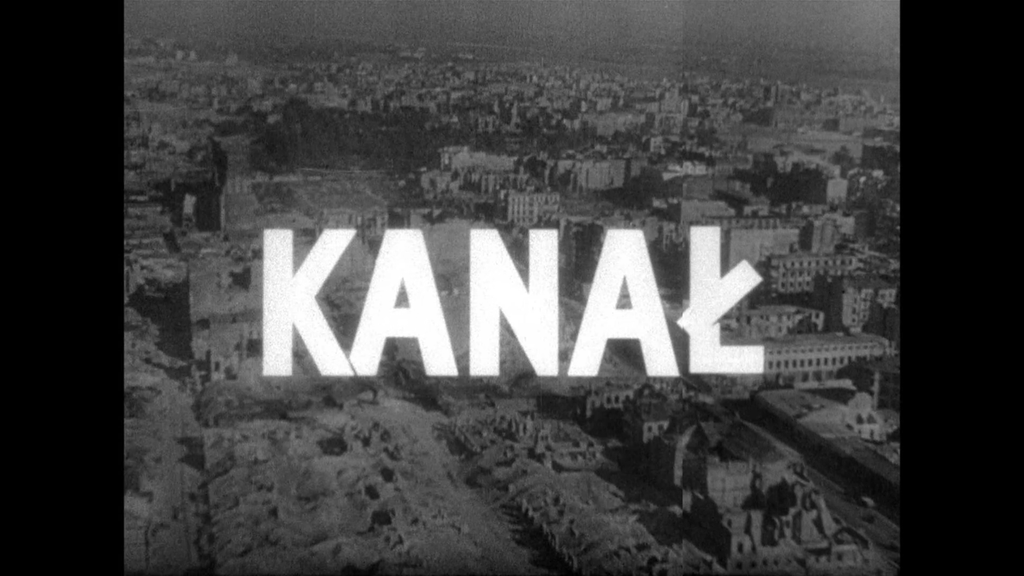
Kanał plays at the Trylon Cinema from Sunday, November 8th, through Tuesday, November 10th. For tickets, showtimes, and other series information, visit trylon.org.
When I watched Christopher Nolan’s The Odyssey for the first time, I was left empty. I enjoyed many aspects of it, certainly had my issues with it as someone who has studied Greek myth in some small way, but really I just felt like there was some strange missing piece. The next day I watched Kanał. It has what The Odyssey doesn’t—a sense of time.
The near decade of Odysseus’s journey feels almost brief in the slapdash way it is presented in the film. It feels as though it takes him mere days to cross from island to island, encounter to encounter, with little to no time to sit and breathe from something going on before landing on Calypso’s speck of sand. Then seven years is rendered only in brief glimpses and the clumsy dialogue of those left on Ithaca, passing in the blink of an eye. In Kanał, it feels as though they are trapped in the sewer for an eternity.

Kanał achieves this in a number of ways. First, it gives us a full expectation of what we’re about to see—this is a tragedy, not a heroic war film. We are made aware that this is the end of these character’s lives that we are watching and that we should pay close attention to how each of them treats this time and how they live while they still can. We are told to really take in what is happening at all times and it makes us keep our eyes peeled for everything that happens.
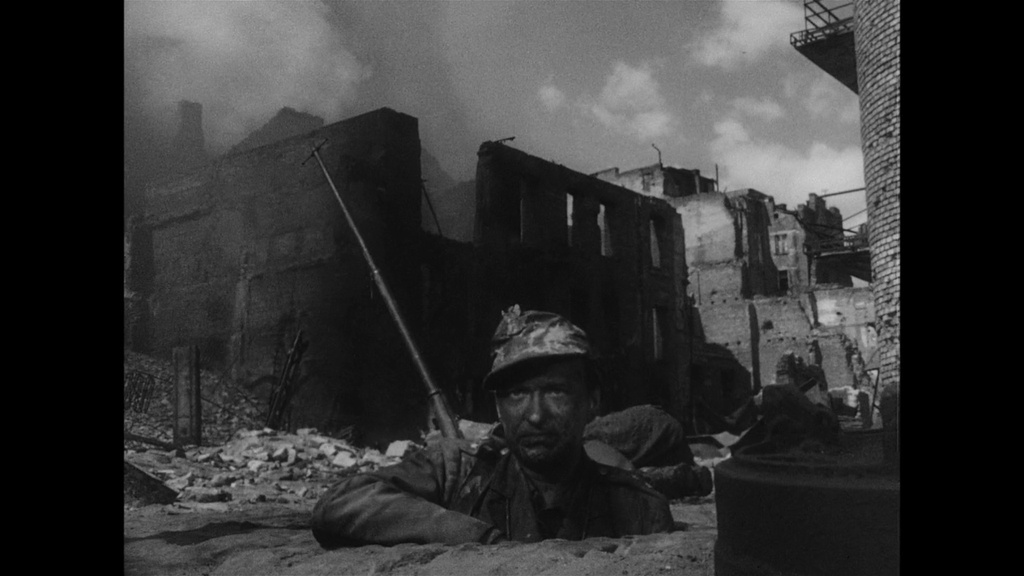
Second, the movie is split into two halves. The first half of Kanał takes place outdoors, mainly in the ruins of the Mokotów district of Warsaw where the action and story feel like fairly standard storytelling. While it has moments of contemplation and anticipation, these are briefer moments compared to what is to come in the second half, but this lulls us as an audience into a false sense of security that this will be a normal war film.
The second half of the film takes place almost entirely in the titular Kanał, translated as sewer. The soldiers, now numbering 27 after 16 are killed in the first half, are stuffed into the sewers and almost immediately separated into three distinct groups of people. This helps create the illusion of a lengthening of time as we hop between the experiences of the increasingly disparate groups, further exacerbated by the failing health of one group, the madness in another, and the vile decisions of one man in the final group.
This focus on the sewers, the confinement, the dark, the horrid things that people do and go through, and watching them slowly break down makes this second half of the movie feel like it is going on forever, in a good way. The first time I watched Kanał I truly thought the second half of the movie was around double the length that it actually was. The sewer feels absolutely endless as crazed laughs, maddening music, screams, and violence don’t seem to be heard by anyone else in the sewer—save those immediately present for those moments. Kanał also has one other, major thing helping it—sound.
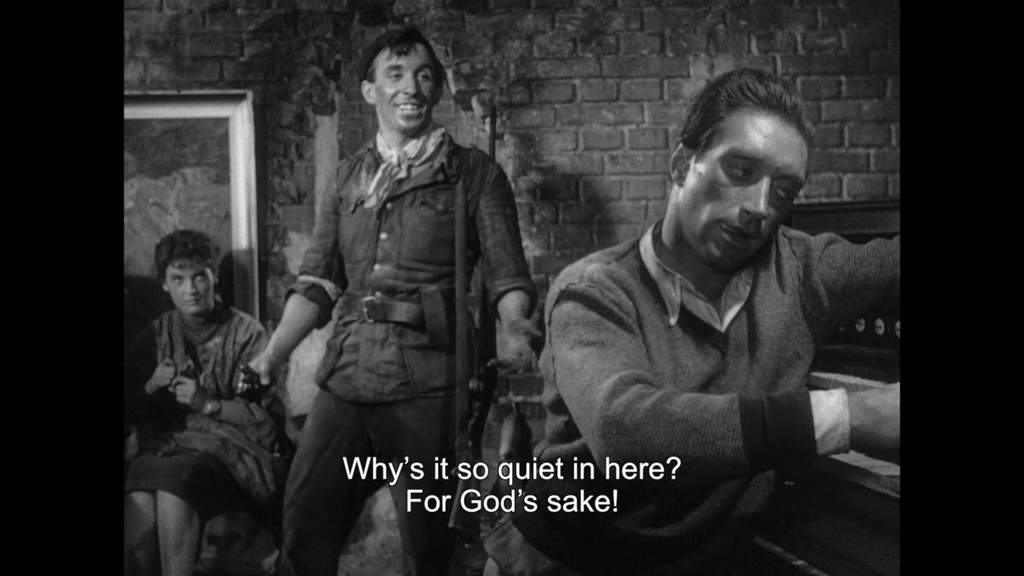
Throughout the film, there are many moments where the sound and music inform every feeling of a moment. This goes from the false hope of heroic war music and the sounds of battle in the first half, to the eerie silence, unsettling music, and horrid sounds of water and breathing that dominate the second half. The music within the sewers is mainly comprised of faint orchestral sounds and a few, haunting notes on an ocarina. More often than not the film forgoes music and relies only on dialogue and sound effects to create an atmosphere of unease within this long, winding brick coffin. The film is out to put us off balance and succeeds in spades as the situation goes bleaker and we are meant to endure the failures of body, mind, and courage.
With The Odyssey however, I had the opposite experience. The film felt one note; sound and music pounded away with few moments of quiet, truly well executed sound mixing, or engaging sound design. Only two examples of nuanced sound execution come to mind, the encounter with this adaptation’s version of Circe, and the attempted seduction of Penelope by Antinous.
This repetitiveness exhausted me. The music was ever-present, the sound was equally unceasing, and if either did let up then we were usually privy to some character yelling or screaming, over and over. I became extremely tired of this crutch over the course of that film’s nearly three-hour runtime as the audience is rocketed through the story from plot point to plot point. (The constant noise was particularly present in IMAX, where the massive speakers muddied any semblance of sound mixing taking place, taking away what magic the IMAX cinematography brought.) This leads me into Kanał’s final important distinction—lack of sound.

Throughout Kanał, we are left in different kinds of silence. The halting of laughter when a missing leg—blown off or amputated, is revealed. A phone call getting cut off by probable violence and panic is met by silence. The stillness between military assaults, the relative silence of the sewer compared to the cacophony of downtown, the gaping silence of people who are no longer following, and the terrible silence that accompanies someone hearing things that aren’t there. Additionally, due to the circumstances of the film, once they reach the sewer they are told to keep quiet as to not alert the Germans to their positions in the sewers which means characters are attempting to keep quiet, and are deathly afraid of what noise will bring.
These myriad ways in which silence overtakes us is amplified in many scenes where all you can hear is the too-clear dialogue track—all diegetic sound having been abandoned, and little to no music to fill the void. Whether this was purposeful or a result of needing to rerecord lines, the effect is intense and off-putting. The voices don’t echo in the sewer, the sounds of battle cease to exist, and characters are left in a strange void of sound in which only their voices can pierce through and yet their voices are not comforting.
The Odyssey, for my money, could have benefited from the use of some of these techniques or even just finding its own way to better vary the sound and music and elongate time more effectively. Now, since I have put down one of the most critically acclaimed films of this year, I do think it’s important for me to say I don’t think Kanał is a fantastic movie. The first time I watched it I found it interesting but was still skeptical of many choices, but I do think it is a powerful movie. It stands as both a strong piece of historical fiction (though inspired by the screenwriter’s personal experience in the Warsaw Uprising of 1944) and as a piece of art and exploration of defeat.
I will never forget the power of the final moments of the film. After shooting Bullet for his despicable choice to abandon every one of their company members that he could down in the sewers, Zadra is left in cold silence, wind blowing, as he walks back to the manhole and brings himself back into the sewers—gun last—before he presumably dies searching for his missing men who are, at this point, certainly long gone. In one last moment of loss, the papers Bullet carried, which contained the information of all the company members and of the deceased, are scattered to the wind.
Edited by Olga Tchepikova-Treon