
| Andrew Neill |
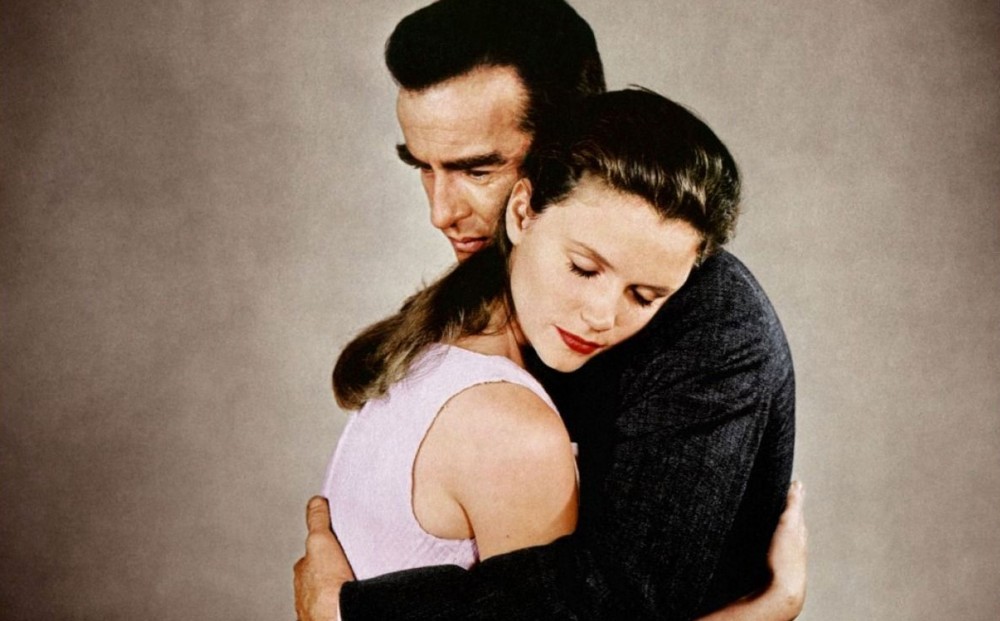
Wild River plays at the Trylon Cinema from Friday, November 13th, through Sunday, November 15th. For tickets, showtimes, and other series information, visit trylon.org.
The 20th century ended over a quarter of a century ago, but it’s ever present on the movie podcast You Must Remember This. Since 2014, the show’s creator, writer, and host, Karina Longworth, has told true stories about the secret and/or forgotten history of Hollywood’s first century. The depth and breadth of that subject has produced a podcast of seemingly endless variety, which feeds the fascination of nerds like me, who can’t stop thinking about how the past informs the present, at the movies or otherwise.
Across its many episodes, the show has covered a far greater number of films. As I listen along to the show, it’s challenging to keep up with all the titles covered. So I don’t. Listening to a movie podcast without watching the movies may seem like deviant behavior, but I’m here to tell you that it’s not a barrier for entry. Removing the film from the story of its making can cast a striking spotlight on the actual human beings behind it.
This has never been more apparent than in the most recent season of the podcast, titled The Bisexuals. It focuses on two performers beginning with Libby Holman, who was not a star of the silver screen. That may seem like a strange choice for a movie podcast, but Longworth’s interest becomes clear very quickly.
Holman lived one of the most remarkable lives ever covered on the show. Her life and career inspired multiple movies released contemporaneously. Holman was known as a torch singer. She performed jazz, blues, and folk songs, most of them originated by Black artists. Her best known number, “Moanin’ Low,” was performed by actor Claire Trevor in Key Largo as a character likely drawn upon Holman. Trevor won an Oscar for the role. There was definitely appropriation in Holman’s work, but also allyship. She was a welcome performer at the Apollo Theater in Harlem and helped boost the career of Black musicians like Josh White, a singer and guitarist who went on tour with Holman and eventually outgrew her in popularity.
Holman was a queer woman and lived as out as one could for the time—roughly the 1920s through the 60s. She married multiple times, all to men, but had sexual relationships with women throughout. Amidst her exciting artistic and sexual adventures, Holman’s personal life is marked by frequent tragedy. Her first two husbands died young. One, a wealthy tobacco heir named Zachary Smith Reynolds, died under mysterious circumstances that drew her into extended litigation and tabloid attention. Director Douglas Sirk’s Written on the Wind is loosely inspired by the events. She had her only biological son, Christopher or “Topper,” with Reynolds, and he, too, died on a hiking trip shortly after graduating from high school.
Holman had a less tragic, but nonetheless tumultuous friendship—eventually with benefits—with another queer icon: Montgomery Clift. Clift’s stardom launched with Howard Hawks’s Red River in 1948. Clift played against John Wayne and, as Longworth frames it, represented an evolution in masculinity on screen. His handsome surface concealed deep, mysterious waters. At that moment, Clift’s iconography was moving away from classic leading men like Cary Grant and toward more complicated figures like James Dean.
Longworth describes Clift as a man frustrated by his sexual identity. Before and after his pairing with Holman, Clift had multiple male partners, but he was more closeted than Holman. During their relationship, the press was vicious, prying into why one of the most desirable Hollywood stars would stoop to dating a Broadway has-been 16 years his senior. Clift’s inner unease was complicated further by PTSD after a horrific car accident in 1956. His primary instrument—his face—had to be rebuilt, and he carried insecurity onward around the loss of his former beauty.
Considering all of this baggage, several less-than-successful career moves, and a growing reputation as an alcoholic, director Elia Kazan chose to cast Clift in Wild River. Kazan openly claimed that he selected Clift because of the sexual uncertainty he projected. Clift plays a government representative who tries to convince a stubborn matriarch to move her family off land about to be flooded by a new dam. His character quickly catches the affections of the woman’s daughter, played by screen beauty Lee Remick, who is also a mother of two.
This is a prime example of the extratextuals of an actor’s life informing and deepening their performance onscreen. Clift played many heterosexual romantic leads over his career, but Wild River was his last, possibly because it’s not conventional or even convincing to some. Remick is throwing herself at Clift, but a lifetime’s worth of emotional and sexual discontentment is preventing him from throwing himself back.
Longworth has chronicled many complicated men before Clift. In the previous season, titled The Old Man is Still Alive, she covers the late careers of some of the most canonical directors of early Hollywood. The stories span the era of these men’s lives after they’ve made their most well known and regarded work, so I wasn’t familiar with much of it. Subjects include John Huston, Vincente Minnelli, and George Stevens, who directed Clift in A Place in the Sun, one of his defining roles. Longworth proved across this series that many noteworthy events occurred long after the culture moved on from these artists.
John Ford was known as the preeminent mythmaker of the American West—and a massive sonuffabitch. In landmark films like Stagecoach and The Searchers, Ford centered men who represented the hardened masculine ideal that Clift would eventually upset. These men presented as tamers of the Wild West, but harbored wildness within them. They viewed women as damsels to be saved or conquests to be won, and they wreaked violence against the land’s indigenous people, who they often saw as subhuman.
With this in mind, it was surprising to discover that Ford ended his career with two comparable left turns. Cheyenne Autumn accounts the troubled journey of Native people traveling back to their ancestral home in Yellowstone, and 7 Women features a large female ensemble led by Anne Bancroft, a first for Ford in his very last film. It suggests the stubborn, irascible Ford may have held a desire to atone for othering and sidelining the marginalized across his long career.
Frank Capra was responsible for defining American idealism in films like Mr. Smith Goes to Washington and It’s a Wonderful Life. Both of these films feature Jimmy Stewart as striving do-gooders or dreamers confronting a corrupt reality—the type of characters that audiences identified with or admired as hometown heroes.
Now that I’ve listened to Longworth’s episode on Capra, I can’t think of the guy without recalling how he suffered a botched adult circumcision procedure and spent the rest of his life with chronic dick pain. Perhaps due to this constant discomfort, emasculation, and an increasingly warped understanding of the American ideals he helped define, he would go on to name names to the House Un-American Activities Committee and write a scathing, bridge-burning autobiography that condemned what he saw as his industry’s immoral transformation into the New Hollywood. The man who gave us George Bailey underwent his own transformation into Mr. Potter.
My favorite season of You Must Remember This is called Polly Platt: The Invisible Woman. Across this season, Longworth paints a picture of a woman in the mid-to-late 20th century grasping for balance between her parallel lives as an artist, a partner, and a parent.
In her early adult life and career, Platt worked alongside her second husband, the director Peter Bogdanovich. They kept the company of a coterie of old directors that Bogdanovich befriended and helped canonize, including subjects from The Old Man Is Still Alive like Ford and Hawks. This patriarchal phalanx disregarded Platt. Most of them belittled her artistic ambitions and saw her solely as the mother of her husband’s two daughters. The old bastards rubbed off on Bogdanovich. He was far more interested in advancing his career than parenting his kids, leaving Platt in a difficult position. She had to advance her career while parenting her kids.
Bogdanovich was a student and purveyor of the auteur theory, that the director is the author of the film. But Longworth’s work across this season casts a spotlight on Platt’s tremendous influence on their shared work, to the point of shared authorship. Polly is credited as the production designer on their collaborations, but her contributions went beyond design to costuming, producing, and more. It was her taste that led them to the source material behind their landmark films, including The Last Picture Show and Paper Moon. Platt felt deeply connected to this material and used that passion to convince her husband that they should make these films.
After listening to The Invisible Woman, I was deeply invested in Platt’s story and compelled to watch her movies, many of which were personal blindspots. Fortunately, the Trylon put together a screening series inspired by the podcast, so I went out to see Paper Moon. With Platt’s life story embedded in my brain, it was impossible not to view the film entirely through her experience.
Paper Moon tells the story of Addie Loggins, a tomboy in Depression-era Kansas who falls in with her maybe-biological-father, Moses Pray, and becomes his accomplice as a small-time grifter. Addie quickly proves to possess more natural ability at the art of the con than Moses, which he dismisses but ultimately exploits. Addie is a girl in a man’s world, and all of them—losers, bumpkins, and threats alike—see her more as an accessory, if they see her at all.
My mind immediately sees Platt as Addie and Bogdanovich as Moses, despite the core difference between the pairs’ relationships. Platt definitely identified with Addie, but she could have seen Moses as any number of men in her life. Paper Moon is a great film because its complex characters welcome such dynamic identification. I see myself in Addie, as someone who’s felt disappointment in being overlooked for my accomplishments, but also in Moses, as someone who lets his insecurities get in his own way. Whatever Platt saw in Paper Moon, I appreciate both her work to bring it into existence and the connection I now feel towards it.
I owe my personal discovery of Polly Platt and the stories of many artists to the existence of You Must Remember This. Longworth continues to push past the myth to the people behind it. The podcast contains her commentary, but her point of view is rarely judgmental—unless it’s strongly deserved. She presents her subject’s actions as they were recorded, as real, flawed, yet often striving people who lived remarkable lives off-screen while accomplishing remarkable things on it. Through her approach, idolization is replaced with identification. You can see yourself in the person who persisted despite consistent tragedy, who struggled to reconcile their outer and inner lives, or who pushed to be seen in the face of indifference. And despite what I said earlier, watching the work definitely deepens the experience. When I make the time to catch up, my appreciation and understanding of the artist’s life only grows.
Edited by Olga Tchepikova-Treon