
| Ed Dykhuizen |
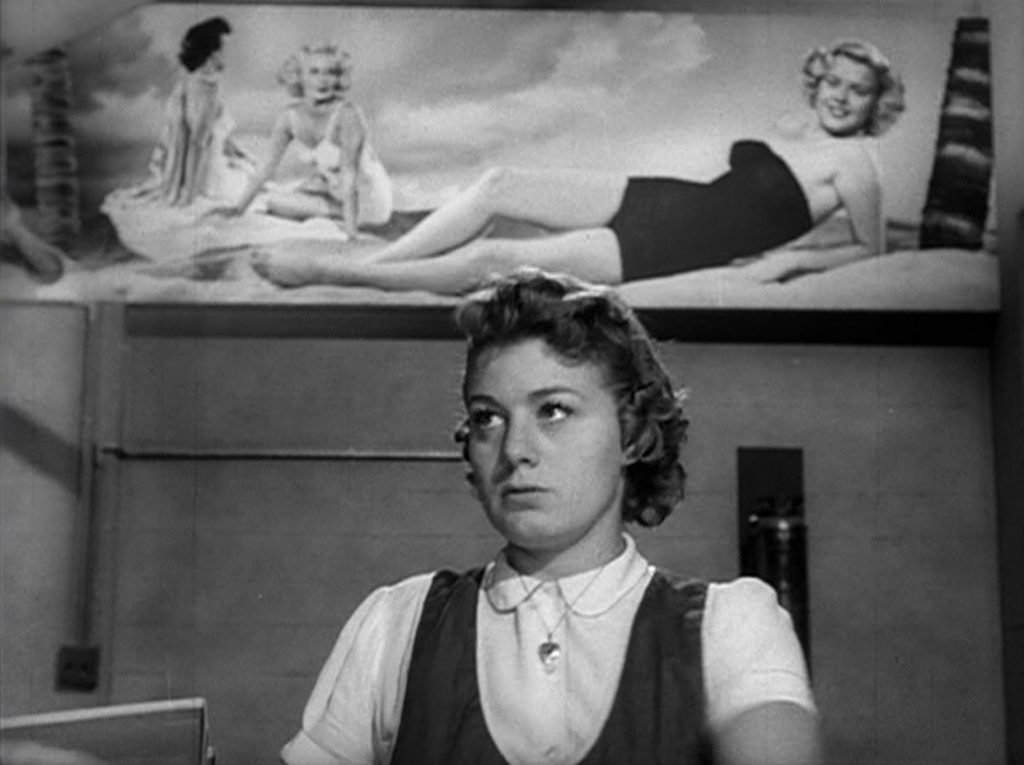
A Place in the Sun plays in glorious 35mm at the Trylon Cinema from Friday, November 13th through Sunday, November 15th. For tickets, showtimes, and other series information, visit trylon.org.
Since the earliest days of movies, they have been at least partially about showcasing attractive young women. The first film studios did so enthusiastically, even if they tried to keep the young women anonymous. Fans and newspapers still latched on to a young beauty that they called the “Biograph Girl,” who starred in films made by the studio Biograph. The Independent Motion Picture Company lured her away from Biograph by promising both more money and marquee billing as Florence Lawrence. She is now known as the first movie star.
Ever since, “movie star” has been synonymous with good looks, especially for women. Men who don’t look like models can reach the A-list if they are funny or have unique charisma. During Hollywood’s so-called Golden Age, Spencer Tracy, Edward G. Robinson, Charles Laughton, Ernest Borgnine, and others became household names more because of their acting skills than their hotness. In comedies, the men could range from the Marx Brothers to Cary Grant, but the women always had to look like Claudette Colbert or Katherine Hepburn. A list of the biggest female stars from the period is nothing but otherworldly beauties (who were also great actors loaded with charisma).
(I recognize that I’m in a potentially hypocritical area here, critiquing movies’ obsession with pretty people while also judging people’s looks. I’ll do my best to remain objective and respectful about the inherently subjective and minimizing topic of actors’ physical appearances.)
This at least isn’t discordant with most Hollywood plots, which are usually about the lives of beautiful people. When the male and female stars meet, they are attracted to each other immediately, because how could they not be? They are both among the prettiest people in the world. The obstacles to finding love in movies are seldom the ones that most real people have, such as trouble getting dates.
Maybe a romantic comedy will be about a woman who is unlucky in love. She will still be played by Sandra Bullock or some other beauty who would realistically have her pick of any man. She might have glasses and a bad haircut, or a purportedly unattractive trait like clumsiness or a strange laugh. In a romantic comedy, you can gloss over this sort of nonsense because it’s all a fun fantasy.
In a realistic drama, though, a gorgeous woman trying to look homely often kills the impact of the narrative. We are supposed to feel empathy for the very relatable (for most of us) feeling of possibly not being hot enough to get the love we deserve. It is wildly unfair that within the real-life American patriarchy, a woman’s dating options will often be limited if she doesn’t have a slim figure and symmetrical face, regardless of how wonderful a human being she is. There is great pathos to be mined from this arbitrarily cruel societal injustice.
Hollywood often squanders the opportunity to fully mine this pathos by casting people totally unfit to play ordinary people in serious dramas, i.e., gorgeous people. The comedian Jim Gaffigan touched on one example:
“When [Halle Berry] was in Monster’s Ball, playing that poverty-stricken woman, the whole time I was watching the movie I was like ‘Well, why doesn’t she just become a model?’”
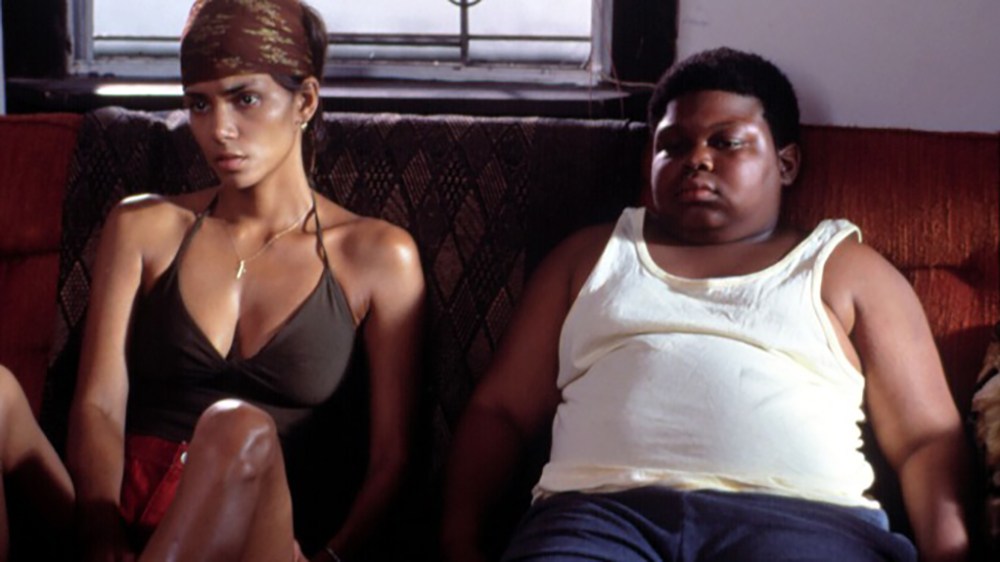
Halle Berry gave her all in that role and won an Oscar for it, probably deservedly. Her performance was so good it almost made the movie great, for me at least. Still, her character’s struggles would have felt much more real to me if they had cast one of the thousands upon thousands of tremendous actresses who aren’t among the most beautiful women in history. (If you want a few more examples of roles miscast with overly attractive women, I have more in an old blog post.)
I’m all for awarding roles based on ability rather than appearance. Race-blind casting, for example, is a great practice that has given us terrific performances and opened up roles to BIPOC actors whose options have historically been very limited.
But there are other times when the story demands that an actor look the part. You don’t cast a tall person to play a character whose struggle is that they’re short. You don’t put George Clooney in a wig and have him play Jessie Buckley’s part in Hamnet. And you really shouldn’t cast gorgeous people to play characters whose story hinges on not being gorgeous.
A Place in the Sun: One Time Hollywood Got It Right
In A Place in the Sun, working-class man George Eastman (Montgomery Clift) hitchhikes to California in a desperate bid to come up in the world. His shot at the American Dream comes in the form of a rich industrialist uncle who has been estranged from George’s poor, humble family.
George is invited to his uncle’s mansion, but in the most perfunctory way possible. It is more of a brief job interview than a family reunion. George bends the knee sufficiently to get the promise of a job at his uncle’s factory.
Before George is ushered out, in swoops his cousins’ friend Angela Vickers, played by 19-year-old Elizabeth Taylor. She lights up the room: gorgeous, confident, charming. She is the center of attention wherever she goes, and revels in it. He is entranced, but she doesn’t notice he’s even there.
George’s uncle gets him a job at his factory, but it’s in the working-class part, a factory floor putting ladies’ clothes in boxes. He is not supposed to fraternize with any of the many female workers. The wolf whistles as he enters the room for the first time make clear that that rule will be quickly broken.
The most eligible young woman at the factory appears to be Alice Tripp, played by Shelley Winters. Alice and George sneak sly glances at each other, but when they are left alone at the end of the day, she steals away bashfully without a word. This is not the typical beginning of a Hollywood romance, in which the music swells as two people lock eyes from across a crowded room. This is more like a real-life attraction: subtle, halting, awkward, and slow to develop.
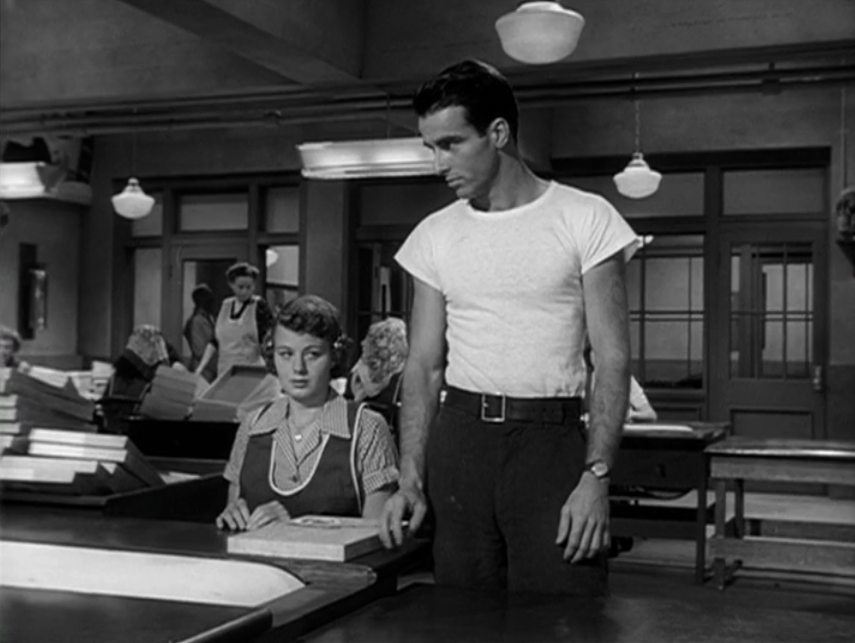
[Image: cliftwinters.jpg. Alt text: Montgomery Clift and Shelley Winters on a factory floor stealing glances at each other in A Place in the Sun, image courtesy thefilmspectrum.com]
Later George happens upon Alice outside of work and starts putting on the moves. Up to this point George has been timid and self-effacing, but that was around rich people. He becomes a lot more confident when courting a shy young working-class woman. It’s not a surprise to the viewer, as Montgomery Clift is incredibly handsome. You can imagine he seduced quite a few back in his Midwestern hometown.
George and Alice start a romance that feels quite realistic. It’s not the stereotypical Hollywood romance of dancing at a fancy ball, close-ups of beautiful faces wrought with emotion, bold pronouncements of true love, bombastic music driving it all home, etc. George and Alice get to know each other in a gentle, genuine way in humble settings like a lively dive bar and an unremarkable sidewalk.
One major conversation topic for George and Alice is class. He insists he is in the same boat as her and her co-workers, but she says “If you’re an Eastman, you’re not the same boat as anyone. Pretty soon you’ll move up.” On a later date Alice takes back that comment, saying he’s “better off in the packing room than with those Eastmans.” She has no delusions that she will rise to the upper class and worries she will be left behind when he does. She is right to worry.
After proving himself a sufficiently industrious young man, George gets invited to a fancy party at his uncle’s house. There he is thoroughly ignored, left to make painfully real-feeling attempts to join conversations. He gives up and hides in the billiards room.
Angela Vickers (Elizabeth Taylor) walks by and happens to catch sight of the handsome young man brooding all alone. She is intrigued. She confidently waltzes in and begins flirting. He is dumbfounded; his greatest wish is suddenly coming true.
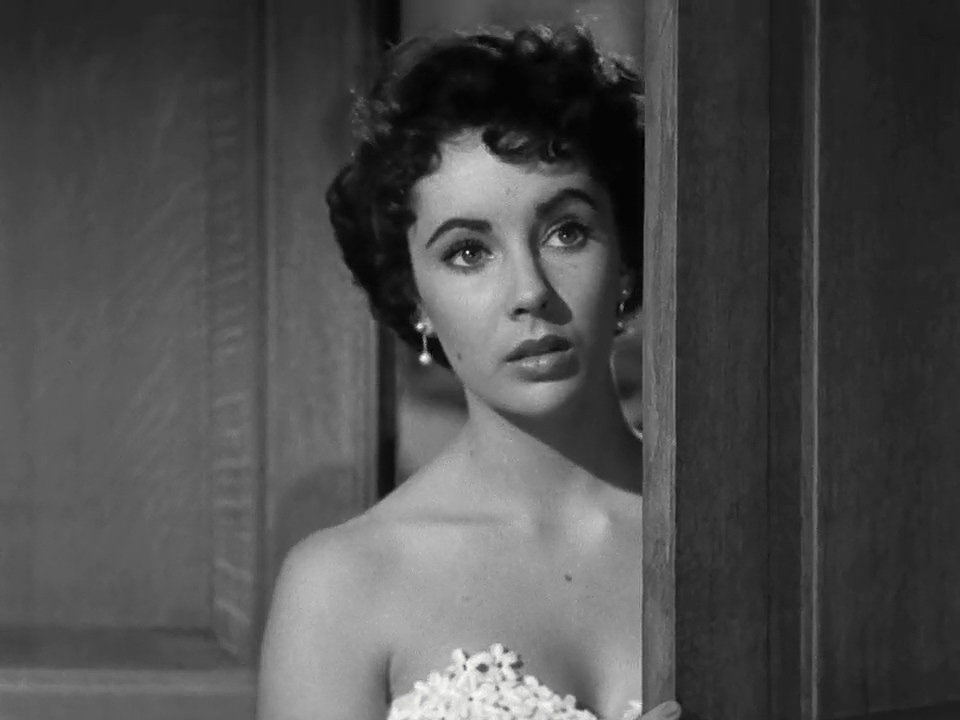
[Image: taylor.png. Alt text: Elizabeth Taylor looking radiant in A Place in the Sun, image courtesy imdb.com]
As viewers, we get it. As much as we may love Alice, we can understand why George can’t help but be swept up by Angela. Elizabeth Taylor’s reputation as the most beautiful woman in the world was already well established in 1951. She looks otherworldly, impeccably dressed and made up, with soft-focus close-ups practically forcing us to fall under her spell.
Angela whisks George onto the dance floor and we quickly get the typical Hollywood romance: dancing at a fancy ball, close-ups of beautiful faces wrought with emotion, bold pronouncements of true love, bombastic music driving it all home, etc.
After this whirlwind romance, George stumbles back, very late, to a sad little birthday celebration he was supposed to have with Alice. Alice is hurt, and George spins lies to placate her. While the Eastman party scene was brightly lit and full of movement and cuts, this scene is static and dim.
The scenes of George and Alice are staged realistically: long shots in long takes with little music. They are almost like the Italian neorealist movies that were just beginning to make waves in 1951. The implicit message is that working-class life is the real world, as opposed to the bright, busy, music-filled upper-class Hollywood fantasy of the Bateman manor.
Several more scenes follow that contrast sharply between the humble world of Alice and the extravagant world of Angela. George’s scenes with Alice are lit less and less until he is completely in shadow. We are left only with the hurt on Alice’s painfully vulnerable face.
Here’s where we (finally) get to how A Place in the Sun was one of the few Hollywood movies that expertly cast a woman who didn’t look like a model. Shelley Winters is absolutely perfect as Alice. She is pretty enough to be convincing as a love interest for a handsome young man on the prowl. She also has naturally sad eyes and generally does not look like a glamorpuss. The contrast between her and Elizabeth Taylor is striking. While Taylor’s Angela represents a dream life of wealth and excitement, Winters’ Alice represents a good, humble, working-class reality.
Of course, it is much more than her appearance that makes Shelley Winters Oscar-worthy in this role. You might be swept off your feet by the fantastical, magnetic beauty of Elizabeth Taylor, but only after you fall for Winters’ shy, humble, vulnerable sweetness.
It would be very easy for the allure of Taylor to completely eclipse the affection for Winters in both George and the straight male viewer. That would make the film shallow and cruel. To pull off the delicate tension between fantasy and reality that the entire movie hinges on, you need an especially subtle and convincing performance from Winters. She delivers one in spades, with facial expressions and line readings that get increasingly heartbreaking as her fate gets worse. Her final scene is a masterclass in tragedy.
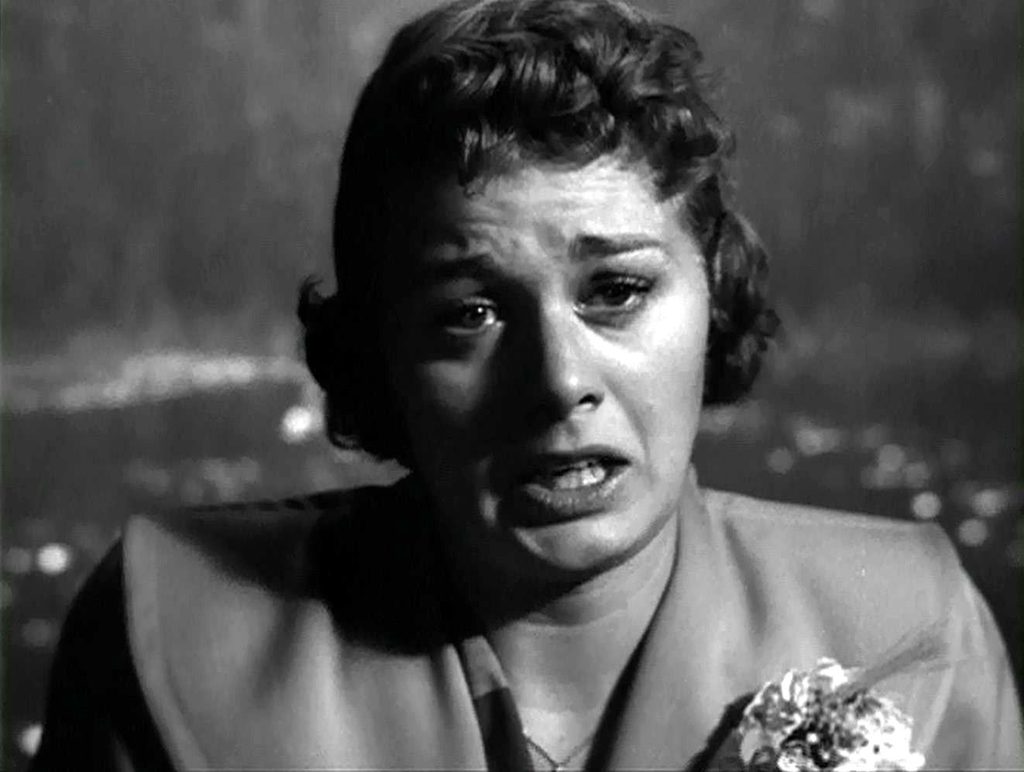
The central tension also could have foundered if Alice and Angela looked much the same. Then Alice would have also looked like a fantasy woman, and the contrast between the two worlds they represented would not be nearly as sharp. Shelley Winters says she removed all her makeup to audition for A Place in the Sun. Credit should go both to her and to the movie’s casting department for recognizing what the role called for.
Who knows; maybe Ava Gardner or Lana Turner could have dressed down and played Alice Tripp convincingly. After all, Charlize Theron pulled off a major deglamorization in Monster (more than 50 years later, though). I find it hard to imagine that either could have been plausible as a simple, sweet, ordinary working-class woman who just wants to find love.
When she came to Hollywood in the 1940s, Shelley Winters was dolled up and pushed as a sex symbol, just like every young female actor before or since. It didn’t quite stick, but she got plenty of supporting roles as earthy broads who meet early deaths. When A Place in the Sun was released, she was 31, an age when most actresses’ careers begin to collapse.
A Place in the Sun was a hit and Shelley Winters was nominated for the Best Actress Oscar. It made her a star, but Hollywood didn’t know what to do with her. She got a series of roles that were beneath her, as barflies and gold diggers in B-movies (with the exception of the all-time great The Night of the Hunter in 1955).
Frustrated, Winters abandoned film and spent a few years on the New York stage. She made a triumphant Hollywood comeback in 1959, winning an Oscar for playing the middle-aged mother Petronella van Daan in The Diary of Anne Frank.
From then on, Shelley Winters enjoyed an enviable career as an in-demand character actor, one based on her persona and acting ability rather than sex appeal. She shone as women who didn’t constantly have straight men falling at her feet, whose lives were defined by something besides their appearances. Such roles have always come along too rarely, but at least when they do, filmmakers should do justice to them and cast actors who look the part.
Edited by Olga Tchepikova-Treon