
|Benjamin Jarman|
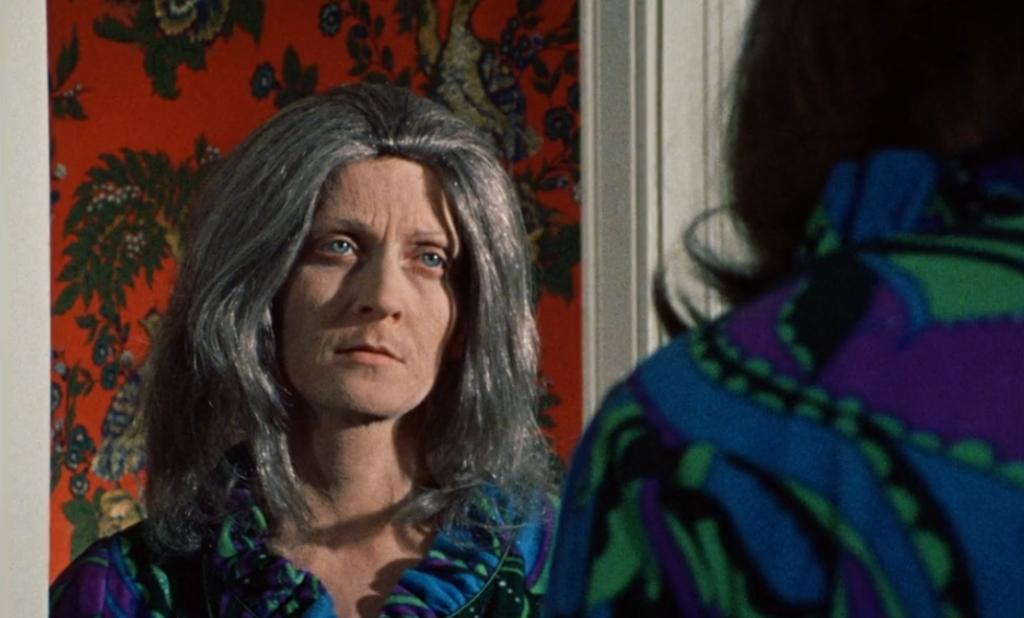
Season of the Witch plays in glorious 35mm at the Trylon Cinema on Wednesday, September 30, one night only. For tickets, showtimes, and other series information, visit trylon.org.
I was watching the TV show Agatha All Along, about a group of witches in the Marvel Cinematic Universe. By this point, my mind had been trained to expect Donovan’s 1966 hit single, “Season of the Witch,” to start whenever I watch something about witches. Sure enough, within the first episode, the Scottish musician’s atmospheric song rings out, further supporting
the show’s creepy nature. Is it annoying to continually hear the song used in anything scary? Yes. Is the song ruined because of this? Absolutely not. However, its repeated use does force me to think about its meaning and history as a soundtrack staple throughout cinema.
Of all the narrative films in which the song is used, George Romero’s Season of the Witch from 1972 is the first and seemingly most appropriate. The film is about witches, but it is also about why a woman might turn to witchcraft. Romero clearly presents the coven as a safe place for women and explores the reasons women might seek out such a community. In this sense, the movie is not really about traditional witches on broomsticks. Instead, it is about women finding a place to belong while surrounded by patriarchy.
While the song does create a frightening atmosphere, its meaning is based more on the social unrest of the 1960s than on supernatural horror. We can look at the history of witch burnings and recognize that many of these events were born from a fear of women gathering and challenging established social structures. Donovan uses this historical distrust of witches as an allegory for the collective distrust of anti-establishment movements in America during the 1960s and 1970s. In the song, Donovan sings, “When I look out my window / Many sights to see / And when I look in my window / So many different people to be / That it’s strange, so strange.” In a sense, he is looking outside and seeing cultural changes that are altering the country. The Civil Rights Act of 1964 had passed, second-wave feminism was building, and protests against the Vietnam War were widespread. To Donovan, these changes are “strange,” but not necessarily unwanted.
He continues, “You’ve got to pick up every stitch / Must be the season of the witch.” The metaphor of knitting suggests that America needs to embrace these changes by picking up the pieces and integrating them into society. The experience reminds Donovan of the mysterious power associated with witches and of the historical end of witch burnings. The “season of the witch,” then, is not simply a frightening period. It is a period of transformation.
On the surface, Romero’s film of the same name is about witches. There are potions, spells, candles, blood, daggers, idols, and a cat; most of the classic witch iconography is present. Dig a little deeper, though, and the film really is not about Halloween-style witches with long noses, pointy black hats, and brooms. Instead, the audience sees women joining together to navigate a patriarchal, male-dominated society. The witchcraft becomes a stylish mask for women embracing the ideas of second-wave feminism. Romero takes the theme of change a step further by making his lead character enter another new season of life: perimenopause.
The main character, Joan, is a housewife threatened by boredom, aging, and physical violence. Her abusive husband is away for work much of the time, her daughter is no longer a child, and her friends have become annoying. In addition, she begins having haunting dreams of a home invasion carried out by a masked attacker. After seeking support from family, friends, and a doctor, Joan learns of a witch in her neighborhood. The witch calmly and professionally invites Joan into the world of domestic witchcraft. Nothing about the woman seems particularly sinister. She has a nondescript home and looks as though she could easily fit in with Joan’s friends.
By meeting and interacting with this woman, Joan finds the sense of place and belonging she has been looking for. The conduit for this connection is witchcraft, but the practice is new and taboo to Joan, much like feminism was to many people in the 1960s and 1970s. Even if people disapprove of her new identity, Joan is refreshed by the change. Witchcraft gives her a way to take matters into her own hands and regain a sense of control over her life.
Unlike most hit songs, Donovan’s song is not used during the credits. Instead, it appears as incidental music during a scene in which Joan walks the streets looking for something to inspire her. Wearing large sunglasses, an elegant poncho, and her hair in a straight, clean ponytail, she passes stores of all kinds until she reaches one devoted to mystical arts. In the windows, we see wigs and dresses, but Joan is no longer particularly interested in that kind of glamour. Eventually, she walks into the basement of a store called “Better Eat Food Co-Op Store,” its name handwritten on a crumbly sheet of paper. This becomes her portal into a new world.
Donovan’s chorus begins as Joan examines jars of herbs and other products, including musk incense, fennel seed, and camphor. To top it off, she pays with a credit card, cutting through the store’s DIY atmosphere with a reminder of conventional domestic life. The song is not simply accompanying Joan’s introduction to witchcraft; it underscores her rejection of conventional womanhood with a sense of cool confidence. As the film builds toward the chorus a second time, Joan moves deeper into the store, lights a cigarette, stares down a porcelain doll, and picks up more items for her incantations.
The nosy man at the counter, slightly incredulous because Joan is not his typical customer, asks her, “Are you a witch?” Joan does not bat an eye. She simply responds, “Oh, I’m just interested in it.” She is clearly more than “interested,” but it is not the clerk’s business to know what she is becoming.
Romero could have left the theme there, but he makes another important choice by casting an older woman as his protagonist. Typically, younger women are used as protagonists in horror films, in part because of their youthful appearance. Romero could have easily made Joan’s daughter the protagonist and followed the horror conventions of the time. With Season of the Witch, however, he uses an aging woman to deepen the film’s theme of changing seasons.
Joan is often confronted with a withered, geriatric version of herself in the mirror. Is this a witch, or is it an older version of herself? She is haunted by her future self and realizes that she needs to be prepared for change. Witchcraft helps her embrace this new season of her life, whether that change ultimately proves to be good or bad.
Donovan’s song compliments this film perfectly because the movie is literally about witches but figuratively about cultural change, women’s rights, and the aging process. It is difficult to assume that Romero uses the song simply because of its spooky melody or its references to witches. Like Donovan, Joan is looking at the changes outside her “window” and picking up each “stitch” through a form of feminism disguised as witchcraft. No wonder the movie shares its title with the song.
The distinctive tune continued to appear after Romero’s film, though often without the same level of thoughtfulness.. The song does not appear in a major narrative role again until I Shot Andy Warhol in 1996. The film is a biography of Valerie Solanas, the woman who shot Andy Warhol, and it takes place only a few years after Donovan wrote his song. The song fits because it could have been playing on the radio during the period depicted in the movie. More importantly, Solanas is attempting to challenge the underrepresentation of women in the arts. While the song is not a perfect fit—there are no literal witches in the film—it remains an appropriate inclusion because of its connection to the social changes of the era.
As the years roll by, “Season of the Witch” appears more frequently in horror films. The song is featured in Tim Burton’s remake of Dark Shadows, the stop-motion animated film ParaNorman, and Benicio del Toro’s production of Scary Stories to Tell in the Dark. These films are appropriate places for Donovan’s creepy melody, but they do not engage with the song’s broader context as thoughtfully as Romero’s Season of the Witch.
The song may appear to be about witches, but its deeper meaning is about confusing and unsettling changes happening in American society. Romero recognizes this distinction and uses the song for the right reasons. His film is literally about witches, but more importantly, it is about women’s rights, social expectations, and the changes women experience throughout different stages of life. By pairing Donovan’s song with Joan’s transformation, Romero turns a seemingly spooky pop song into something much more meaningful.
Edited by Finn Odum