
|Doug Carmody|
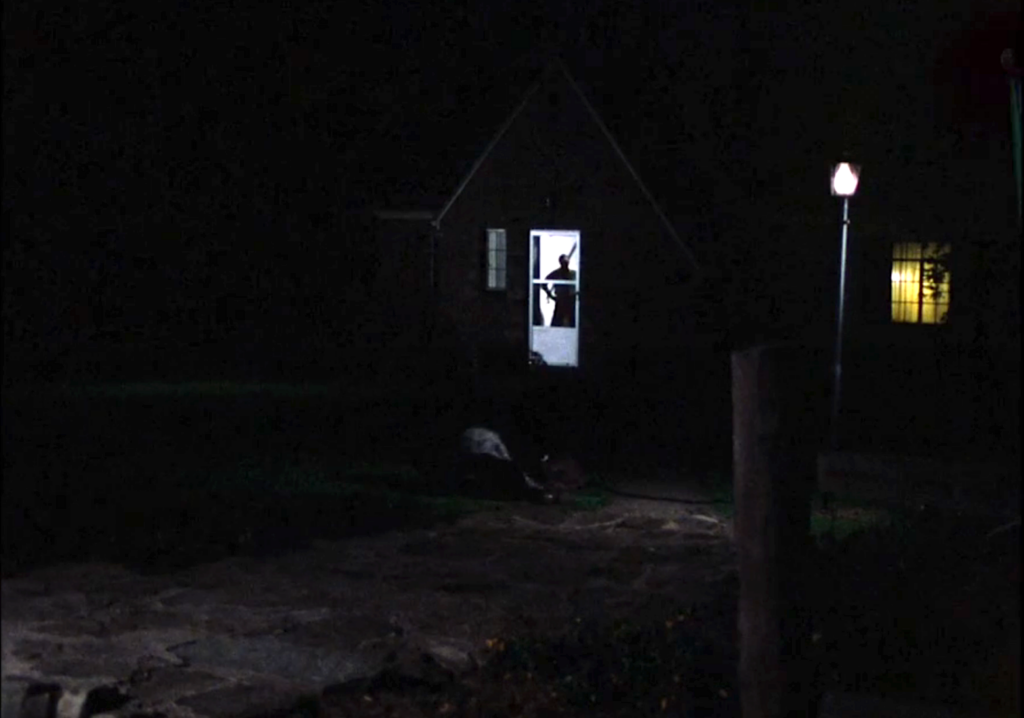
Season of the Witch plays in glorious 35mm at the Trylon Cinema on Wednesday, September 30, one night only. For tickets, showtimes, and other series information, visit trylon.org.
The 1970s found George Romero in a peculiar place—Pittsburgh, not Hollywood. Despite his debut’s eventually colossal impact on horror cinema and eventually massive box office gross (over 30 million dollars on a budget of borrowed cameras and rented farmhouses), very little professional or critical recognition had filtered down to the filmmaker himself. The Living Dead’s invasion of American culture was hobbled by a series of distribution-related shitshows that left Romero floundering between commercial obligations and on tiny budgets for an entire decade after his initial success.
As Vincent Canby of the Times described it, Night of the Living Dead was “a grainy little movie acted by what appear to be nonprofessional actors, who are besieged in a farmhouse by some other nonprofessional actors who stagger around, stiff-legged, pretending to be flesh-eating ghouls.” He further noted the film was “made by some people in Pittsburgh. The review’s dismissive tone made it notorious with horror fans (not to mention Pittsburghers), but Canby had his facts straight. The movie was shot and acted by a bunch of DIY-er Pittsburghers, and by all accounts the version he saw was probably grainy.
But the movie Romero shot was crystal clear. In the first of several acts of cinematic malpractice, the Walter Reade Organization (the film’s distributors, who despite appearances to the contrary were not dentists) took the pristinely composed chiaroscuro 35mm stock and downsampled it to cheap prints for distribution.1
These distributors further maimed the commercial prospects of Night by rolling it out at zombie pace and forgetting to include a copyright notice on the initial print. The latter fuckup led to a years-long debate as to whether Night belonged to the public domain. I will defer any legal advice to Perisphere’s in-house counsel, but the situation led to a proliferation of low-quality bootlegs. So the production quality of the film was unfairly maligned (by Canby and others) for years after its initial release—leaving Romero with a commercial and critical smash hit in his pocket, but with no money or industry clout to show for it.2
The end of this trek in the wilderness is better known than the beginning—Romero finds a production partner (Rick Rubenstein) who could secure stable budgets for his films, and a rich fan of his early work (Dario Argento, of all people) who would fund his sequel to Night in exchange for the right to handle its international release—but only after adding about 120 minutes of admittedly sublime Goblin music to the score.
Thus, a transmission that started as a greyscale murmur was relayed worldwide in a deafeningly colorful prog-rock spectacle, consecrating Romero’s place in cinematic history and confirming his status as a guy who could generate serious box office returns when given a decent budget and sane distribution.
So began Romero’s career as a full-time feature filmmaker, and tragically, so ended the most interesting decade of his career.
A Personal Apocalypse
Romero spent the interregnal period between the first and second Dead films putting his own sick twist on the independent “social issues” film. Where most directors see social fissures, Romero sees gaping wounds. So across this lost decade, our director spends his meager budgets elevating the social contradictions of middle class American life into his own apocalyptic register. Where Night of the Living Dead had smuggled social critique into the horror film, most of Romero’s next decade is spent doing the opposite—an inversion that puzzled audiences at the time and many critics thereafter.
Season of the Witch paints a nasty picture of the American family through the lens of gender antagonism. The suburban housewife at the center, Joan Mitchell, acts as a prism. Joan’s waking life shows misogyny in realist trappings. Her dreams initially offer a directly metaphorical way of representing her situation, before devolving into a register of abject terror that brings the gender relations of the film to a breaking point.
The film opens on a metaphor—Joan walks behind her husband in a forest, but he is oblivious to her presence, snapping branches behind him in a way that bloodies her face. When Joan awakes from this nightmare, she finds herself in another one—her husband beats, leashes, and kennels her. In contrast to Joan’s future terrors, this sequence operates on an unsubtle register.
Each of these layered dreams haunts Joan by recapitulating her husband’s real-world hostility. Jack oscillates between total indifference (seeming oblivious to her presence in the household when he isn’t giving her orders) and crude patriarchal abuse (beating Joan while insisting that Joan should have beaten her daughter). Jack treats Joan like his property.
No Way Out
Jack’s brutality doesn’t seem abnormal in Joan’s circle; one of her friends heartbreakingly asks to be escorted home, because “that way Harry won’t be able to jump all over me.” The friend falls before a glaring, dominant Harry upon her arrival home, briefly composing a tableau of the gender relations of the film. This grim composition of hostility and subjugation echoes across the relationships in Joan’s life.
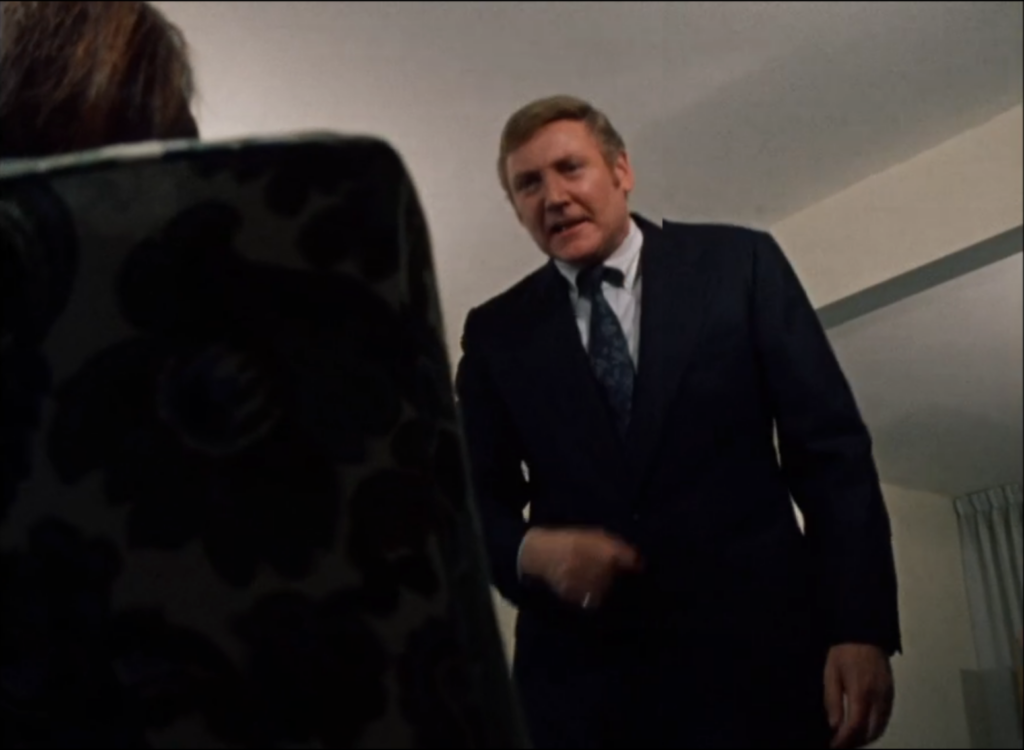
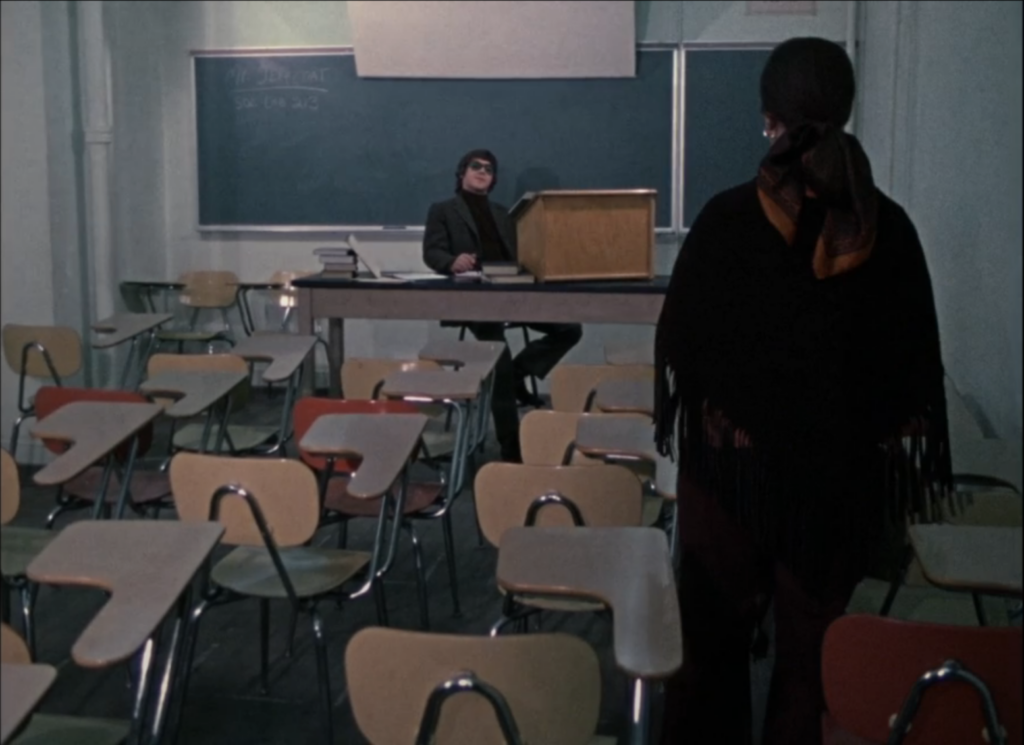
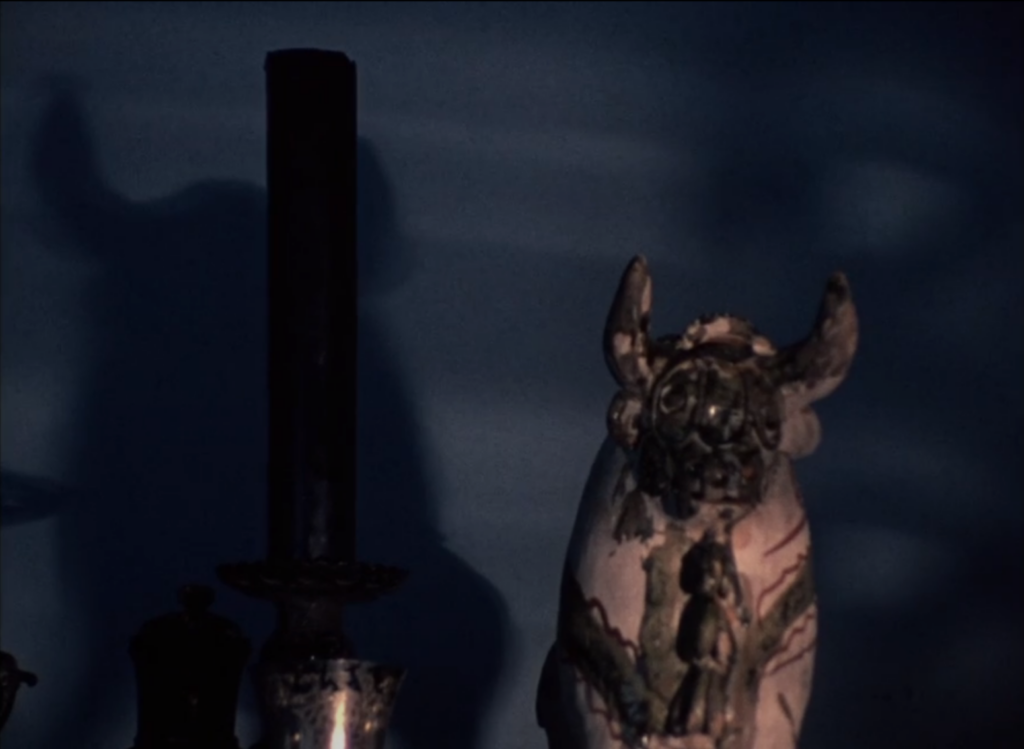
An escalating sequence of abstract nightmare accentuates the violence in these quotidian interactions, and draws the conflict to an unbearable level. In contrast to the layered metaphors of the first act, these dreams subsist almost entirely on tone and mood. Their ostensible content is Joan’s relationship to masculinity in the abstract. First, a bull totem that decorates her bedroom seems to loom over her as a massive shadow. Next, masked men stalk her throughout her own home. Romero’s distinct way of composing and editing comes to the fore here—the enemies here are figures of pure alterity, appearing mostly as shadows, and otherwise being shown at disorienting angles and uncomfortably close distance.
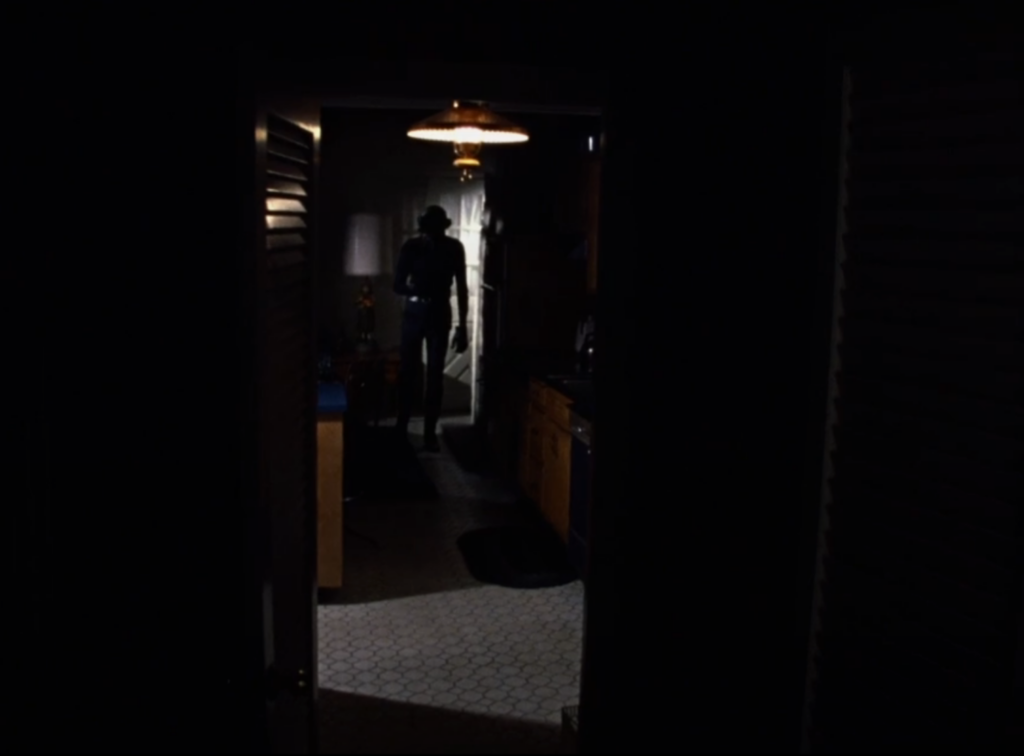
Dramatically these scenes inject an animal opposition to the plot—the real violence that men subject Joan to is recast in stark fight-or-flight terms. The mood of these scenes seeps into the waking world. When confronting Greg, a younger man who treats her with a similar indifference and brutality to Jack, Joan frames their relation in terms of total opposition: “It’s hard for me to accept somebody like you.”
To Everything There is a Season
Joan turns to witchcraft to navigate this thick web of male hostility. After meeting a local witch, Marion, Joan feels inspired to look into the practice herself. The effect on Joan is intoxicating, helping her take concrete actions that reshape her relationships with the men around her.
Joan’s settling of accounts with the men in her life drives the final act of the film. First, Joan mystically summons Greg—whose advances she had previously rejected—to have an affair at her home. When she grows weary of him, she casts him away. Both actions reveal Joan growing into a more assertive stance in the world. She revels in this newfound power, exclaiming “I’ve actually caused things to happen.”
When Joan’s abusive husband returns from a business trip, she kills him with a shotgun. A police officer laments that she probably did it on purpose, but will still walk free.
Thus Joan liberates herself—for a spell.
“Things only seem to be magic”
Tonally, the film strikes an ambivalent attitude towards both 1970s witchcraft and Joan’s glow-up in general. From the outset, Romero paints witchcraft as a consumerist, aesthetic practice.
Marion herself foregrounds the “mercenary” aspect of her practice, noting that she accepts tribute for her services, and also that the formerly occult rituals of witchcraft are now available for purchase in paperback form. Following this portrayal, Joan’s initial entry into the world of witchcraft comes from a store in Pittsburgh proper. Prominent shots of packaged products (including mystical “fennel seed”) and Joan’s mastercard underscore the shallow nature of this engagement with the occult.
Furthermore, the actual portrayal of ritual heavy-handedly indicates that Joan’s spellcasting success is a delusion. Immediately after “summoning” Greg with a spell, she calls him with a telephone. The sequencing of the film also suggests that she may have killed her husband in a case of mistaken identity (thinking he was a demon she summoned) rather than empowered vengeance.
Several critics have taken the film’s ambivalent tone in the final act to indicate that Joan’s liberation is basically fraudulent.3 Under this reading, Joan killing her husband scans as a cautionary tale against reaching for violence in a moment of confusion, much like the endings of Night of the Living Dead or The Crazies. Similarly, a final sequence in which a coven led by Marion ritually collars Joan as part of an initiation seems to recall the opening, and suggest that she has merely traded one form of bondage for another.
But these pessimistic readings ignore the boldest choice in Season of the Witch: Romero obscures Joan’s perspective from the audience at the end of the film. The film hews to Joan’s subjectivity from its opening moments until the end of a final fever dream in which she is hunted across her home by a demon. She tries unsuccessfully to fend it off with a shotgun, but it attacks her before she wakes in bed unarmed. The perspective switches—for the first time—to Jack arriving home. When he tries to enter their home, Joan shoots him three times and then rests, her face shrouded in darkness.
Joan remains occluded until the end—her initiation ritual barely shows her face at all. In the final scene, she appears (freshly made-up) from the perspective of other women at another party. The film refuses to present Jack’s death as either a tragic mistake or righteous comeuppance—it’s just a matter of fact. A similar mystery shrouds Joan’s initiation—has she fallen into this new form of submission, or willingly chosen it?
Notes:
- John Russo, The Complete Night of the Living Dead Filmbook (Harmony Books, 1985), 48. ↩︎
- Russo, 47. ↩︎
- Paul Gagne, The Zombies That Ate Pittsburgh:The Films of George A. Romero (Laurel Entertainment, 1987), 49. ↩︎
Edited by Finn Odum