
|Jackson Stern|
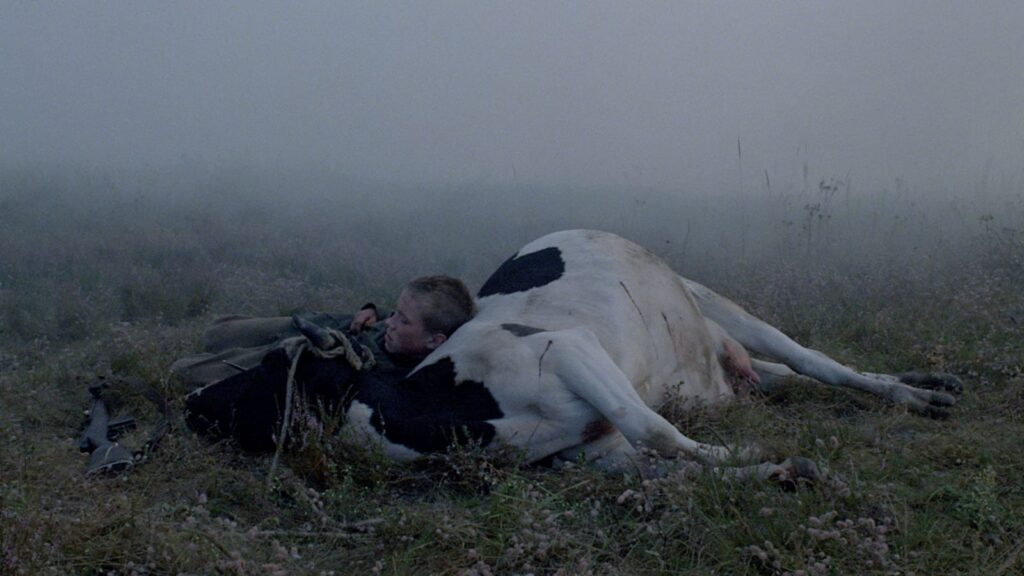
Come and See plays at the Trylon Cinema as part of BLEAK WEEK on Sunday, June 7. For tickets, showtimes, and other series information, visit trylon.org.
To call a film totally immersive is to imply that there isn’t almost always some sort of invisible barrier between the viewer and the images projected on the screen. Something happens in the space between the light’s reflection and the eyes of its observer that dilutes perception to the point where even the most painfully subjective films render a certain amount of distance. However, there are rare cases where a filmmaker doesn’t quite get this memo and makes something so tangible, so unerring in its immersion that the barrier of experience is violently distorted. Enter Soviet filmmaker Elem Klimov’s final cinematic statement: Come and See.
Unlike so many self-proclaimed “anti-war” films throughout the years, it doesn’t take long for this film to tie a rope around your neck and drag you through the deepest depths of Hell. Taking place at the height of the Nazi occupation in what is today known as Belarus, the film’s many horrors are seen through the eyes of a young boy named Florya (which derives from “flower”, underlining a theme of abandoned innocence which echoes throughout). After he digs up a rifle from the beaten sands of a trench, Florya (a truly singular performance by Aleksey Kravchenko) joins the Belarusian resistance to escape the mundanity of his adolescence and perhaps to fulfill a patriotic duty to his country. The promise of adventure is almost instantly perverted, however, and the rest of the film depicts his shell-shocked plight for survival.
While the film is famous for its uncompromising commitment to realism, usually incited by its use of boots-on-the-ground handheld photography and painstakingly accurate production design, its unique perspective and poetic flourishes often drive it away from the austere. Despite the unspeakable atrocities coating the film inside and out, a certain beauty pervades many of its most dire images. At first this may seem counterproductive for something so unapologetic about its disdain for warfare, yet it’s really used to emphasize the cruelty of man against the natural world that birthed us. In certain moments, it’s hard not to bask in the serenity of the Belarusian countryside, in a gentle rainbow shimmering against a cloudburst, or the ethereal emptiness of a foggy meadow. Klimov seems to have such an intrinsic love for nature that it’s all the more devastating when we see its brutalization in real time.
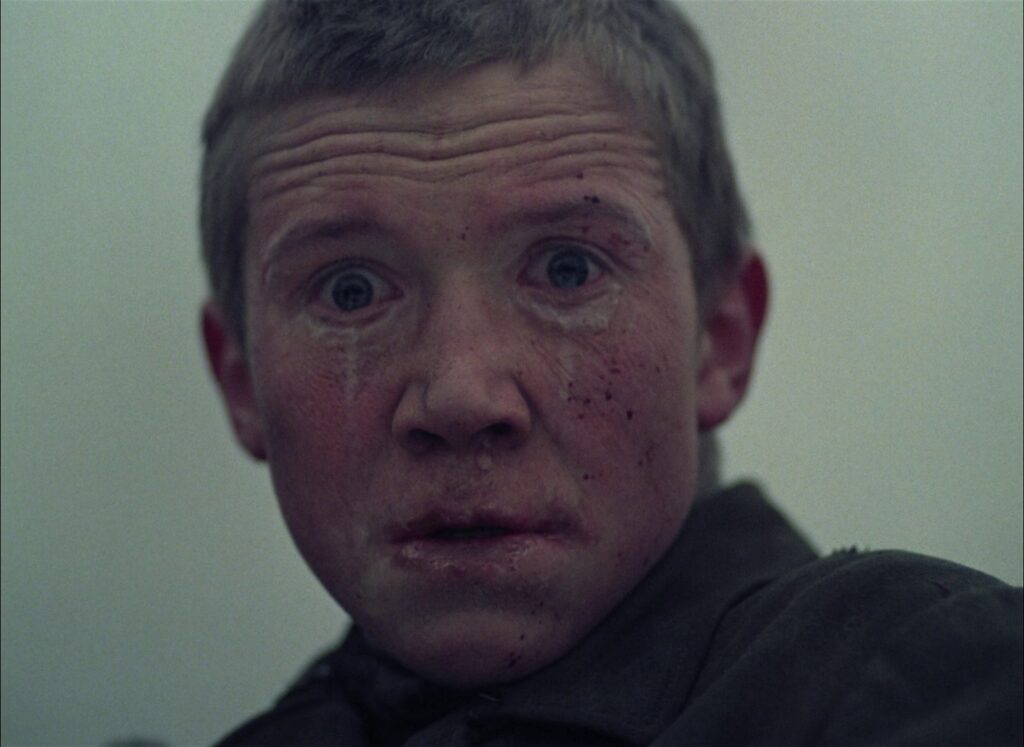
Deeper do we grieve when all the beauty we see is through the eyes of a child, burning into his retinas flames he will never unsee. These moments of basking in all the good the world has provided become increasingly seldom the further Florya travels into the heart of darkness. His eyes crack with wrinkles as he goes along as his devastated, near fourth wall breaking stares into the eyeline of the audience become more frequent; it’s as if he’s looking out into a future he may never see for any kernel of hope. These small glances are like a kind of metaphysical time travel which builds to an operatic finale in which Florya, in his own consciousness, reverses time and attempts to undo all the damage that Hitler has done. This cosmic sequence’s purpose in the larger context of the film I wouldn’t dare spoil, but it’s a profound final statement on its subjective fatalism as imagined by its most vivid participant who, by the end of it all, has no choice except to envy the dead.
Come and See’s cacophonic soundtrack also greatly assists its overwhelming outlook, and it employs various techniques of sound design that would become staples of the form in the decades to come. There’s, of course, all the ear-splitting clatter of gunfire, screams of the formerly-innocent-soon-to-be-damned, and roars of plane engines overhead, yet as Florya’s stability falters so does the sense of all the noise. Tinnitus overwhelms him (therefore us) after bombs shake the ground and it becomes even stranger when fragments of Strauss linger over the desperate struggle through a bog or when Mozart’s most famous requiem wails as time collapses in on itself. These seemingly random uses of classical music do much to put the viewer into Florya’s corrupting mind, acting as escape hatches he just barely can’t reach and mocking his abandonment of childhood bliss. A bliss which we know would’ve ceased whether he joined the resistance or not.
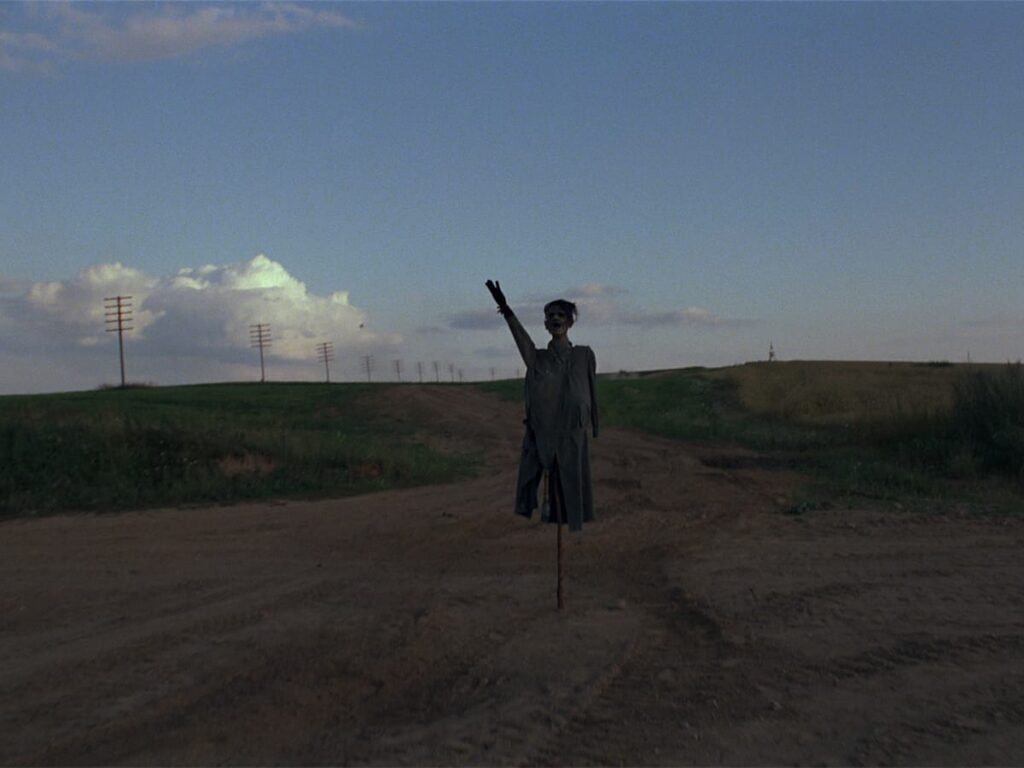
There isn’t much to hope for by the end of Come and See. By putting us directly in the sight line of a child soldier, Klimov forces us to reckon directly with the desecration of all the things human beings have ever deemed sacred: whether that be beauty, guilelessness, or the natural world itself. While that world tends to its wounds, the sullen war the human soul wages against itself is perhaps a battle that can never fully be won until the lights go out for good. This isn’t exactly prime for a fun night out at the movies but it’s one whose urgency may tragically never sway. That fact only makes a viewing more mandatory, and if you need any extra convincing, just follow the command of its title: Come and See. If you follow this order, you may never be the same.
Edited by Finn Odum