
|Riccardo Williams|

Hausu plays in glorious 35mm at the Trylon Cinema from Thursday, October 29, through Sunday, November 1. For tickets, showtimes, and other series information, visit trylon.org.
In October 2025, I saw Hausu for the first time ever at The Trylon. I was so moved that I immediately went home and could not find a way to get the movie out of my head. After sitting and thinking about it for about an hour, I asked one of my friends who I thought would like the movie to watch it with me over video call. And so I had seen Hausu twice. I would watch the movie another time that month and have since seen it a total of four times. A year later, as I return to Hausu, what strikes me most is how none of it feels like it should work. There are so many disparate elements at play that it’s hard not to get lost. But I think the real grounding element here is the film’s relentless humor.
Comedic elements in horror and the horror-comedy genre aren’t new concepts. See Sam Raimi’s Evil Dead 2, or The Cabin in the Woods, for a more recent, more meta example. Why do these two disparate emotions play off each other so well? While there are quite a few reasons, chief among them is the fact that we use the same bag of tricks to convince people that something is scary as we use to convince people something is funny. Secondly, humor makes things more relatable and shows how a character might interact with their world. Finally, it prevents viewer fatigue. When these elements combine with the right artistic touch, you can make something that keeps the audience thrilled without tonal whiplash—or with, if that’s your prerogative.
It feels like there has been no shortage of comedians turned horror icons in the past decade. We’ve seen the likes of Jordan Peele of “MadTV” and “Key and Peele” fame with his breakout hit Get Out, followed quickly by the success of his films Us and Nope. Zach Cregger, of “The Whitest Kids U’ Know” comedy group, scored big with his Sam Raimi-inspired hit Barbarian, and more recently, Weapons and Resident Evil. And in one of the biggest success stories in horror history, former sketch comedy TikToker and YouTuber Curry Barker broke box office records with his indie film Obsession. You can feel the influence of the director’s comedy background in these movies. All of these films have their fair share of laugh-out-loud gags, relative to more bleak horror movies on the market. So what gives? Why are all the funny people suddenly masters of horror? Will we have any comedians left once this simple trick is figured out? Well…I can’t answer that last one, but I can pretty confidently say that the reason this transition happens so often is because of transferable skills. We often forget that movie directors are craftspeople too, and as such, the tools they’re familiar with follow them throughout their work and define what they’ll do next. When you’ve got the capacity to make someone laugh, scaring someone might not be so hard.
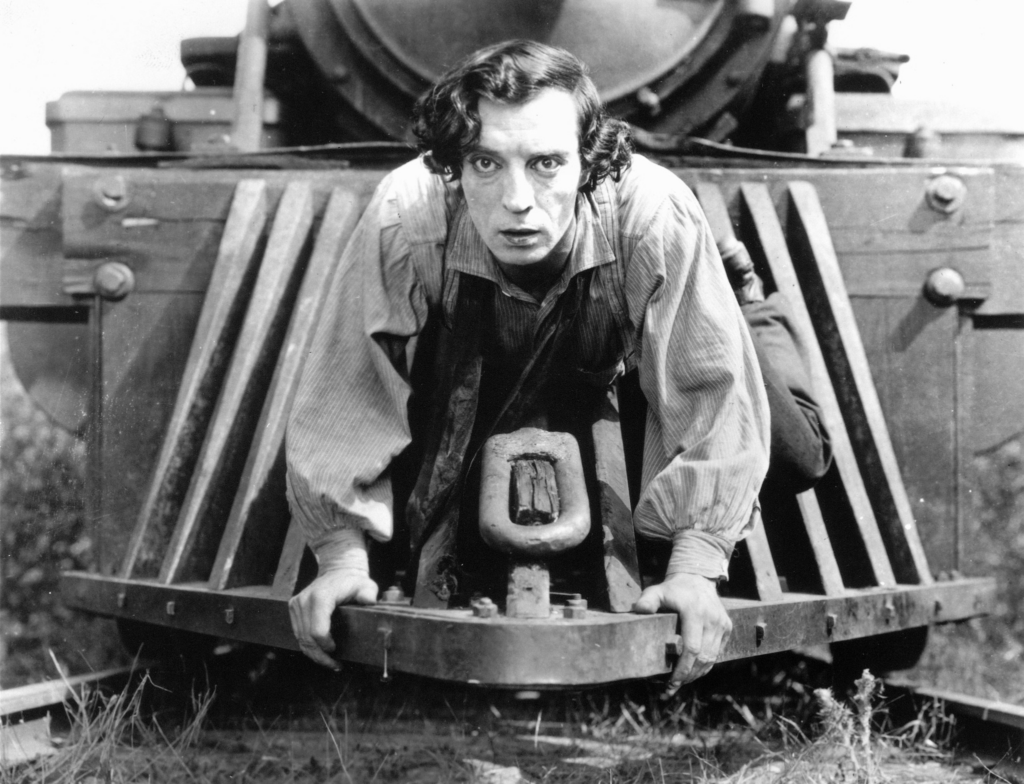
Even someone completely uneducated in the ins and outs of doing comedy themselves is likely familiar with things like the rule of three, or setting up a punchline to be paid off later. These things are ingrained in our culture, and we seem to understand them as innately as the laws of physics, even if we don’t exactly have the words for describing what we’re seeing. When Buster Keaton hides underneath a table in the third act of The General, and we witness the Union army’s repeated yet unwitting attempts to reveal his cover, we’ve been taught to understand that this gag will play out with slight variations exactly three times before we move into the next slew of set-ups and punch lines. Horror movies keep the audience engaged in much the same way. A suspiciously locked door or excessive negative space in the camera’s field of view teaches us to be wary and anticipate a scare. In both genres, our innate understanding of those rules creates unique opportunities to subvert our expectations. Maybe the punchline comes a little earlier, or it’s completely unrelated to the setup. Maybe the wide pan of the camera is instead setting up a jump scare from directly behind our horror protagonist. This is already a great way to keep us on our toes; where horror and comedy can really shine is when they’re working hand-in-hand. When we let humor into horrific scenarios, we can work in interesting ways to showcase how the characters feel about what they’re seeing.
Having a character crack a joke or give an incredulous look can calm the viewer after a tense scene while giving insight into how a character feels about the unfathomable horrors that lie before them. This is not to say that the character should necessarily be spouting quips and one-liners, but think of Wile E. Coyote’s sign just before he falls to his doom after another failed Road Runner capture. This glimpse into the mind of the character makes you understand exactly where they’re coming from and makes the horror less about how you’re experiencing it, and more about how they’re experiencing it. Hausu has one of my favorite examples of this in the character Kung Fu, the fearless and disproportionately strong member of the main cast. Throughout the early stretches of the movie, several highly suspicious scenarios with possessed items attacking the group are solved with Kung Fu’s brute strength. Eventually, Kung Fu is attacked by levitating logs while chopping wood for a fire. After dispatching the logs with her expert martial arts, she remarks: “This is ridiculous. Maybe it was an illusion.” Outside of being a funny beat to end the scene on, it also creates character-informing contrast. Kung Fu calmly resumes her chores after the attack, while the other members of the cast are actively being attacked and freaking out about it at the same time. As her name suggests, Kung Fu remains steadfast and still doesn’t believe what she’s seeing, but can handle herself in a fight. And true to form, she never loses her head, ready to go toe-to-toe with the ghouls and ghosts within the titular house—until she, of course, quite literally loses her head. And then they play that for laughs, and Kung Fu delivers a seemingly killing blow with just her legs, despite missing vital body parts. All without attaching a piece of woodworking equipment to her person, mind you. Ash Williams, eat your heart out. The peaks and valleys of violence and laughter keep us under the movie’s spell.
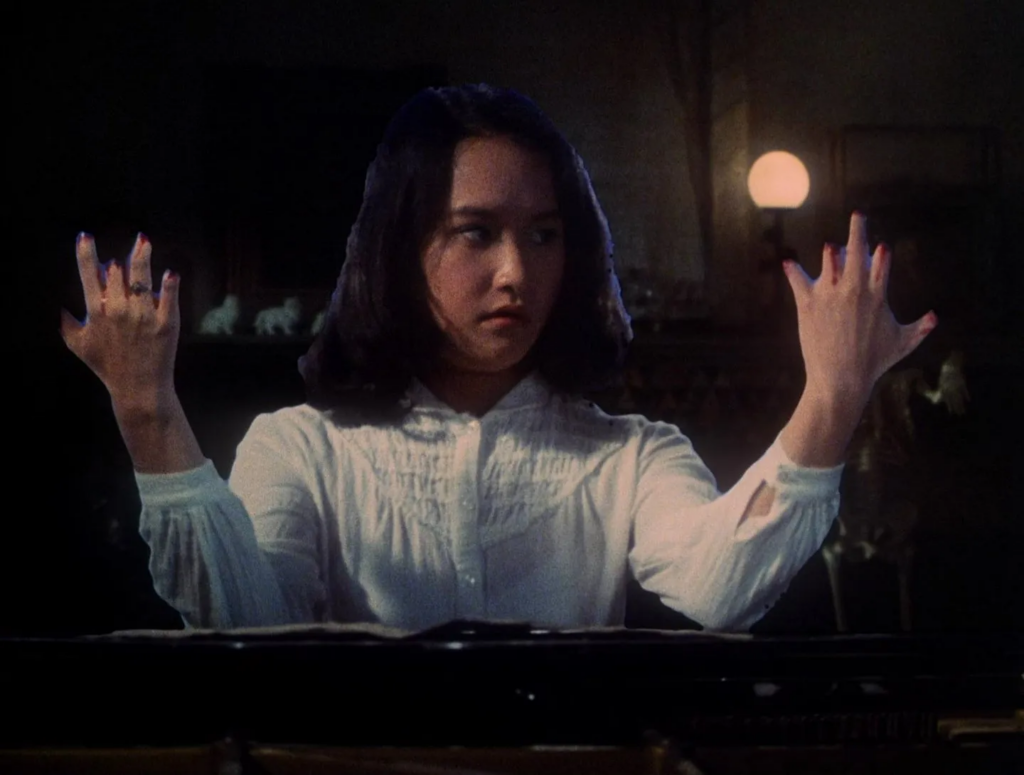
Comedy is also an amazing way to keep the audience engaged and provide relief from the tension that comes with the horror genre. We see this across all generations and subgenres of horror film, from the “You’ve got to be fucking kidding me” head-spider scene from John Carpenter’s The Thing, to Josh Brolin’s earnest “WHAT THE FUCK” after a particularly rough jump scare in Zach Cregger’s Weapons. As before, the director reels the audience in, rattles them, and lets something else break the mood before the next scare. Near the climax of Hausu, Melody, the aptly named musical virtuoso, is left alone with a very haunted piano. She begins to play a stripped-back version of the movie’s main theme on it; we watch as the piano bites down on her hand. Accompanied by surreal special effects, she’s shown to now have lost a few fingers. Her now detached extremities continue to play the tune without her, before finally the piano devours her whole. It truly is one of the most upsetting scenes in the movie, because for a moment, the playfulness and comedic tones aren’t present, resulting in something genuinely otherworldly and haunting. You remember for a moment that these are just young girls, trying to enjoy time away from school. You remember that they weren’t even supposed to be in this house in the first place. Then, just like that, we see Melody’s disembodied consciousness joke about looking at herself from behind as she’s being devoured, and we’re thrown back off our rhythm, ready for the next scare.
Comedy and horror are a match made in heaven. Using techniques shared by both genres, they meld to create something totally new. To me, that mixture of delight and disgust showcases all facets of the human condition, the theater of the absurd and the theater of the grotesque in perfect harmony. When you see a movie like Hausu, it takes you on a trip where only one thing’s for sure—the difference between a shriek and a smile is only a matter of perspective.

Edited by Finn Odum