High Sierra: The American Crime Film in Transition

|Ryan Sanderson| Rushing Towards Death was the title W.R. Burnett originally wanted for High Sierra, the book that became the movie that made Humphrey Bogart into a movie star (and, more circuitously, John Huston into a director). That first—I would argue more evocative—title came from… Continue reading
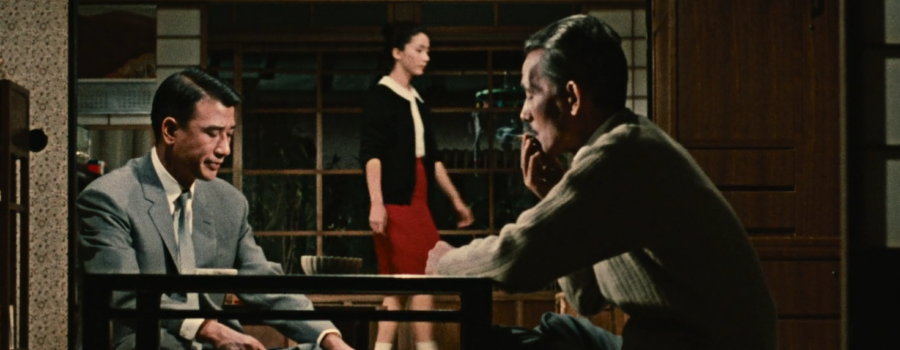
The Architecture of Family: An Autumn Afternoon and The Royal Tenenbaums

|Andrew Neill| Let’s get a potentially uncool but nonetheless true thing about me out of the way right now: I am a huge fan of the American film director Wesley Wales Anderson. You probably know him as Wes Anderson. He’s one of my favorite directors—gotta be in the top three… Continue reading

He Knows When You’re Awake: (Re)Visiting the History of Santas in Horror

|Finn Odum| Eons ago (in 2019), when I was but a spritely, youthful child (20 and in college), I wrote about the 1984 controversial Claus classic Silent Night, Deadly Night. Back in the days of zinger conclusions and quippy comments on Santa Claus’s sanctity, I had dreams… Continue reading

Women in the Eyes of Men – Ozu and Kore-eda

|Nicole Rojas-Oltmanns| Japan seems to have a magnetic pull for educated Millennials. The USA, it seems, is the antithesis of the orderly, tidy, traditional, technologically advanced, and ritualistic culture of Japan in the minds of many. Whenever anyone begins recounting… Continue reading

How To Properly Identify the Ending of On Dangerous Ground

|MH Rowe| On Dangerous Ground (1951) might appear at first to be one of the more unbearably melodramatic film noirs ever produced. Its ending, or really the ending of the ending—the film’s final scene—threatens especially to pull all that has preceded it down into the depths of pure… Continue reading

Ozu’s Colorful Everyday: Equinox Flower (1958) and Late Autumn (1960)

|Steve Rybin| The Trylon’s “Ozu in Color” series presents four of Yasujirō Ozu’s color films made near the end of the director’s career (1958 to 1963). These films cover what is for Ozu familiar narrative ground: fathers and mothers give away daughters to marriage; generational conflicts pit… Continue reading

New Ideas in Old Hollywood: Ida Lupino’s Outrage

|Doug Carmoody| Content Warning: Discussion of sexual assault on screen. Ida Lupino’s Outrage has a concept ready-made for modern independent film glory. A famous actress writing and directing a blunt, socially aware film about sexual assault has been a recipe for several of the buzzier and better-received films of the… Continue reading

Photographed Where It Happened

|Nate Logsdon| “This is a true story. It was photographed where it happened.” In two sentences, the onscreen statement before the opening credits of Ida Lupino’s Never Fear—the first picture produced by her production company The Filmakers—distills the ethos of independent cinema… Continue reading

TV Time

|Nate Logsdon| Wim Wenders couldn’t find reality anywhere. In the Spring of 1983, he had traveled to Tokyo to mark the 20th anniversary of Yasujirō Ozu’s death. He was seeking the Japanese world that appeared so luminously in the films of that great director, whose body of work… Continue reading

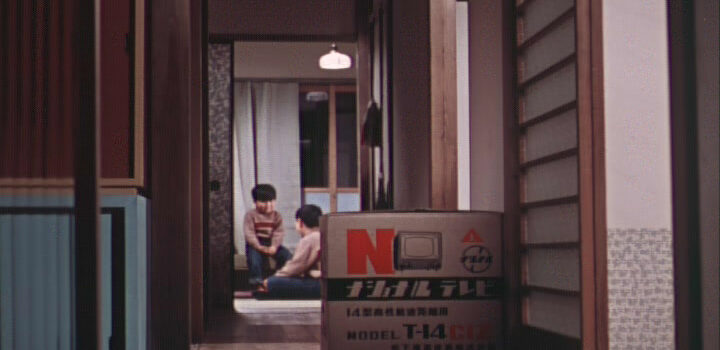
TraditionVision: Ozu’s Exploration of the Multi-Generational Adjustment to TV

|Dan Howard| In this day in age, television is just as common and almost essential to our daily lives as food or nature. Sometimes, it feels like it’s just always been around, but in fact, the first concept of what would ultimately become television, Facsimile Transmissions, was introduced… Continue reading

Lupino Noir: The Femme Fatale Sits in the Director’s Chair

|Patrick Clifford| THIS IS THE TRUE STORY OF A MAN AND A GUN AND A CAR. THE GUN BELONGED TO THE MAN. THE CAR MIGHT HAVE BEEN YOURS OR THAT YOUNG COUPLE’S ACROSS THE AISLE.  WHAT YOU WILL SEE IN THE NEXT SEVENTY MINUTES COULD HAVE… Continue reading

You Guys Are Soft: Male Friendship and Violence in The Hitch-Hiker

On the surface, Ida Lupino’s The Hitch-Hiker (1953) is a ripped-from-the-headlines thriller about a homicidal maniac who hitches a ride with two friends on their way to Mexicali as murder looms just around the corner. Even the onscreen title that opens the film indicates its true… Continue reading

Guinevere Turner, American Psycho, and the Effective Distance of Lesbian Cool

|Sophie Durbin| “Gloria Steinem… as legend would have it, took [Leonardo DiCaprio] to a baseball game and
said, ‘Please don’t do this movie. You’re the biggest movie star in the world right now, and teenage girls are living for you, and I really don’t want them all to run… Continue reading

Nyah! I Have to Return Some Videotapes, Doc.

|Lucas Hardwick| Spoilers ahead, Doc. Bugs Bunny may have been a master of disguise but his ability to successfully fool his adversaries with a crappy wig and a cheap dress relied on their inability to pay attention. Countless occasions of Bugs’s survival were predicated on feeble… Continue reading

The Assassination of the Teen Comedy

|Brogan Earney| By the early 2000s, the teen comedy genre was at the height of its powers. Movies like She’s All That, 10 Things I Hate About You, Clueless and many more, were pumped out monthly and guaranteed to bring box office success. Eventually, they became… Continue reading

A Certain Slant of Light: The Thin Line Between Fantasy and Reality in Soleil Ô

|Courtney Kowalke| The first movie I saw at Trylon in the spring of 2019 was John Sayles’ The Brother From Another Planet (1984). The film follows a protagonist known only as “The Brother” (Joe Morton), an extraterrestrial who crash-lands in Harlem, New York City… Continue reading

Paying Attention to Man Ray: Some Reflections on What Experimental Cinema Can Do For Us Right Now

|Sophie Durbin| As a child, it would’ve been hard to fathom that going to the movies would one day be as esoteric as spending a night at the opera. But some time in the past five years, I realized that spending much of my free time on film had suddenly cast me as an eccentric clinger-on to… Continue reading

I Don’t Belong to You: Autobiography in Anna May Wong’s Pavement Butterfly

|Ben Jarman| In 1928, Anna May Wong said “No!” to Hollywood. Before leaving Tinseltown, she made an unmistakable name for herself, taking on supporting roles that would often overshadow the lead actors and actresses. With that fame, Wong received constant attention from the… Continue reading

Don Hertzfeldt Has Something to, um, Tell You

|J.R Jones| Don Hertzfeldt’s characters have always struggled for words. In the opening scene of his hourlong animation It’s Such a Beautiful Day (2012), the everyman protagonist, Bill, recognizes someone walking toward him on the street and prepares a greeting. But when they pass… Continue reading

Hertzfeldt to Miyazaki to Life: How Negative Space in Animation Gave Me the Time to Live

|Zach Staads| I first saw Don Hertzfeldt’s Everything Will Be OK in my friend’s living room, a cavernous Victorian echo chamber carved from oak and smothered in pink-beige plaster, where we watched on a chunky, green Dell laptop from 2006. Those 17 minutes changed my life. Continue reading

Burned—Anna May Wong and Shanghai Express

|Matthew Christensen| As a kid, we used to play a game called “Statue Maker.” The statue maker would swing two or three kids about; they had to hold the pose they landed in and come up with some character to portray. Other children would play customers, guided about by the statue… Continue reading

Obayashi the Dramatist: Beijing Watermelon (1989)

|Natalie Marlin| In the dawning hours of the morning, a grocer (Bengal) wakes to the still-blue fading night. The framing is methodical, delicate, but not at all static. The grocer Haruzo’s body stirs from bed, but the camera lingers on his wife Michi (Masako Motai) stirring and rolling… Continue reading

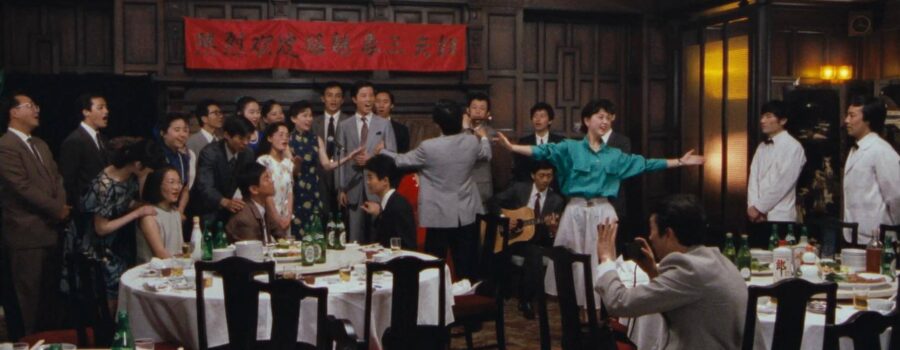
Everyone Knows What to do with a Watermelon

|Nicole Rojas-Oltmanns| Unlike coconuts, mangoes, apples, cherimoyas, plantains, and pineapples, everyone knows what to do with a watermelon. Cut and enjoy. They grow in the vast majority of the world from Sweden to Japan, USA to Chile, China to Israel. Perhaps, because of this, watermelons … Continue reading

The Searchers: Beautiful to Look at, Tough to Stomach

|Brogan Earney| There’s a lot to admire about The Searchers; the beautiful landscapes, the exhilarating action scenes, the complex characters. It’s all enough to have this film continuously mentioned as one of the greatest ever made, as it should be. The first time I saw the film was just… Continue reading

The Rose That Lives its Little Hour: The Woman Behind the True Story of The Train

|Courtney Kowalke| We, the makers of this film, wish to pay tribute to those French railway men, living and dead, whose magnificent spirit and whose courage inspired this story. So opens John Frankenheimer’s nail-biter action film The Train (1964). Viewers don’t have to… Continue reading

Generals and Majors Everywhere

|J.R. Jones| Last spring the New Republic published a theme issue titled “American Fascism: What It Would Look Like,” with a cover image of Der Donald staring bullets at the reader in closely-cropped hair and a Fuhrer mustache. Eight different stories examine how a second Trump presidency… Continue reading

Rock Hudson Deserved Better from Hollywood

|Matt Lambert| In 2013, I was taking my first-ever film studies course. It was a course on Melodramas and our introductory film was the Douglas Sirk, 1956 classic (and a mainstay on my Letterbox Top Four) Written on the Wind. Rock Hudson plays a working-class, intellectual who works for… Continue reading

Seconds: Be Careful What You Wish For

|Bob Aulert| In 1966, Rock Hudson had been a movie star since the early 1950s—by his mere presence, he could generate the financial support to get a movie made AND then get people to buy tickets to see it. John Frankenheimer had parlayed solid network TV jobs like Playhouse 90… Continue reading

Kenji Misumi: Both Lone Wolf and the Cub

|John Moret| The samurai film is, in essence, a very conservative genre in the same realm as the western or horror film. Before you freak out, I don’t mean conservative in terms of politics (though, really…) but in form. The conventional film would witness a ronin finding his honor after losing his way… Continue reading

A Mother Scorned

|Matthew Christensen| If you are a Gen-Xer like me, your first introduction to Dame Angela Lansbury was probably not through her phenomenal stage career, nor her remarkable film appearances. No, your first introduction to Lansbury was through her work as the pragmatic, somewhere… Continue reading

Isolation and Family, Arthouse and Hollywood, The Mafia and Jesus: The Impossible Marriages in Martin Scorsese’s Filmography

|Ryan Sanderson| I didn’t fall for Scorsese initially, the same way I did for his contemporaries. Raging Bull left me cold. I hated the characters in Goodfellas too much to really latch on. Make no mistake—I encountered plenty of toxic masculinity in adolescence, just a brand that disguised… Continue reading

Pretty Poison: An Anti-Lolita for the Post-Code Era

|Sophie Durbin| Let me set a scene for you. In a quaint little town in mid-century America, an emotionally stunted man with a suspicious past becomes fixated on a lovely young girl. In an attempt to incorporate her into an insidious plot, he whisks her away, lying about his identity and his intentions… Continue reading

Killer Smile

|MH Rowe| Nathaniel West’s The Day of the Locust (1939), which like Joan Didion’s Play It as It Lays (1970) is a classically bleak “Hollywood novel,” ends as Didion’s later story never could: with a riot. No one could riot in Play It as It Lays. Although it is set in the unruly 1960s the violence of… Continue reading

1917 and the Pitfalls of One-Shot and Long-Shot Filmmaking

|Nicole Rojas-Oltmann| You may have noticed the influx of one-shot and long-shot films in the past two decades. We have camera technology to thank for this. Now film can be made in one go. You know, like theatre has always been done. One-shot and long-shot cinematography pose… Continue reading

This Just In: Audience Manipulation in Johnnie To’s Breaking News 

|Benjamin Jarman| “Image matters most. We have to put on a great show. An eye for an eye. This is the age of the media. The media got us. Now we get back at them.” These are the first lines of dialogue recited by actress Kelly Chen in Johnnie To’s 2004 crime film, Breaking News. Chen Continue reading